The next morning, I was up bright and early. The accommodation did not provide meals, but I had bought some groceries the previous day, and I was able to make a good breakfast. Then it was time to get back on the trail.
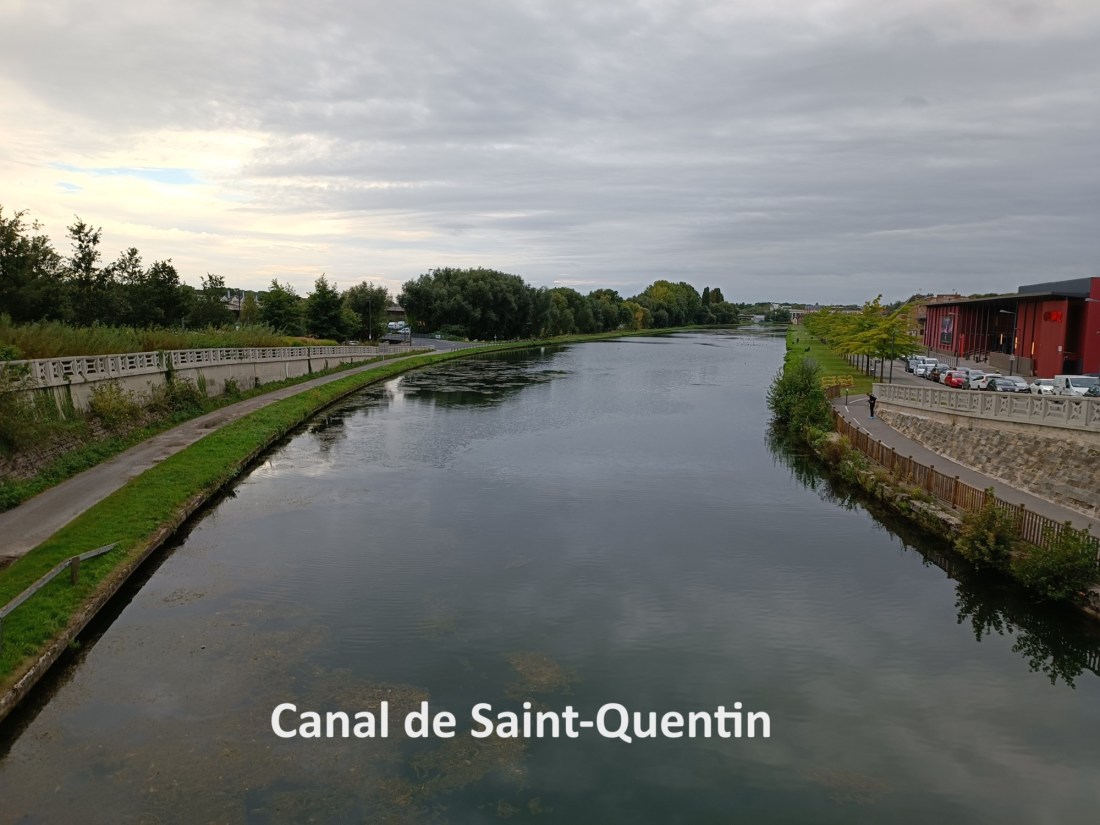
I went back through centre of Saint Quentin and out onto the D930 to the south. It is still a street at that stage, the Rue de Paris, and long before it would become a country road, I turned off to the right. That brought me to the Canal de Saint Quentin. The first proposals for a canal to link the Somme and Oise rivers go back to the early 1700s. Successive companies undertook the work, in some cases achieving a little progress, but technical issues and lack of funds kept getting in the way, so that by 1800, a lot still remained undone. In 1802, Napoleon ordered the completion of the canal, and with such a powerful force behind the project, it got done. The canal was officially opened by Napoleon himself in 1810. It is part of a network that links the Oise, south of Saint Quentin, with Cambrai, well to the north.


I followed the canal as far as Seraucourt-le-Grand. Along the way, I met joggers, dog walkers, and cyclists. One cyclist passed me on his way towards Seraucourt. Then, as I approached the village, he approached again on his way back. He stopped to ask was I doing the pilgrimage. I explained that I was, but that I was only going as far as Reims on this trip. We then talked about the weather. It was a fine day at this stage, and he commented that there would be rain on the morrow, but that it was supposed to improve after that. I had only had good weather so far on my journey, so the prospect of a little rain next day did not upset me. Maybe I should have been more concerned.
It was about ten o’clock when I was coming into Seraucourt. There was a small café at the edge of the village. I initially passed it, but then went back to see what I could get. Coffee and croissants? Sorry, no croissants. I settled for the coffee. The lady running the place asked me if I was walking the Via Francigena, and I replied that yes, I was. I asked about a stamp for my credentiale, but she didn’t have one. I finished my coffee and went back on the trail.
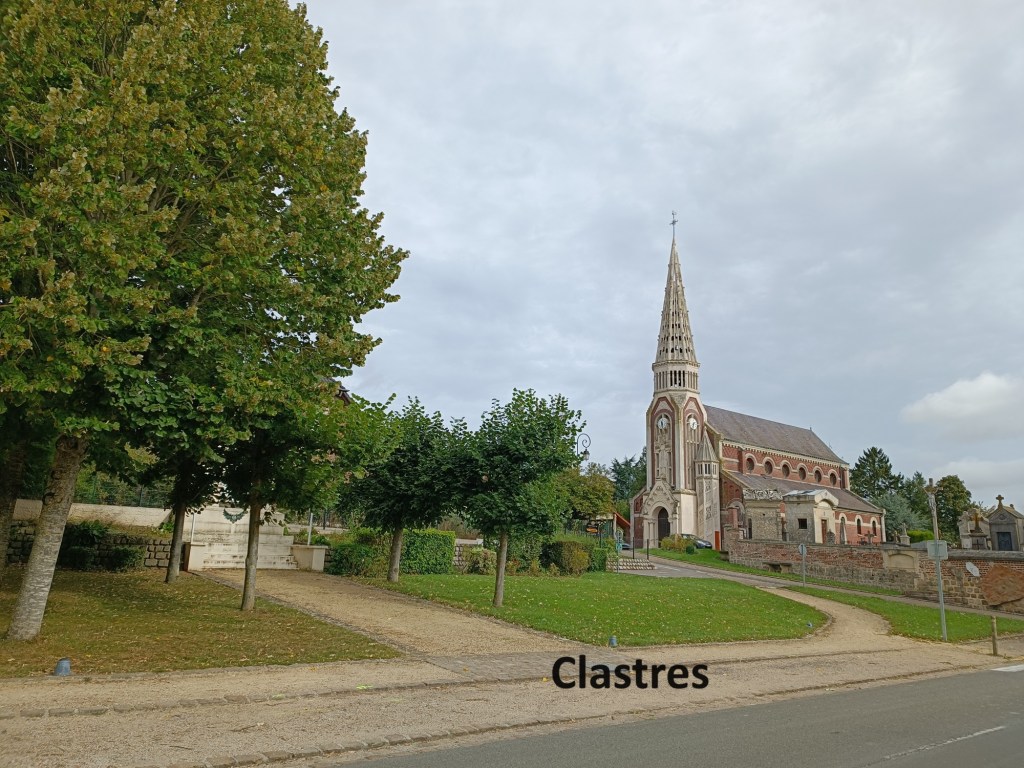
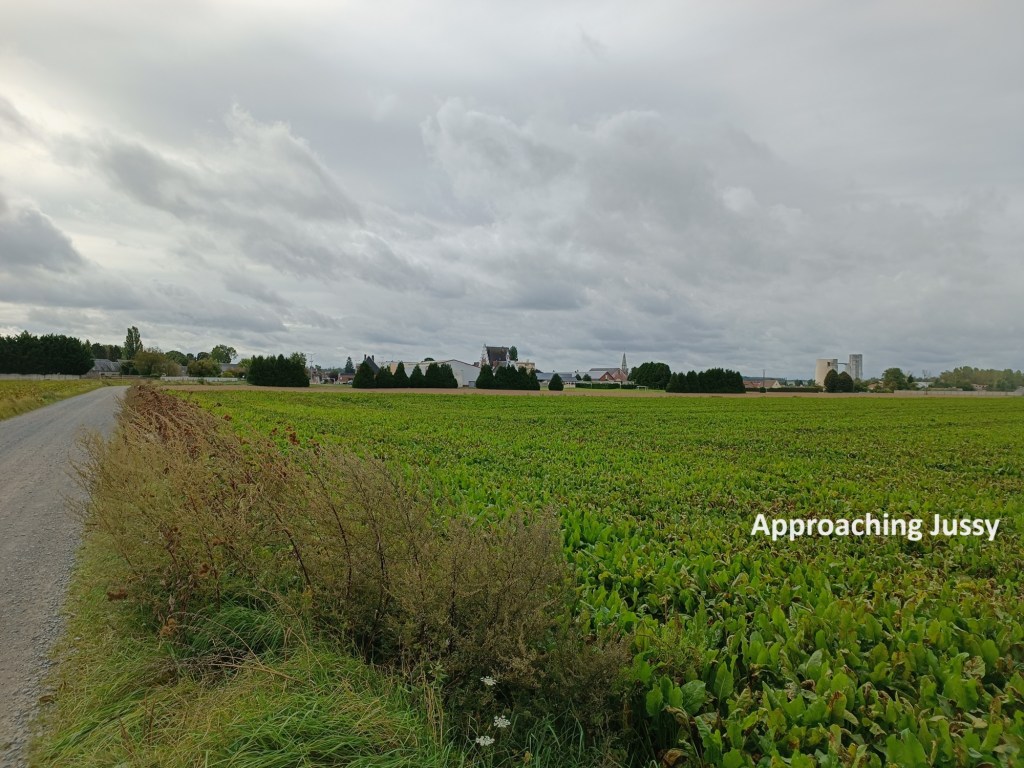
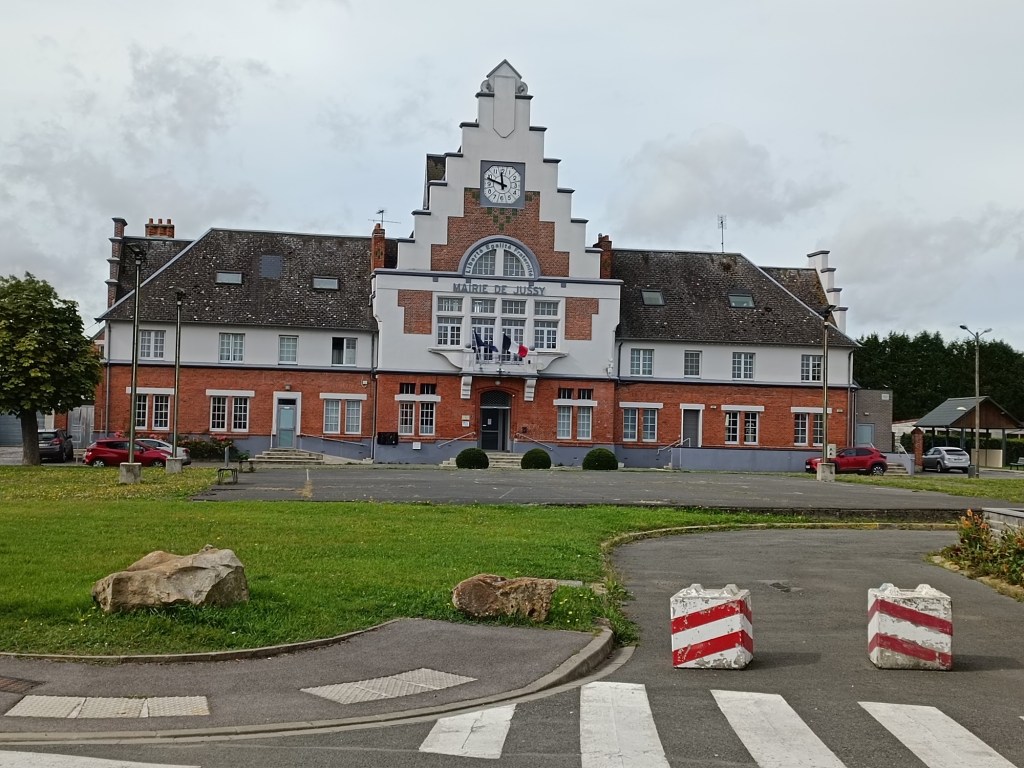
The trail leaves the canal at Seraucourt-le-Grand and heads out into the countryside. I soon reached the village of Clastres There was nothing of interest in Clastres, and I continued on. The next village was Jussy. It is bigger than Clastres, and probably has some amenities like a bar or café. However, the trail chooses to ignore most of the village. The route comes to the edge of Jussa, and immediately turns eastwards, going back out into the fields. A while later, it turns south, and eventually brought me back alongside the canal. This is the Canal de Saint Quentin again, the same canal system that I have followed when leaving the city.
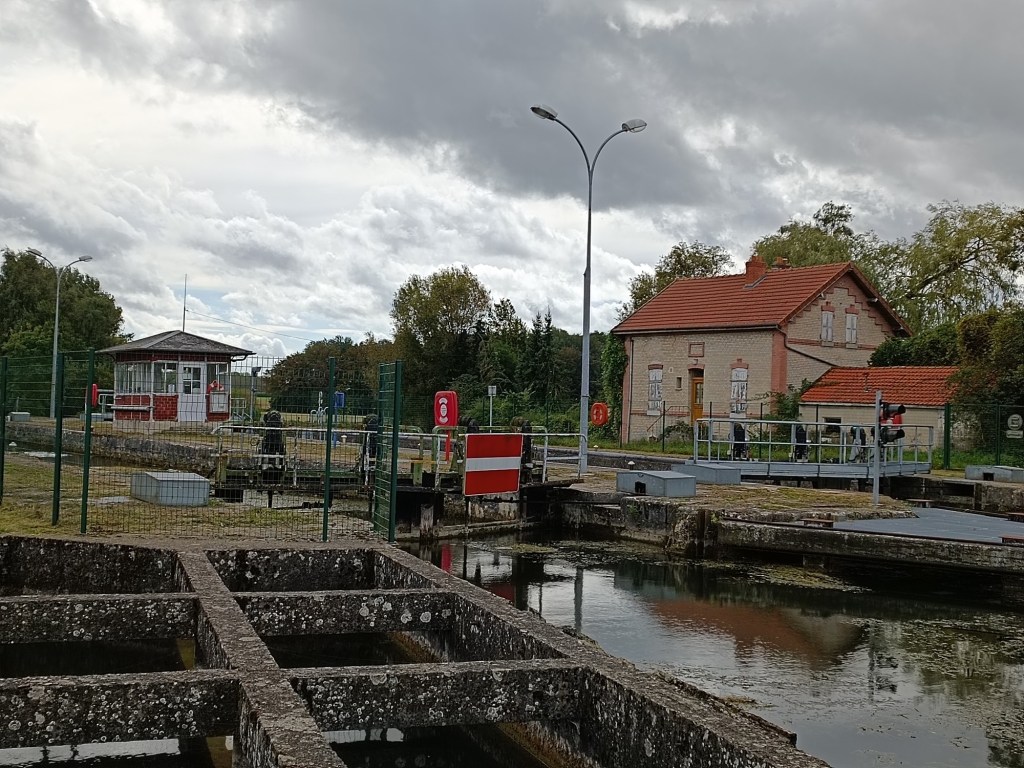
Along the way, the proprietor of my planned accommodation for the fight had messaged me that he had to cancel it. He said it was due to a water leak that was flooding the place. It was planned for Tergnier. After some frantic searching on the internet, I found that the campsite in Tergnier could help out and I managed to make a booking there.
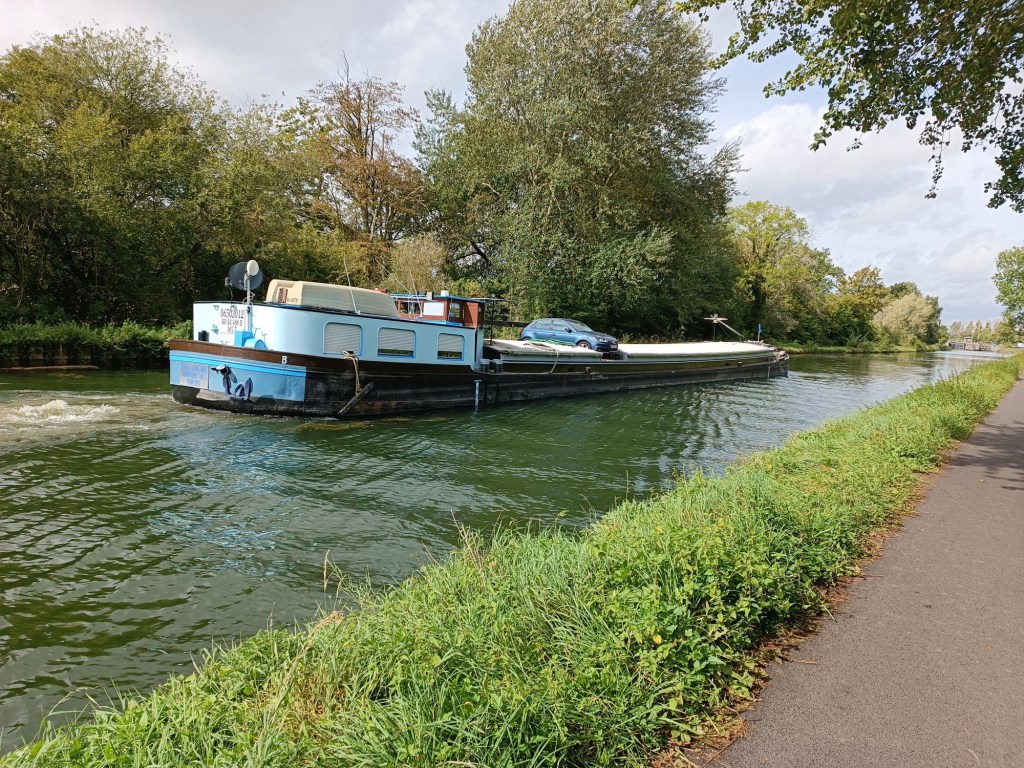
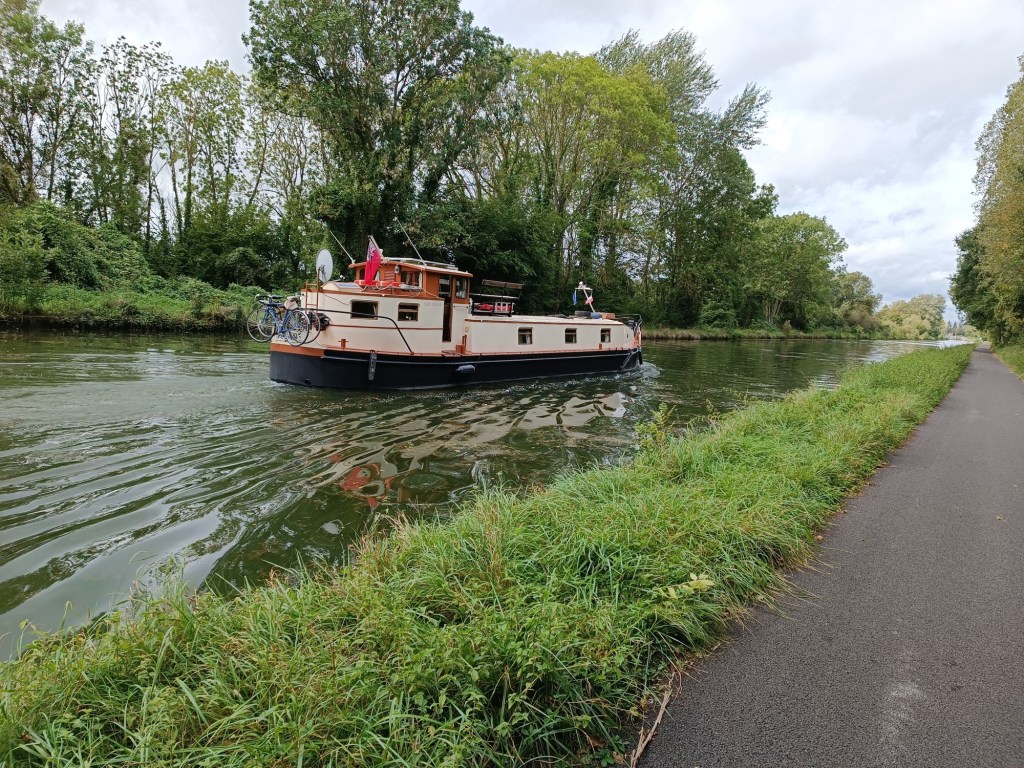
It is a long walk into Tergnier along the canal. For the first time on my walk, I saw some boats using the canal. One was a large barge, carrying gravel. The other was a smaller craft that looked like it was intended for enjoyment rather than work.
At times, it seemed that I would never get to Tergnier. The walk along the canal seemed to go on forever. But eventually, I was there. The surroundings of the canal change as it approaches a town. Out in the countryside, it is fields and hedgerows. Then there are more houses. And eventually, the path beside the canal becomes a road, and eventually a street. That is how it was with Tergnier. To get to the campsite, I turned left once I reached the main road, and then onto Rue Carnot. Halfway down the street, there was a café, and I was able to get some refreshments, including some very welcome beer. It had been a long walk on a warm day.
Once refreshed, I headed on to the campsite. My stop at the café had been timely. I arrived at the campsite about ten minutes before three o’clock to find that the reception did not open until three. Had I not stopped at the café, it would have meant a long wait at the campsite. But the receptionist arrived very soon after me, and once the formalities were done, I went off to pitch my tent. And those formalities included the important stamp in the credentiale. With the forecast from the man on the bicycle fresh in my memory, I made sure that I was organised for rain.
As the afternoon turned into evening, other campers came in. My neighbours were three German cyclists. They were cycling the Jakobsweg, which is the German name for the Camino de Santiago. I chatted with them about it for a while. They were going as far as Paris on this trip, to come back later for the next part.
And then it was time to get some dinner. There is a restaurant just outside the campsite, and that is where I ate dinner. It was not a great restaurant, but good enough. After that, I went back to my tent to get my night’s rest.

 Walkingman