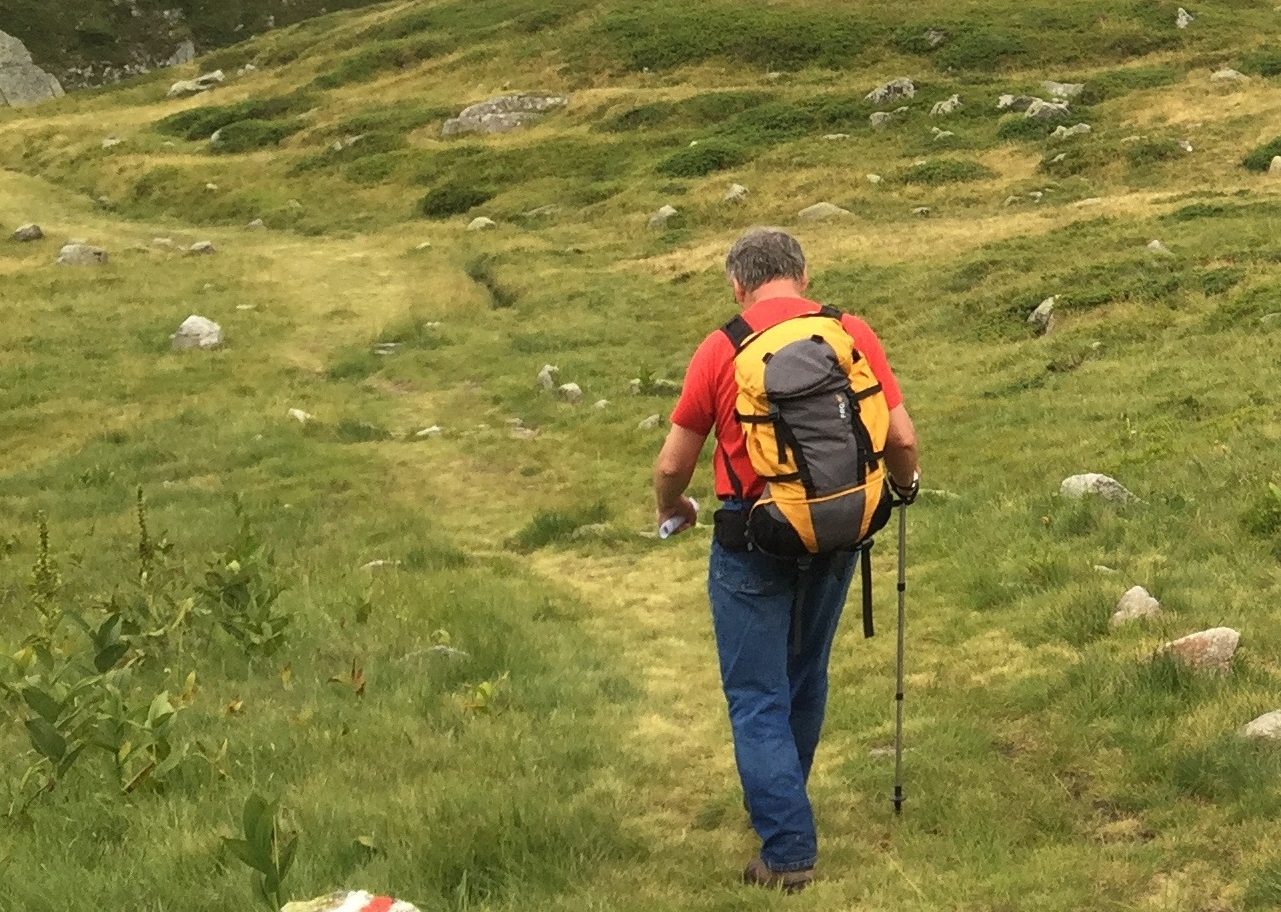
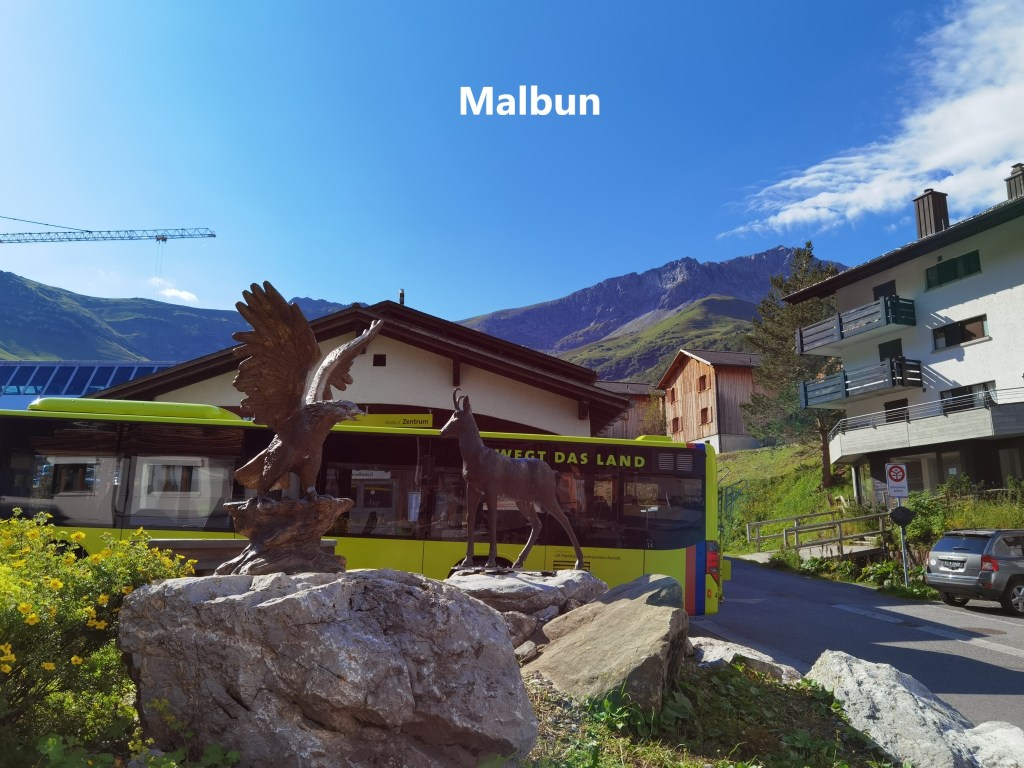
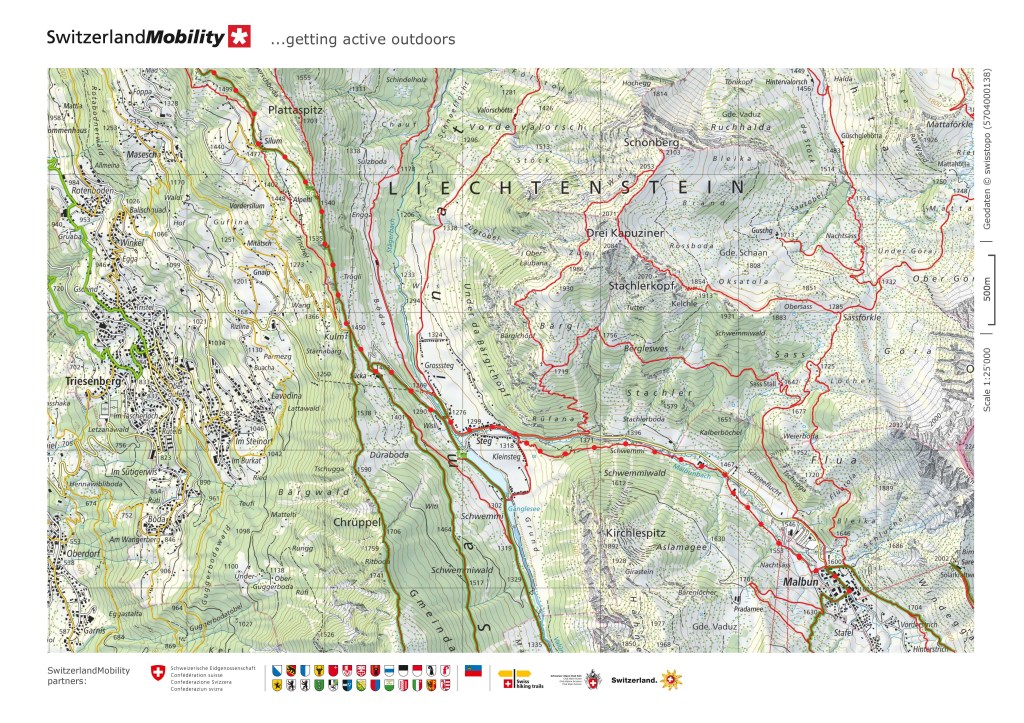
Things took a detour recently, and I found myself waling a different trail for a day. I took an early morning bus from Vaduz to the little town of Malbun. Or perhaps it is an exaggeration to call Malbun a town. It is a ski resort in the eastern part of Liechtenstein, and it is very clear that it owes its existence to winter sports on the mountains around. Malbun’s only claim to international fame came in 1968, when a Swiss military exercise accidentally landed a few shells in the town. There was minor damage, but thankfully no injuries.
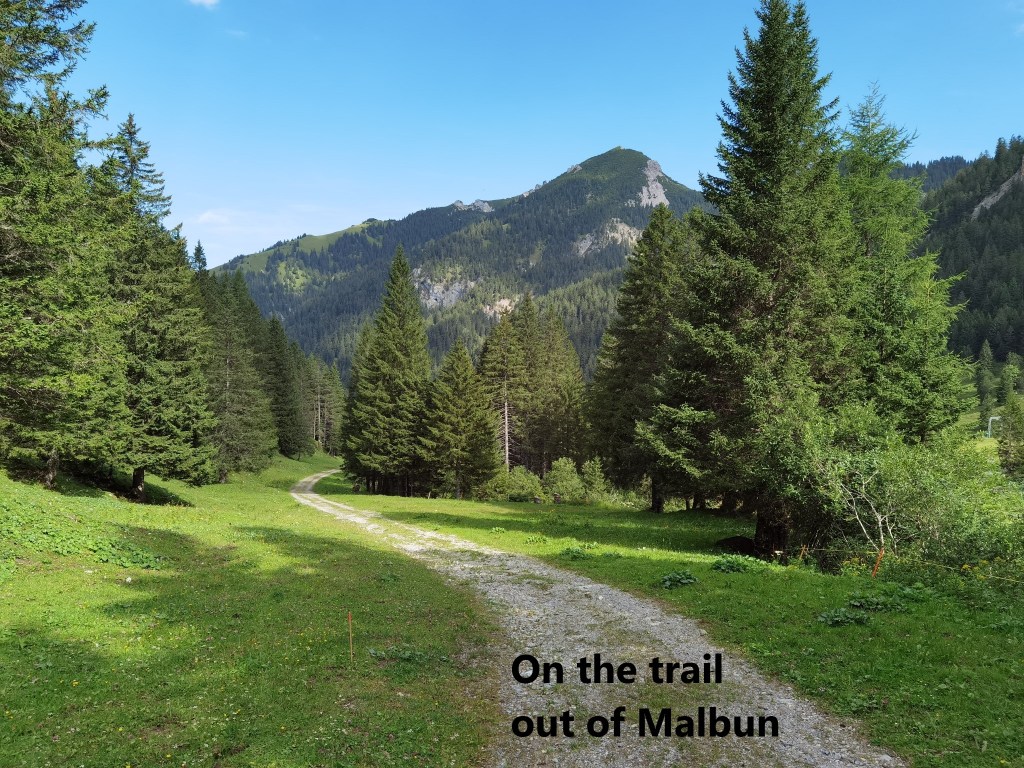
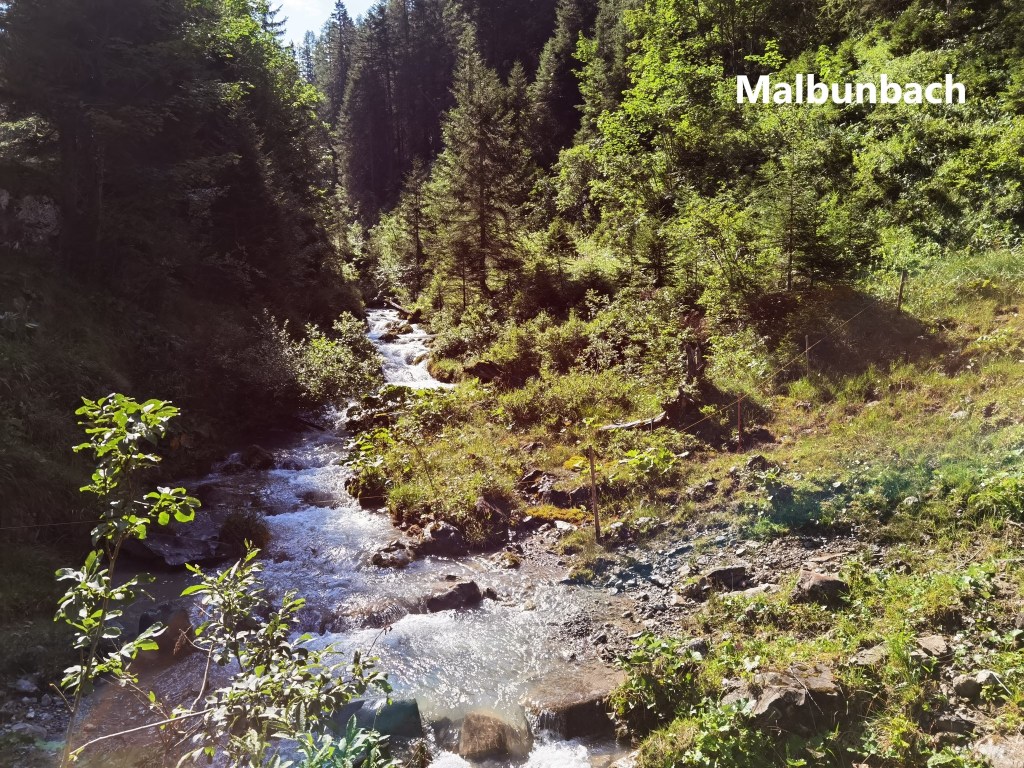
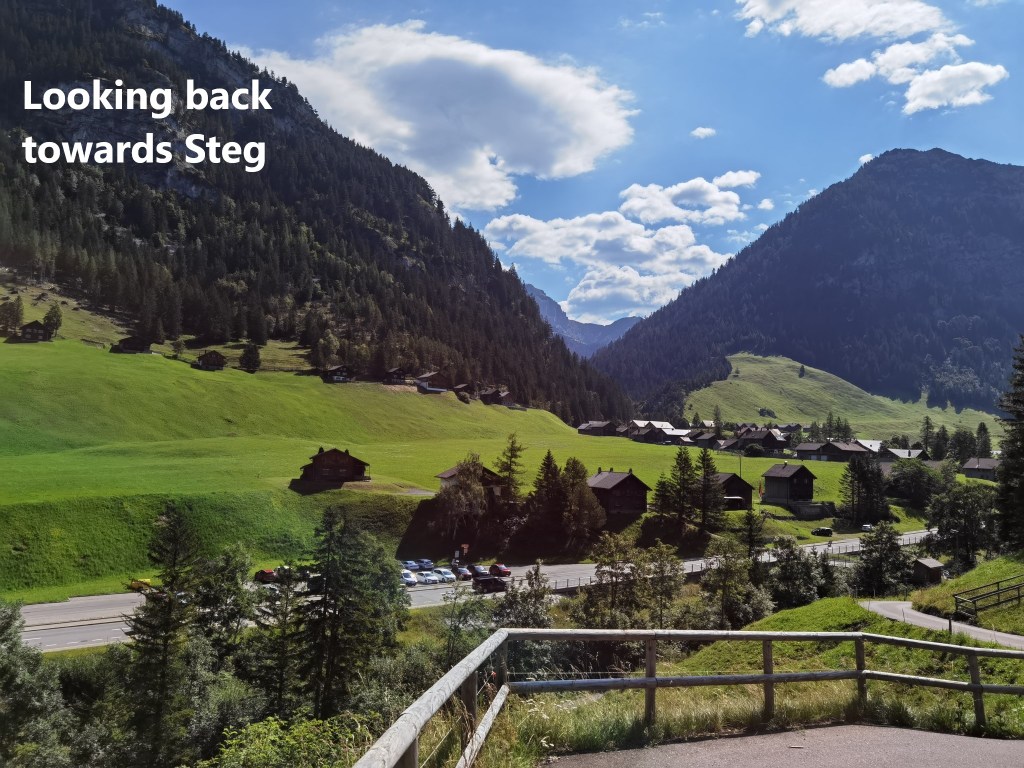
For me, Malbun was the start of my latest walk. The town sits at exactly 1600m above sea level, and the first part of my route was all downhill. After an initial section through fields, I was soon into woods. I crossed the Malbunbach, a gently stream in these warm days. The trail goes up and down, mostly following the contours of the hill, while the road nearby descends more rapidly. Staying on the hillside, however, brought me to a point overlooking the village of Steg.
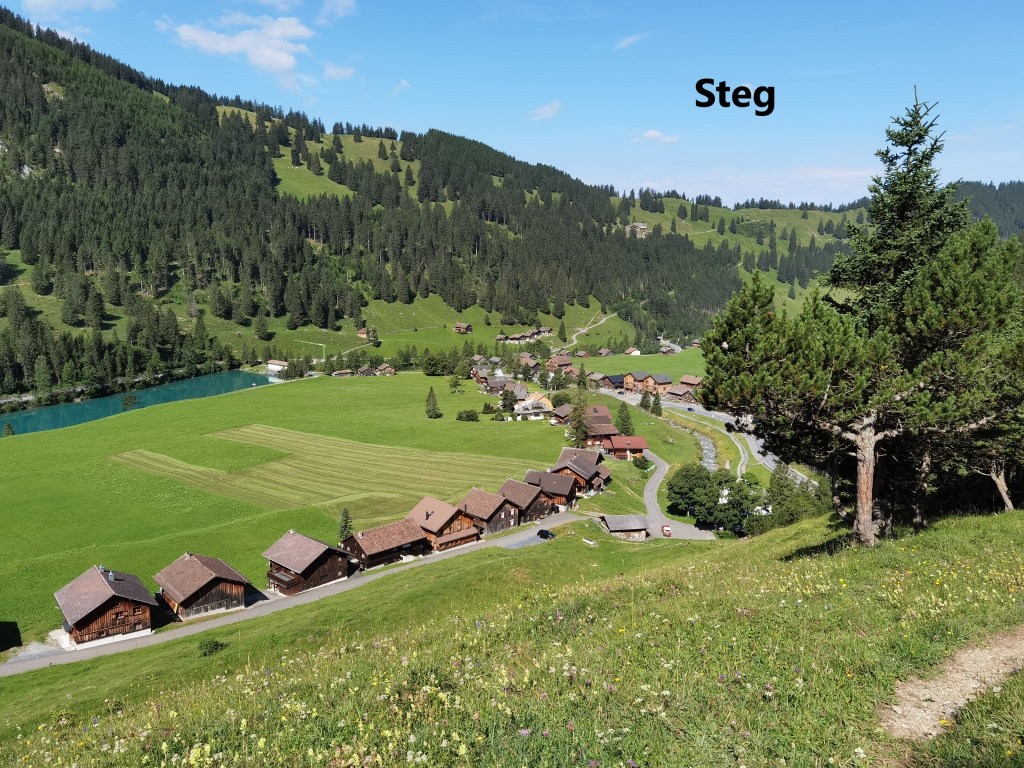
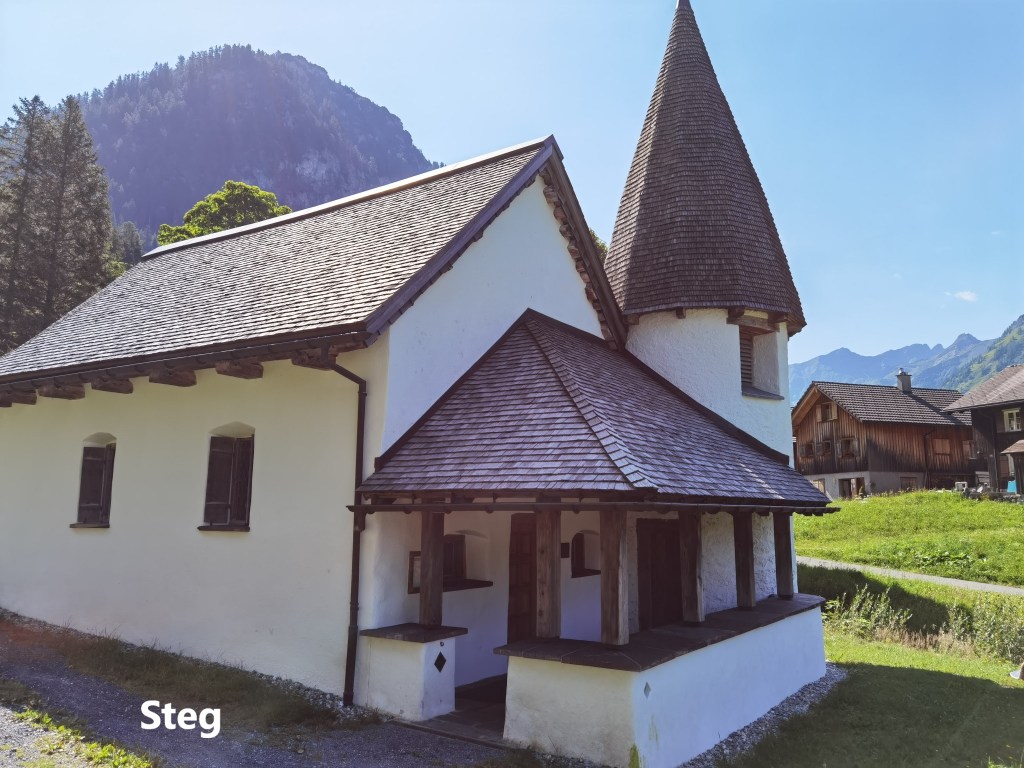
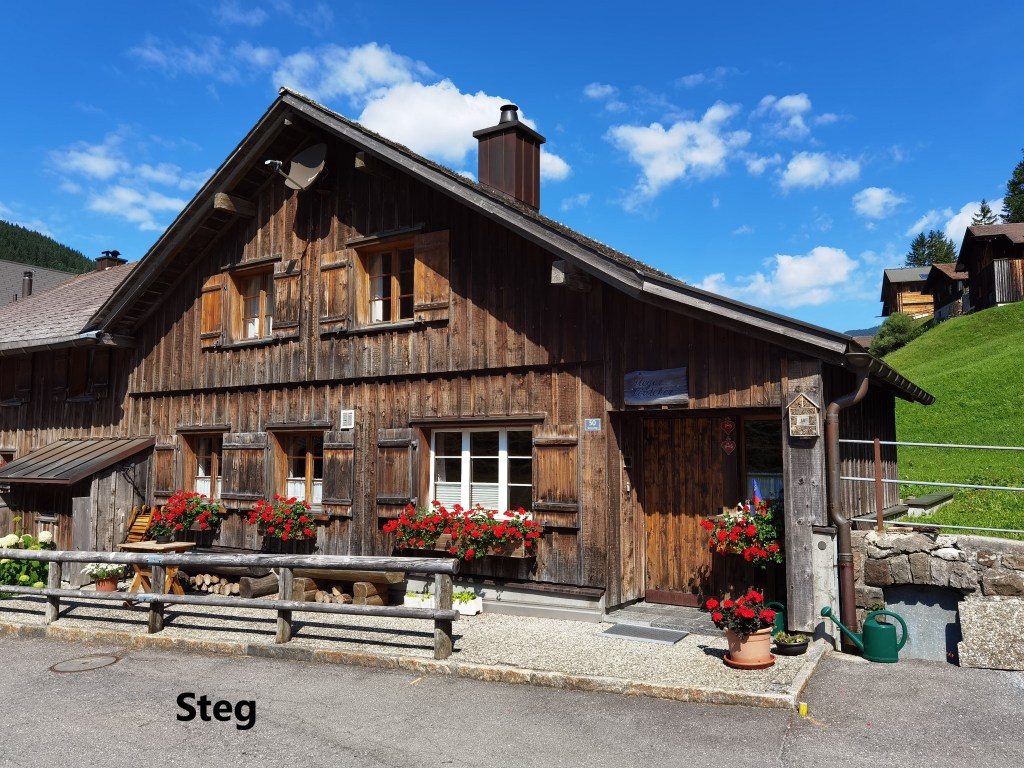
At an altitude of 1300m, Steg is lower than Malbun. It is a village of wooden chalets clustered around a church and an establishment that grandiosely calls itself a hotel. I took the road out of the village, but soon turned off onto a trail heading for the ridge on the western side of the valley. The trail starts out as a road, then becomes a track, goes back onto the road, and finally is a track again as it reaches the upper slopes. The ascent is gradual, and not too tiring, in spite of the warm sunshine.
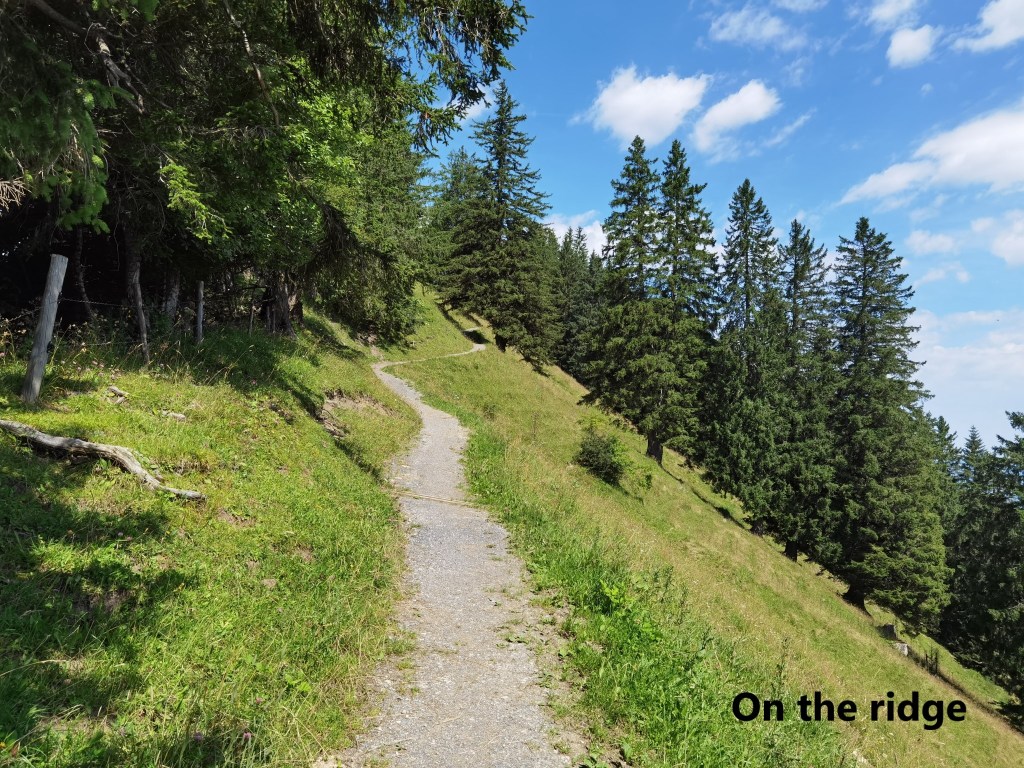
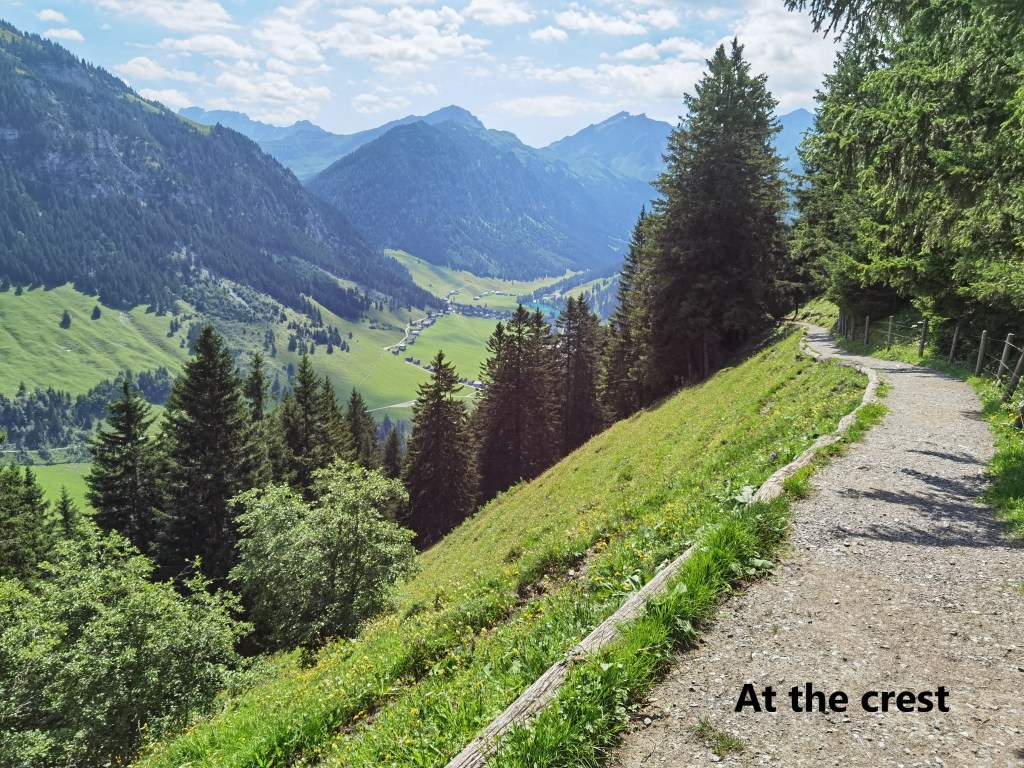
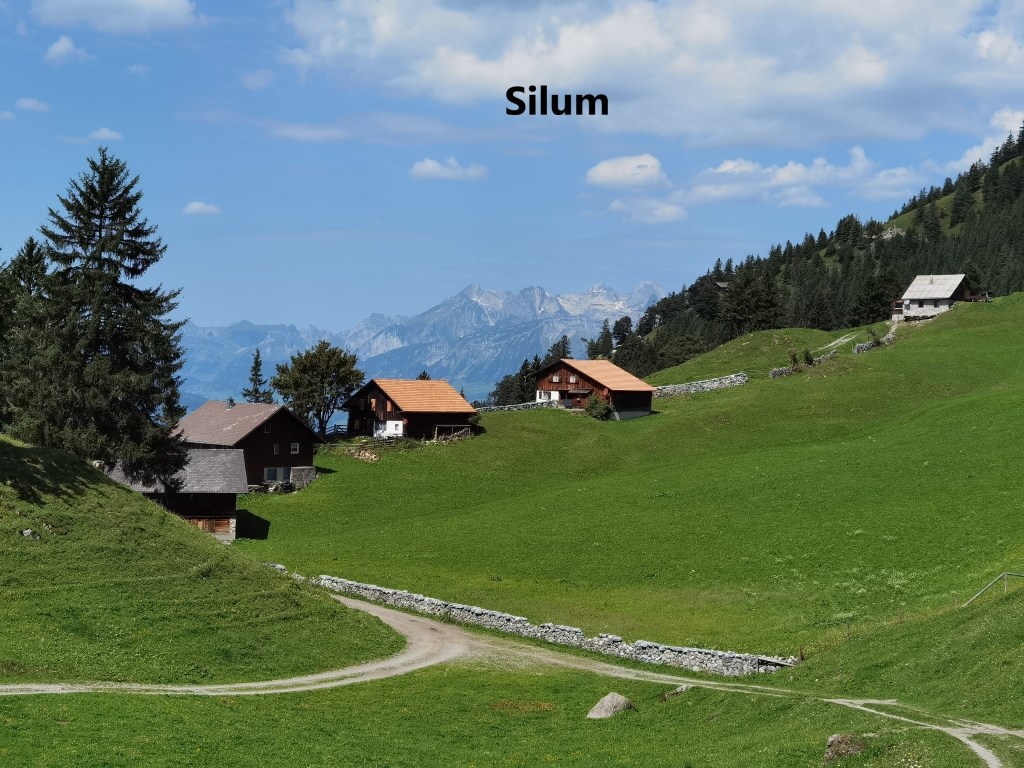
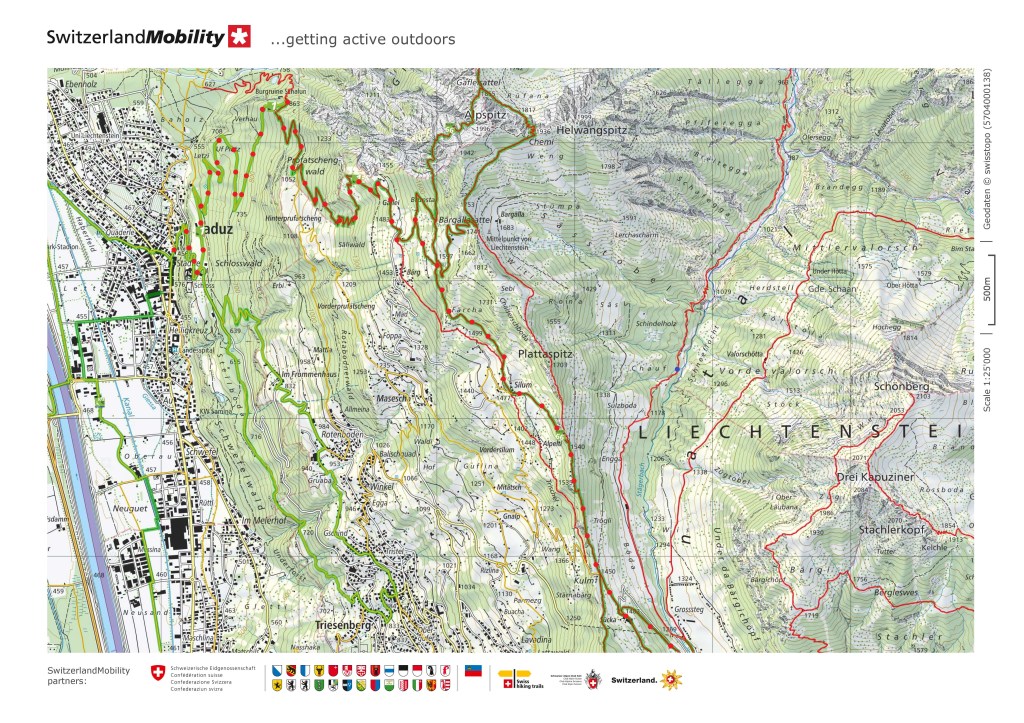
At the crest of the ridge, the Rhein valley to the west finally comes into view. And then the trail passes over onto the western side of the ridge. From there, the descent is gradual until reaching Silum. Silum is not even a village, just a small settlement, but it does have a Berggasthaus. And from the approach to Silum there are wonderful views of the Rhein valley to the west.

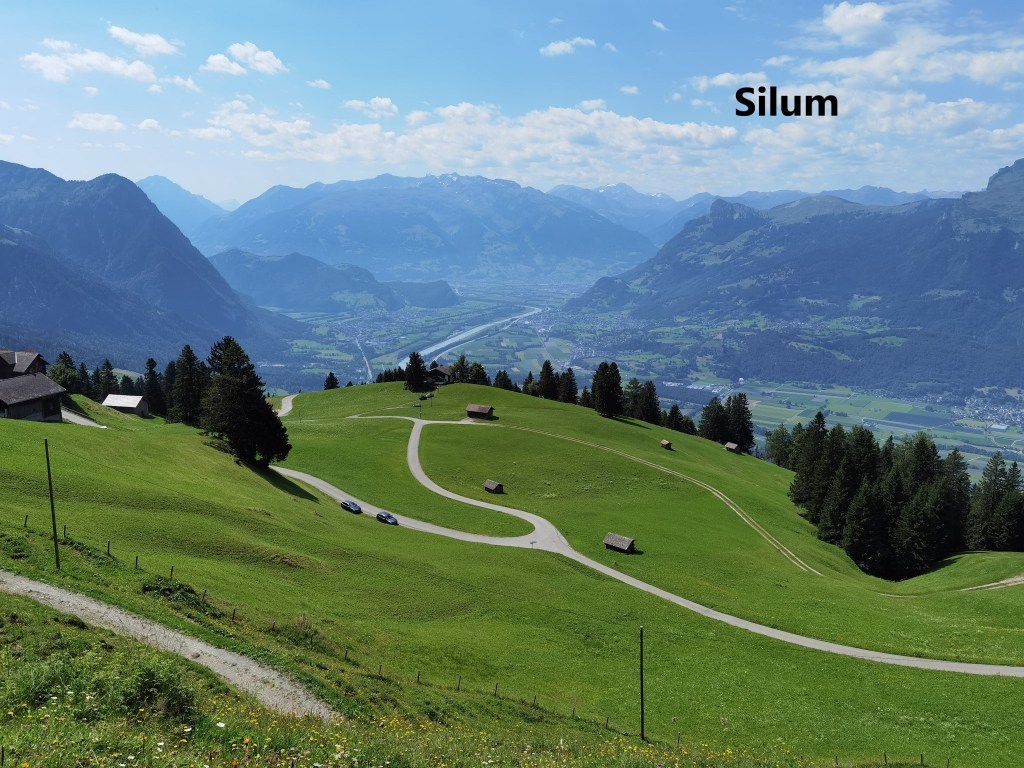
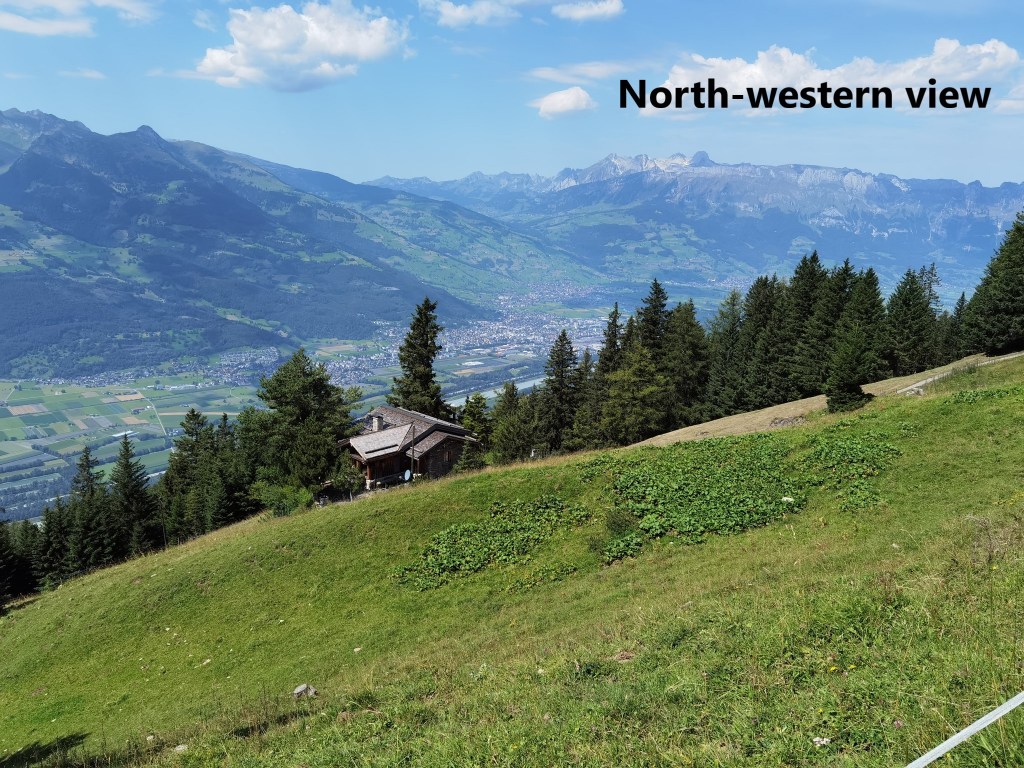
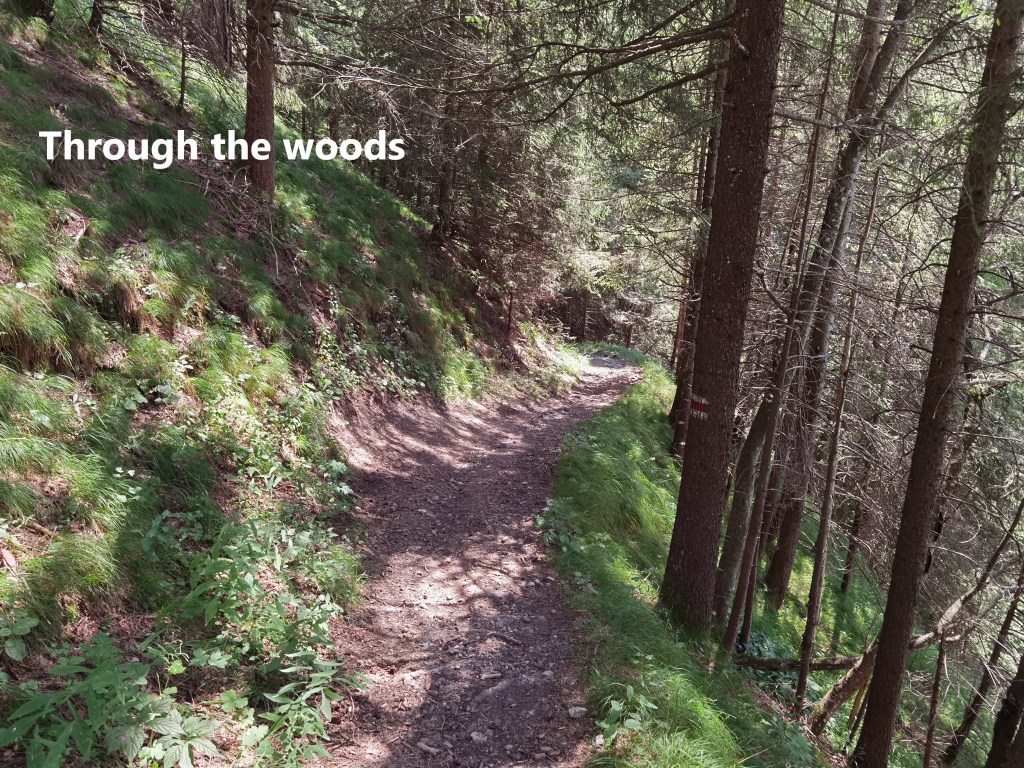
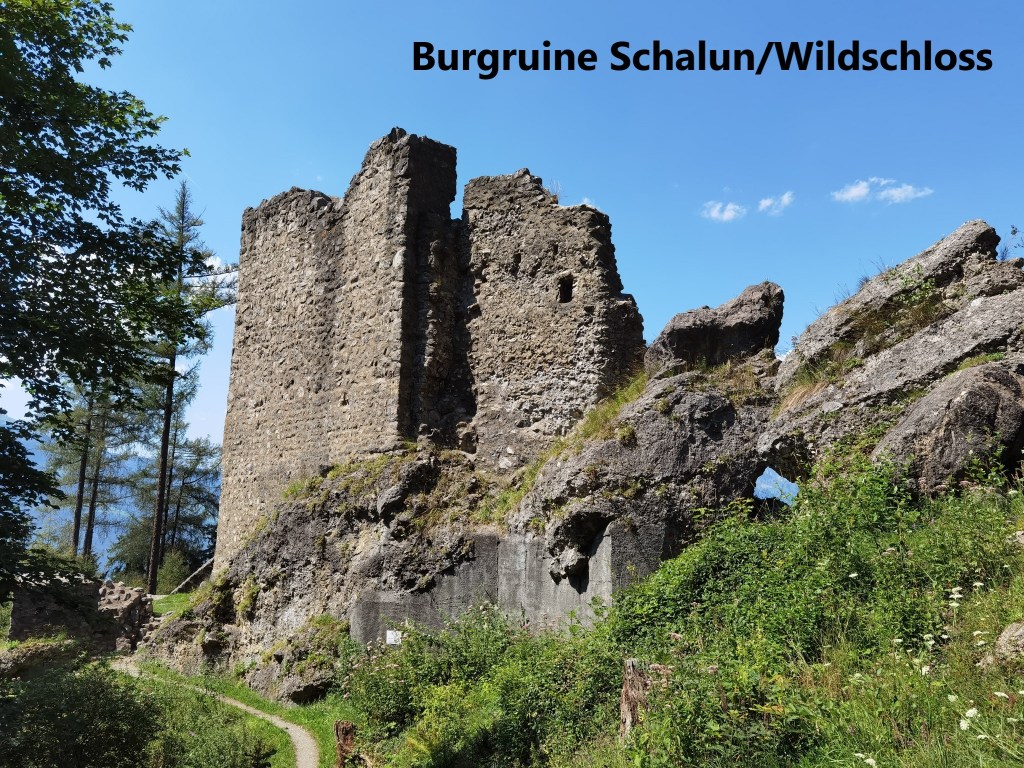
After Silum, the route contours around the side of the ridge. There is a small amount of ascent, but in truth, there are streets in Basel that are steeper than this section of the trail. Shortly before Gaflei, the trail begins the real descent. It goes through woodland, descending through zig-zags until it eventually reaches the Bergruine Schalun, also referred to as the Wildschloss. This castle was built sometime around the end of the twelfth century. It was abandoned sometime at the end of the fourteenth century, for reasons that have not been recorded. Since then, the old fortress has been quietly deteriorating. In the twentieth century, there have been archaeological excavations, and works to stabilise the old structure.
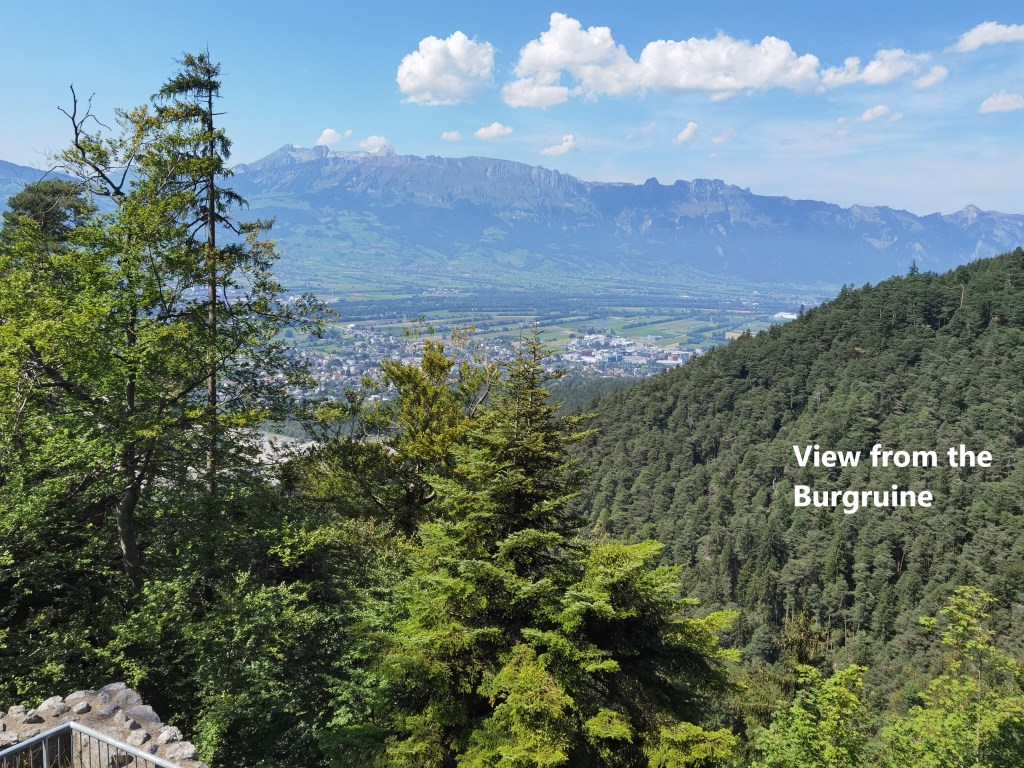
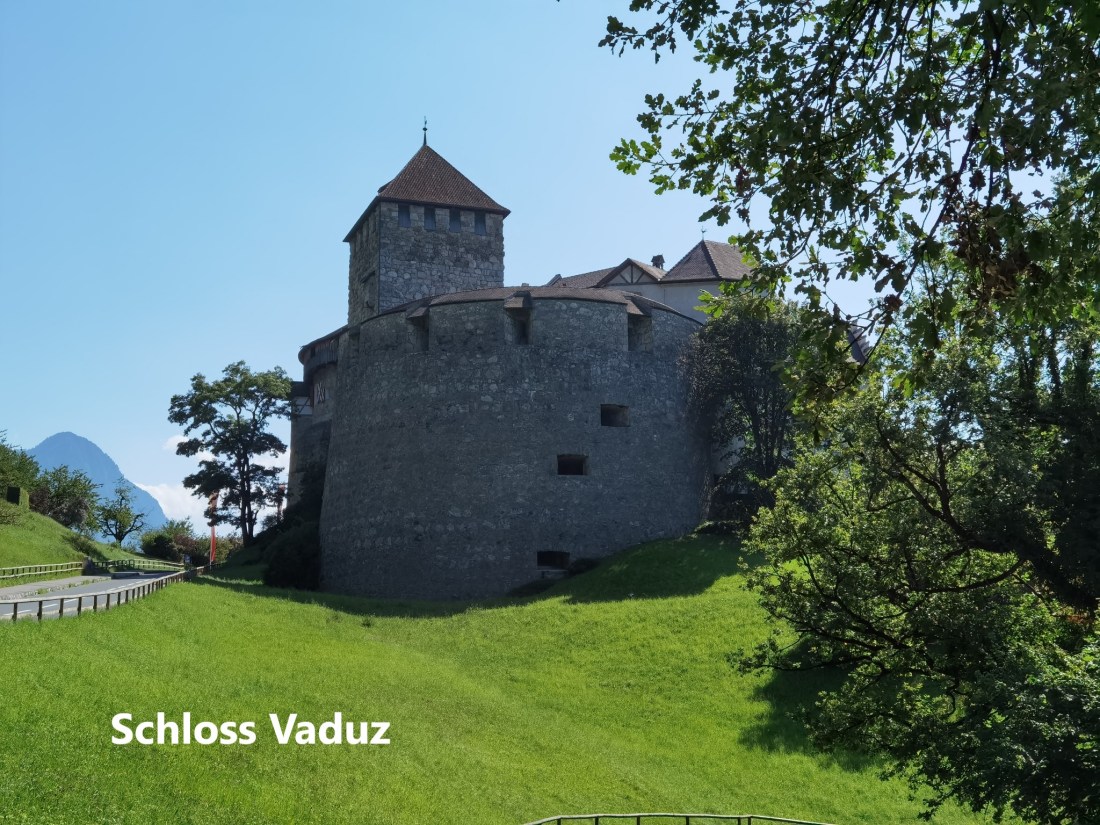
After the Bergruine, the trail follows a forest track, much wider than the woodland trail that brought me that far. The trail winds around until the Schloss Vaduz comes into view. The castle is an impressive site. Pats of the castle date back to the twelfth century, but the round bastions are more recent, built in the sixteenth century. The castle is the residence and home of the prince of Liechtenstein, and so is not open to the public.


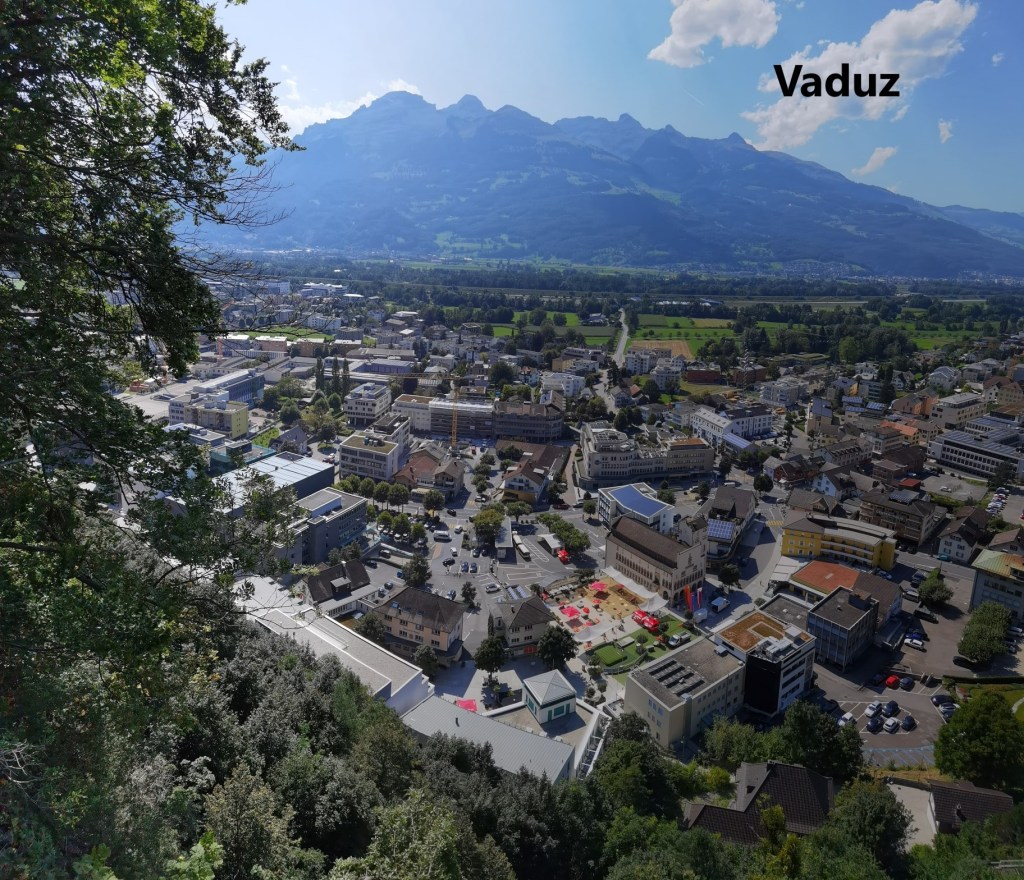
From the castle, the trail continues on downhill to arrive in the centre of Vaduz. In the nineteenth century, this city was barely a village, but the prosperity of the twentieth century has propelled it into the thriving town. And just the place to end a day’s walk.
This was not one of my longest walks, with a step total for the day of just 32,067, but it was thoroughly enjoyable, and a great way to see Liechtenstein.

 Walkingman