
When last I wrote about the Midleton Greenway, I described my walk out from Midelton to the village of Mogeely. That was in October of 2024. Later, in November of 2024, it was announced that the remainder of the route would open in December, all the way to Youghal. I resolved that during my winter visit to Ireland, I would walk the entire route.
Thus it was that on 29th December, I started out again from Midleton.
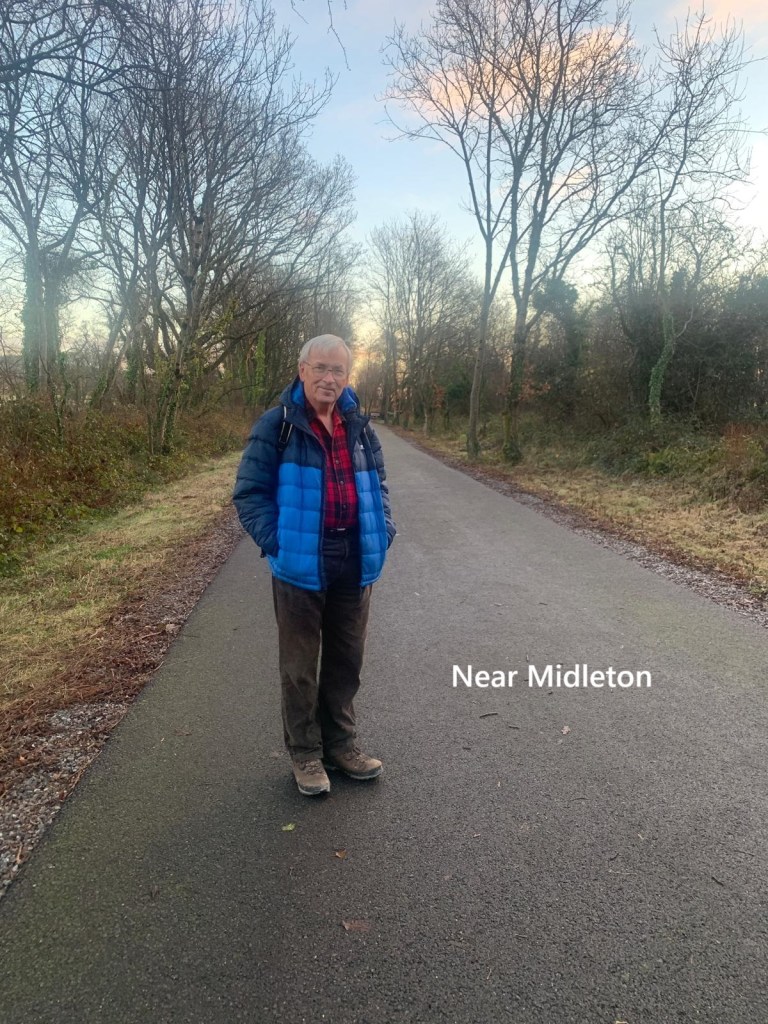

I won’t go into detail of the route to Mogeely. That is covered in my previous post on the Greenway. I will only say that I walked at a leisurely pace from Midleton to Mogeely, passing and being passed by runners and cyclists along the way. At Mogeely, I once again dropped into the church to admire the decoration, noticing details that I had not noticed on my last visit there.
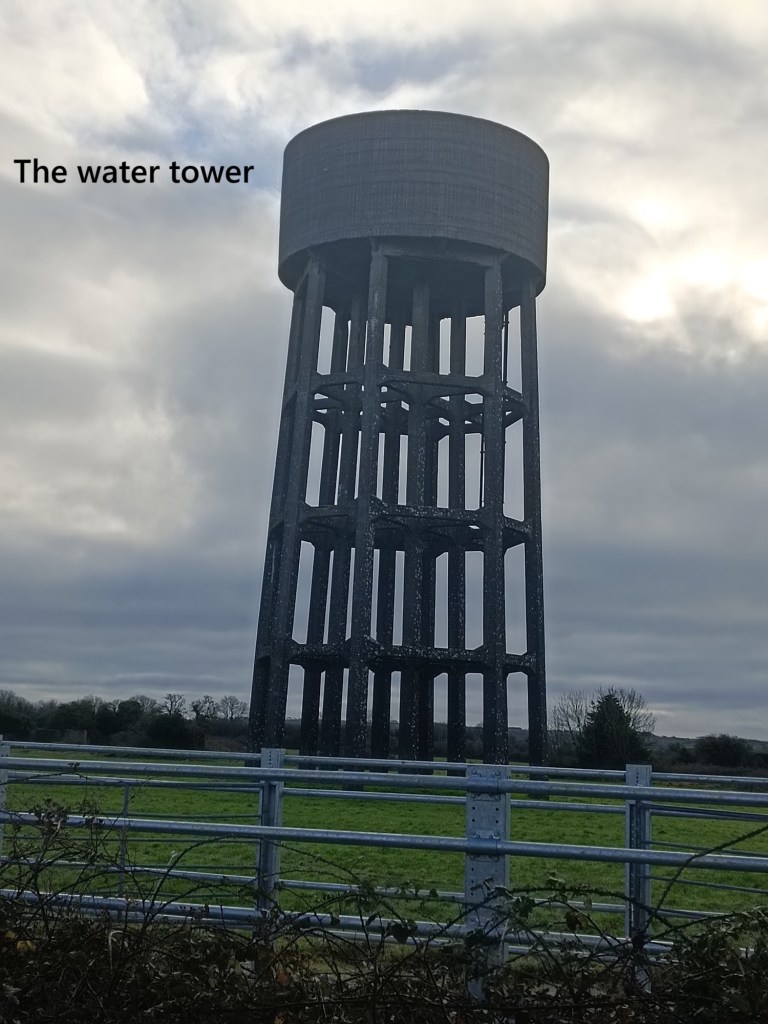
From Mogeely, I continued eastwards. One of the major landmarks along the route is a large water tower. This is a remnant of a proposed airship station. During World War 1, with German submarines taking a heavy toll on allied shipping, the airship was seen as an effective counter measure. The airship would escort the ships, keeping a lookout for submarines. To give the airships better range out into the Atlantic, the RAF commandeered a site between Mogeely and Killeagh to build a base for these aircraft. Work began in 1918, but the end of the war that year made it unnecessary. Work stopped completely in April 1919, just as the Irish War of Independence was beginning. Everything that could be moved was taken back to Britain, and the remainder left behind. The newly independent Irish Free State was uncertain as to what to do with the half-finished aerodrome, and eventually, the land was returned to the farmers. No aerodrome was completed. The water tower remains the most prominent reminder of the proposed aerodrome, though there are also a few ivy-covered buildings slowly decomposing into the landscape.
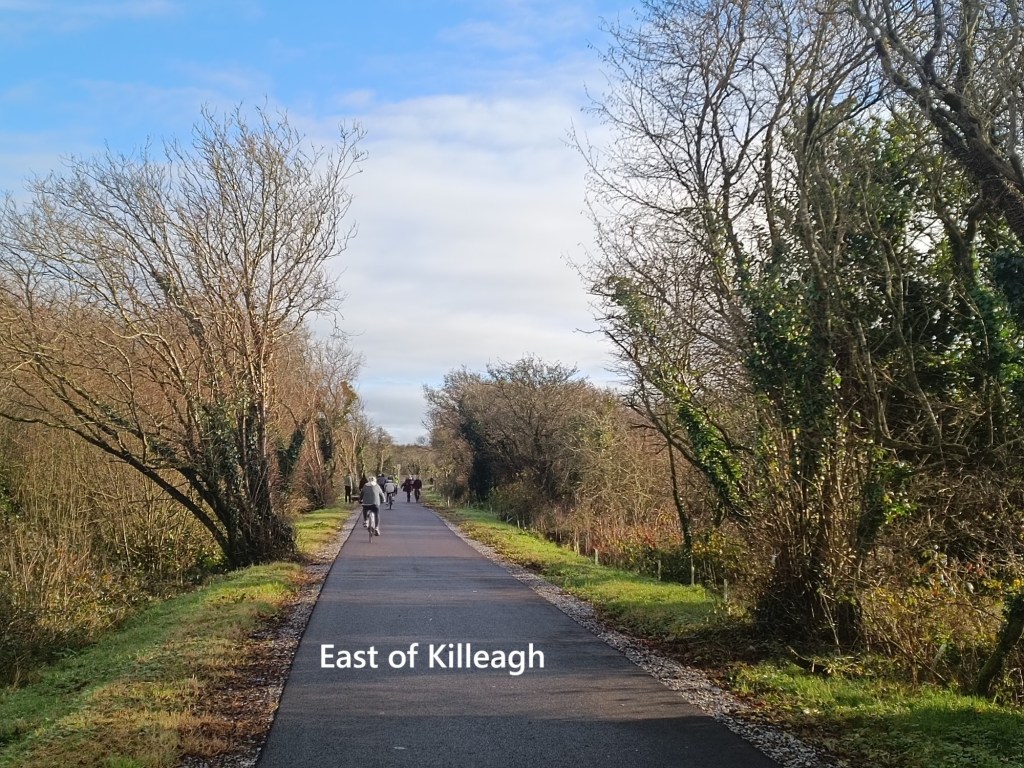
It is not far from Mogeely to Killeagh, and I soon came to the old station there. A pop-up coffee station was doing a brisk trade, selling to locals, walkers, and cyclists. The station is very close to the halfway point on the route, so I took a short refreshment stop and watched others do the same.
The countryside east of Killeagh is good farmland, flat and fertile, and I passed on this way for quite a while.

The architecture of the route changes after Killeagh. The bridges between Midleton and Mogeely are of stone construction. There are none between Mogeely and Killeagh. After Killeagh, the original railway bridges are of brick construction. It must be remembered that the line was built in stages. From Cork to Midleton opening in 1859, while construction was still in progress on the remainder. The first regularly scheduled trains to reach Youghal were in December 1861. The project was never financially secure, and I can only wonder if the brick construction was a cheaper alternative to the cut stone used on the earlier stages.
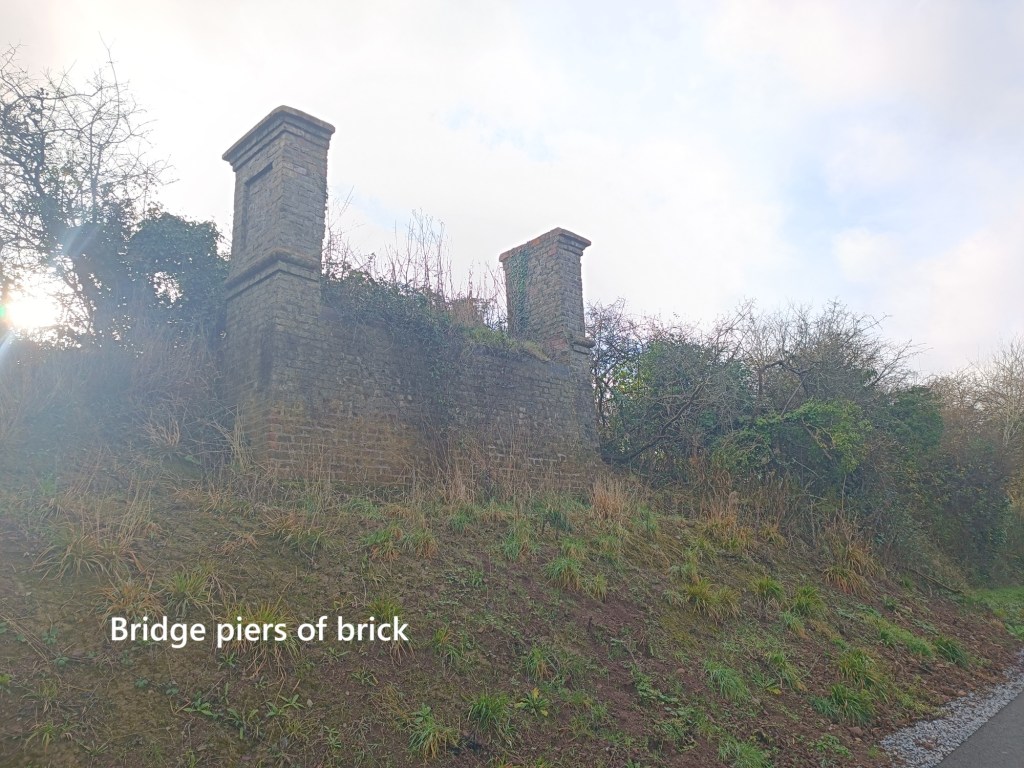
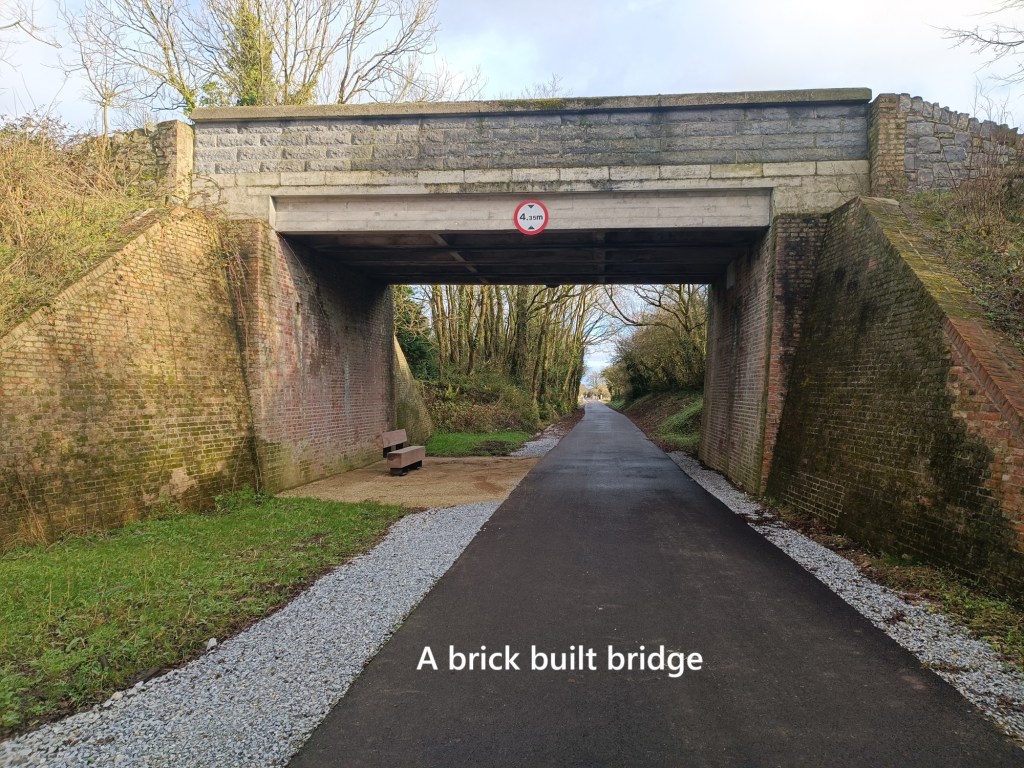
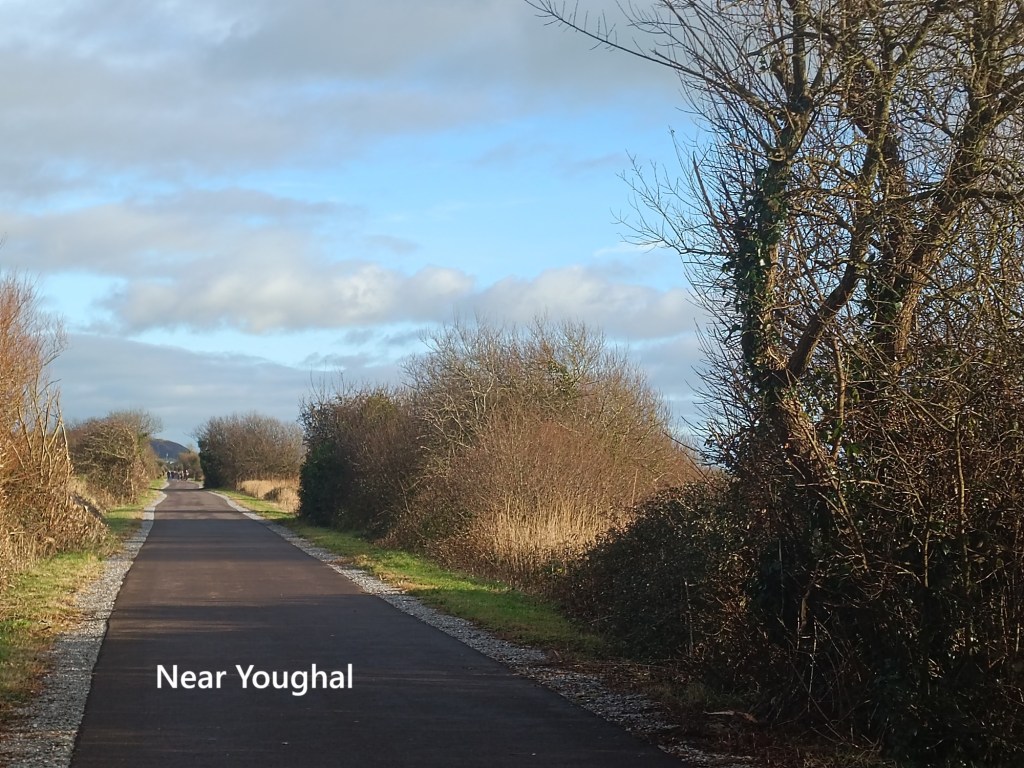
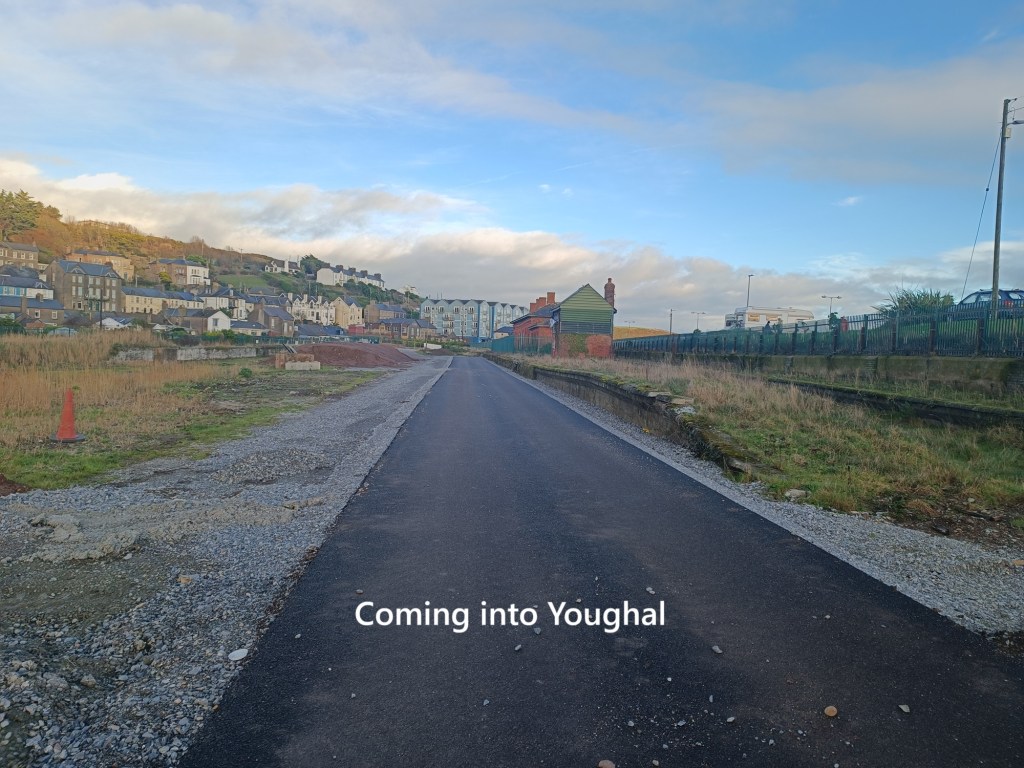
The route continues for several kilometres more through flat countryside. As I approached Youghal, the newly built houses on the hill to the north of the town were the first sign that I was approaching the town. At that stage, the greenway goes through a marshy area. The construction must have been difficult in order to provide a firm bed for the railway. By now, it was afternoon, and there were plenty of walkers, many of them family groups, out enjoying the winter sunshine.
It seemed to take forever to reach the end of the walk. Youghal Station itself is not yet a part of the walk, though it is visible through closed gates. I am not sure why it is closed off. It would seem fitting that the walk should begin and end at a railway station. Instead, the walkway turns left into a municipal car park.
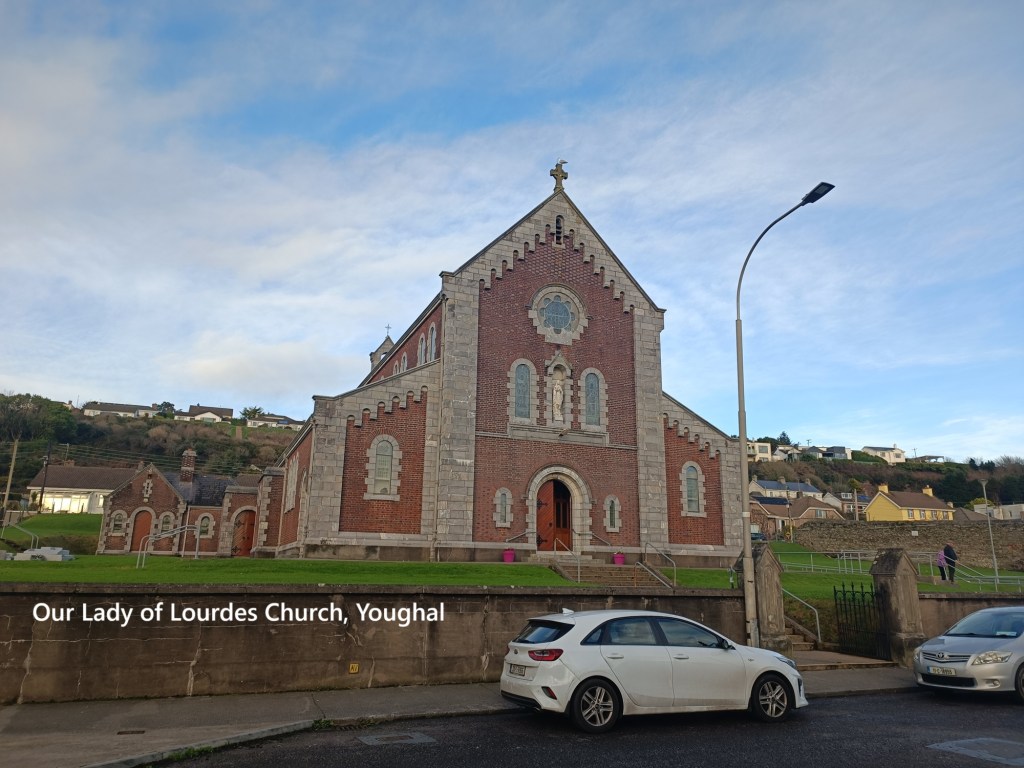
From the car park, it is only a short walk to the bus stop, just opposite the Our Lady of Lourdes Church, and from there, I got the bus back to Midleton.
The Greenway is a popular amenity for walkers and cyclists. I am not sure how long it will last. Opinion is still divided as to whether the Greenway was the correct decision, or whether rebuilding the railway line out to Youghal would have been a better alternative. But whatever the best decision might have been, the Greenway is certainly better than leaving the line derelict and overgrown as it was.

 Walkingman