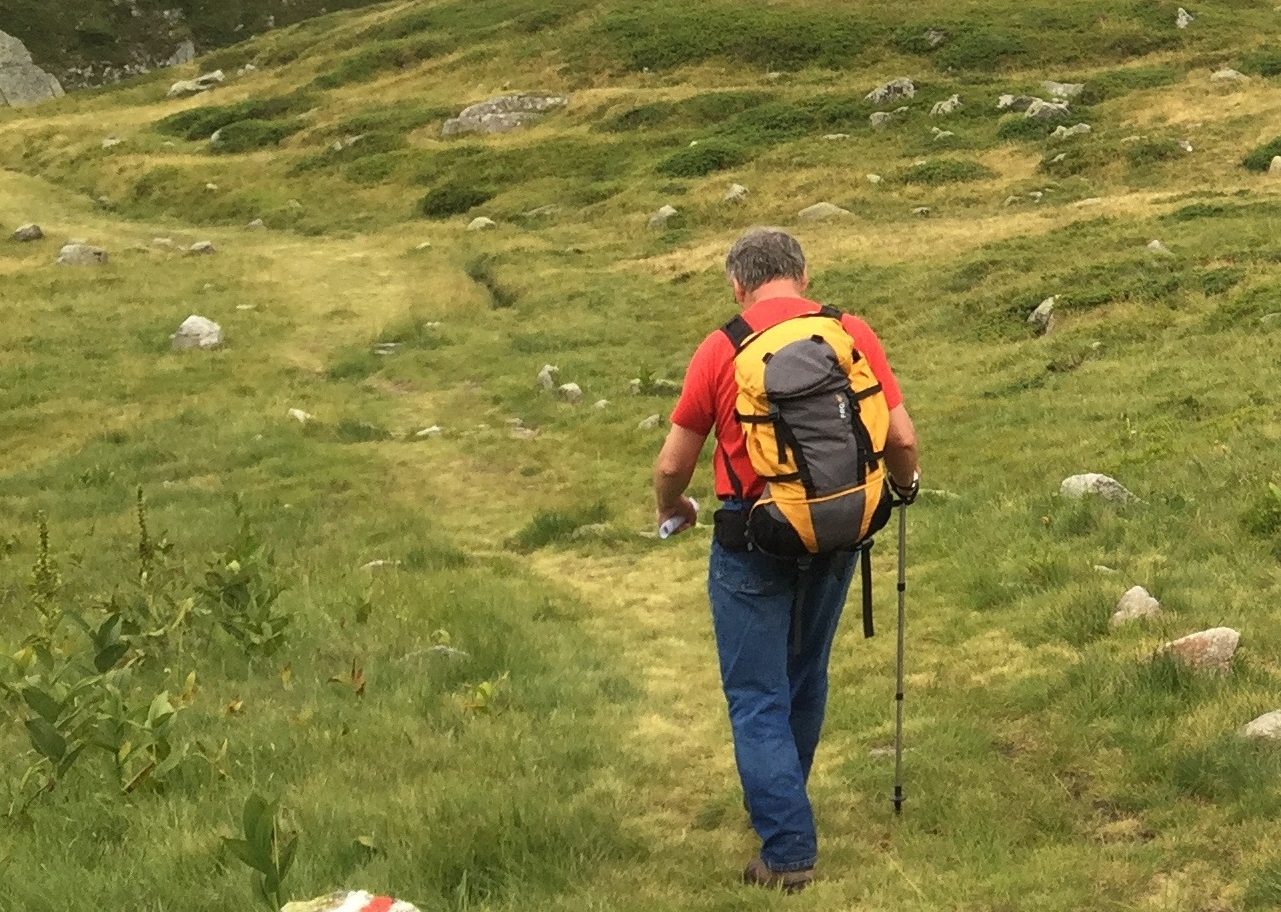
I was up and out of the tent before dawn, The rain had stopped, but the ground was still wet. Under the light of a head torch, I packed up the tent as quietly as possible and made ready to go. Once everything was done, and while it was still dark, I headed out on the trail again. I was far too early for breakfast at the campsite, and even too early for the local boulangerie in Licques, but I had a plan.
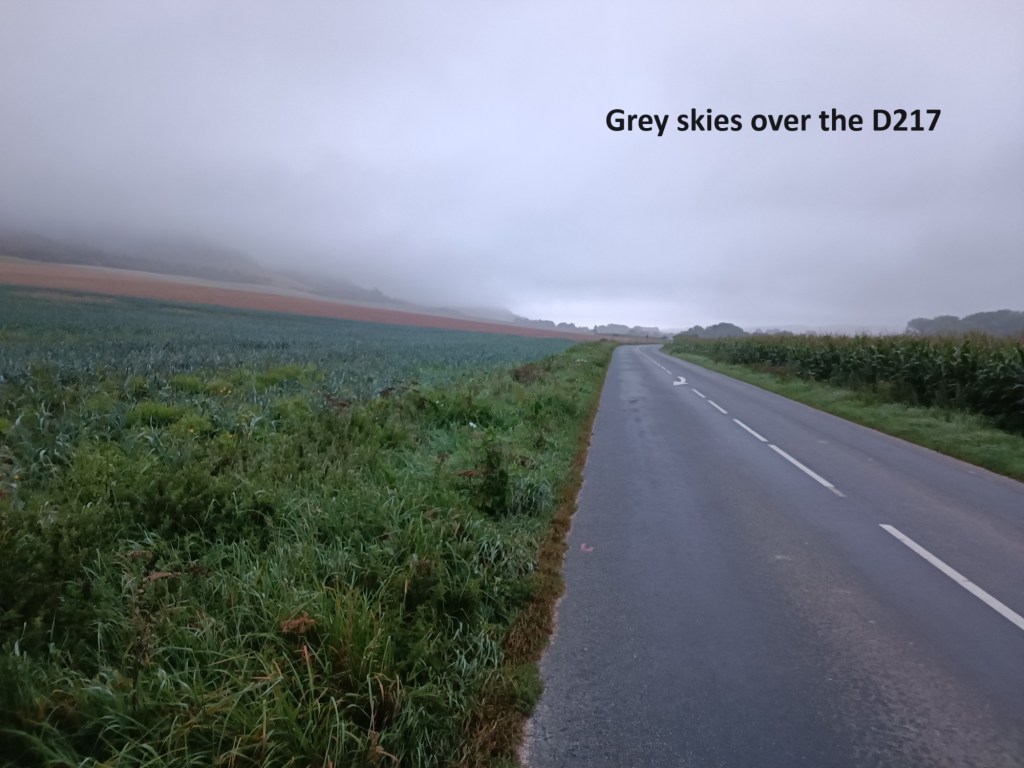
As the darkness turned to a grey dawn, I went through Cahen, and on to Audenfort. By the time that I reached Audenfort, it was fully light, or at least as bright as a very cloudy morning after rain would allow. From Audenfort, the route goes north to cross the D217 road, otherwise known as the route de Licques. The official route does a large circuit on high ground to the north of the D217, and I could see no good reason for it. I decided to take a shortcut by going directly to the next village, Clerques, along the D217. It would mean walking along a potentially busy road, but it would shorten the route considerably. As I walked along the D217, the hills to the north, with the official route were still shrouded in mist, and I felt my decision vindicated.
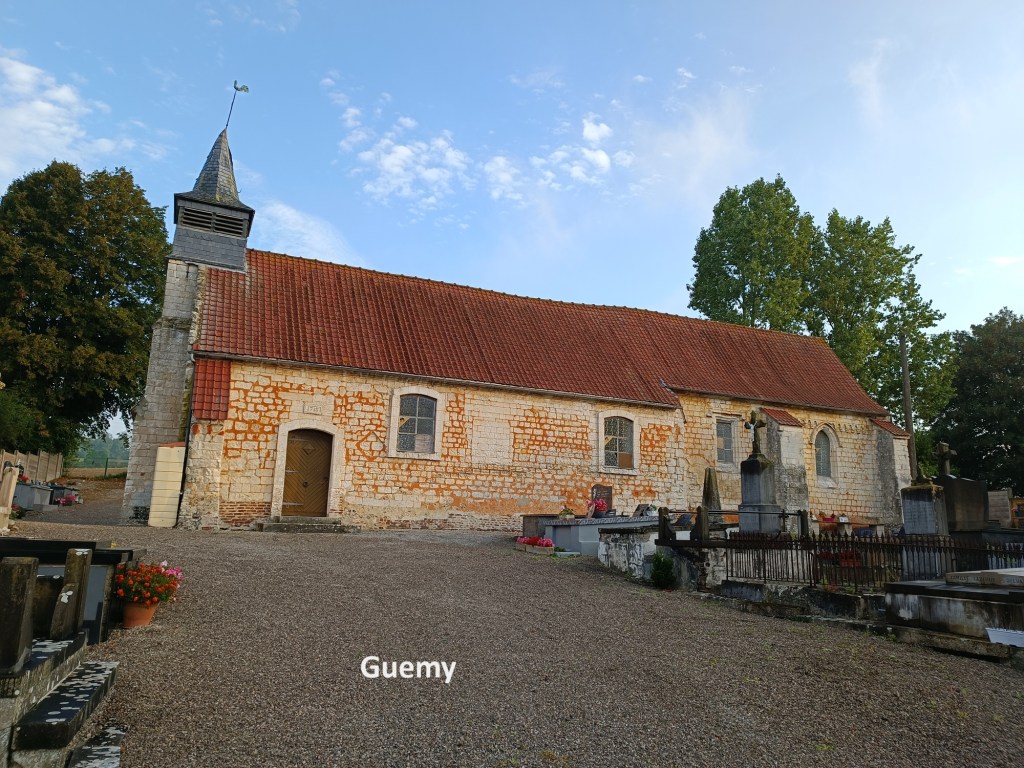
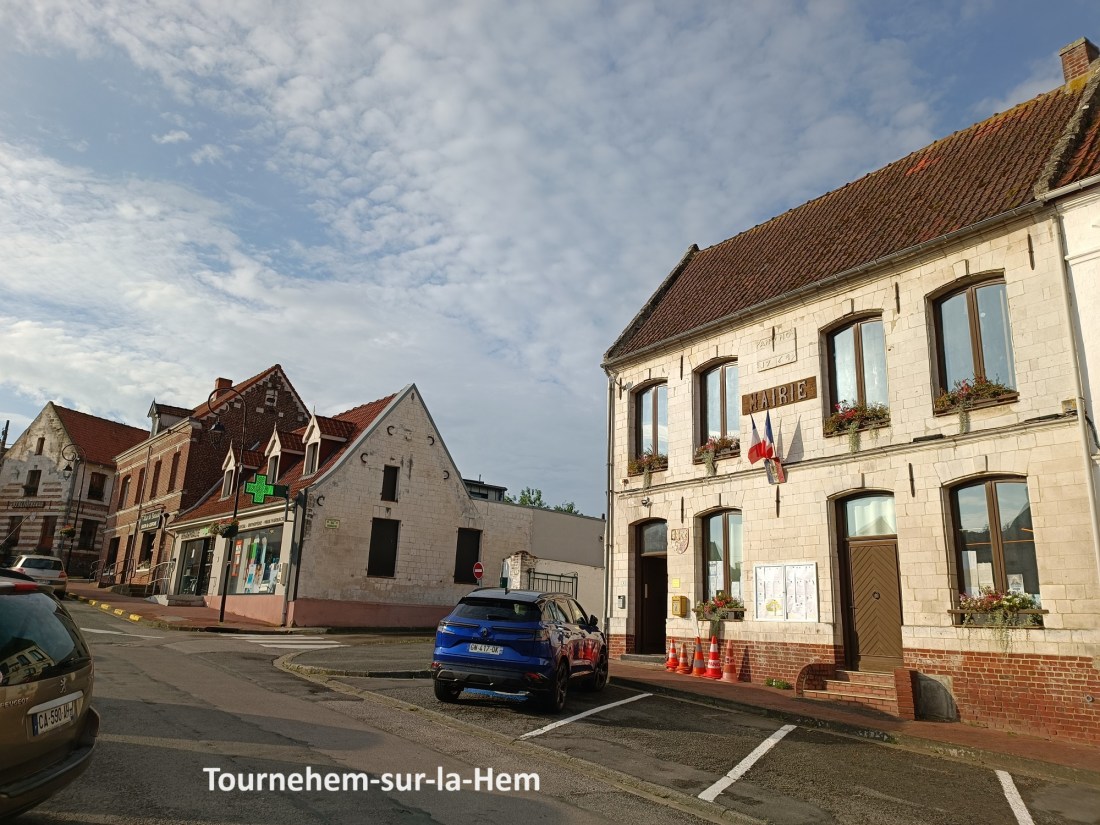
Once I reached Clerques, it got easier. The D217 turns off to the south. In Clerques itself, the schoolchildren were waiting for a bus that would take them to some other nearby village or town for school. They took little heed of the hiker walking in from the countryside and on through the village. I went straight on, along the minor road out of Clerques towards Le Hamel. The road is named the Route de Guemy, as Le Hamel is too small to merit naming a road. By now, the sun was beginning to dispel the clouds, and by the time I reached Guemy, there was even some blue sky. At Guemy, my shortcut rejoined the official route coming back down from the hills, and I followed the road on in to Tournehem-sur-la-Hem.
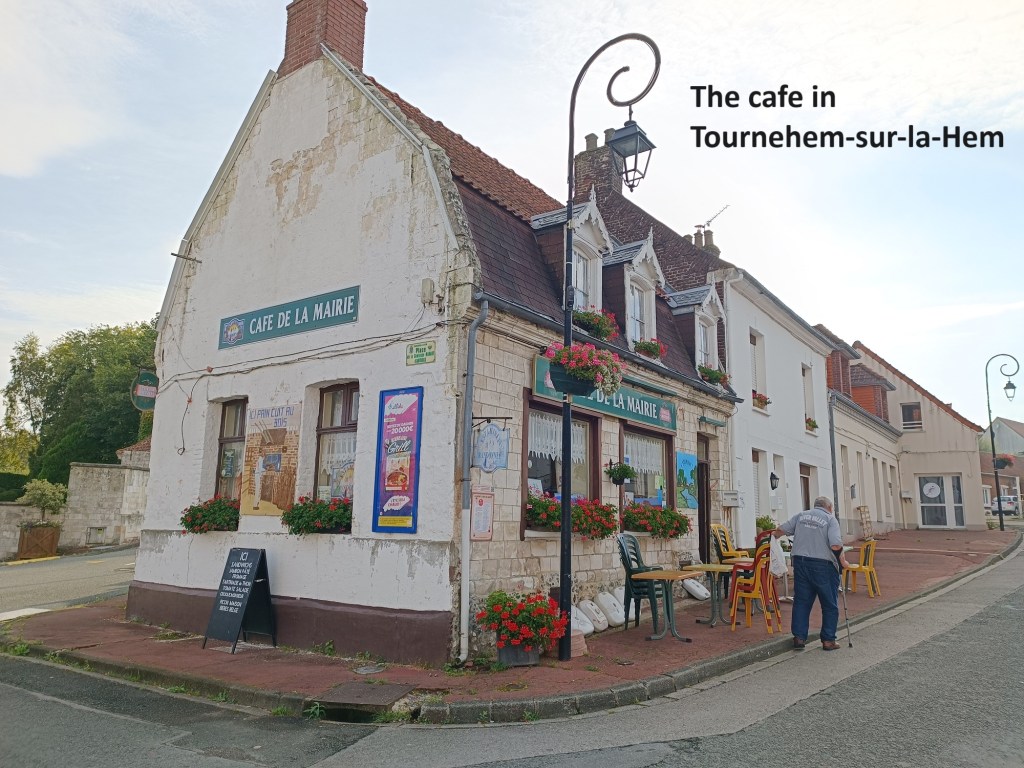
Tournehem is bigger than the other villages that I had passed through, and has not only a boulangerie, but a thriving café as well: the Café de la Mairie in the village square. It is run by a slightly rotund elderly lady who is constantly smiling and chatting with her customers. When I asked, she regretted that she could not offer me croissants for breakfast, but she could do fresh baguette bread with jam. And so Tournehem was where I got my hearty breakfast with lots of carbohydrate to get me through the day. I even got a stamp on my pilgrim passport as well.

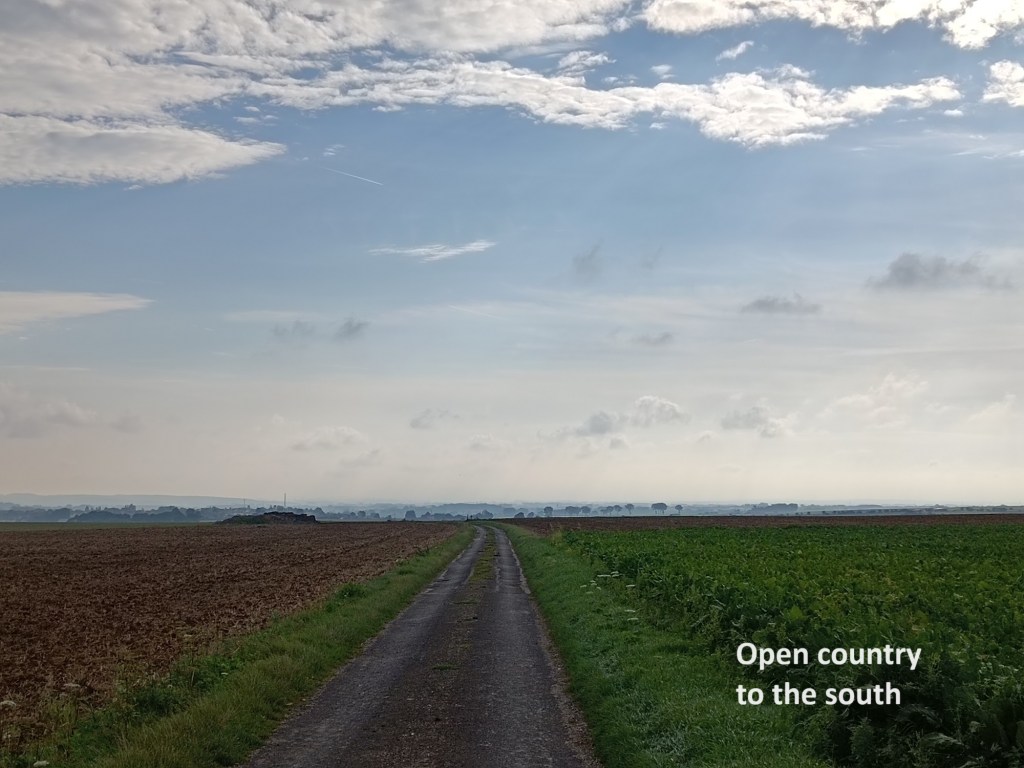
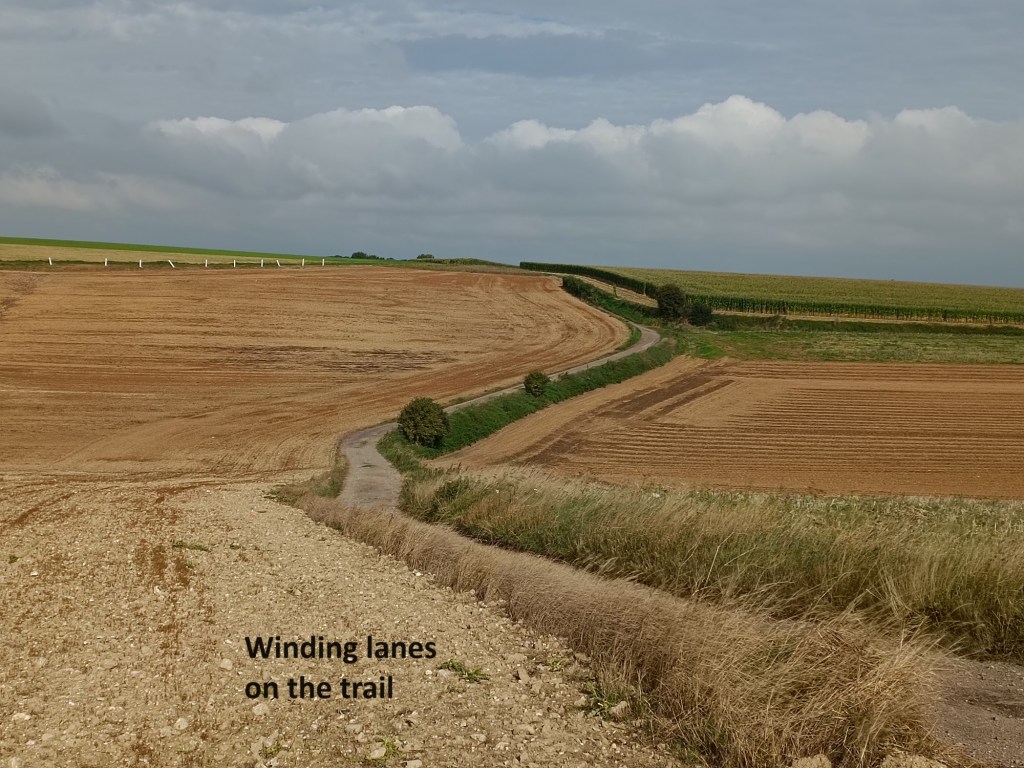
I left Tournehem in bright sunshine, heading out onto the higher ground to the south. The countryside opened up, and I could see the trail stretching out in front and behind me. It is undulating land, and the route would occasionally dip a little, only to rise again as it went over another small hill. It was a mixture of roads, such as the D222, and cross-country tracks. Mostly, those tracks just crossed the roads, and continued through fields.
The official route took a detour at the village of Grand Difques, but I chose to go through the village itself in the hope that I might find something interesting, but there was nothing. I went on over the hill, and down into another village, Cormette. Again, I was hoping I might find something interesting, maybe even a bar or café. But again, there was nothing. I didn’t hope for much in Leulinghem, so I was not disappointed. I reached the road going on into Wisques. The route passed under the major road D942 and went on into the village. On the way into the village, I passed a sign in a garden that said I had come 107km from Canterbury, but I was still 1648km from Rome. Actually, that did not add up. The total length of the Via Francigena is about 2200km, but those figures don’t add up to that.

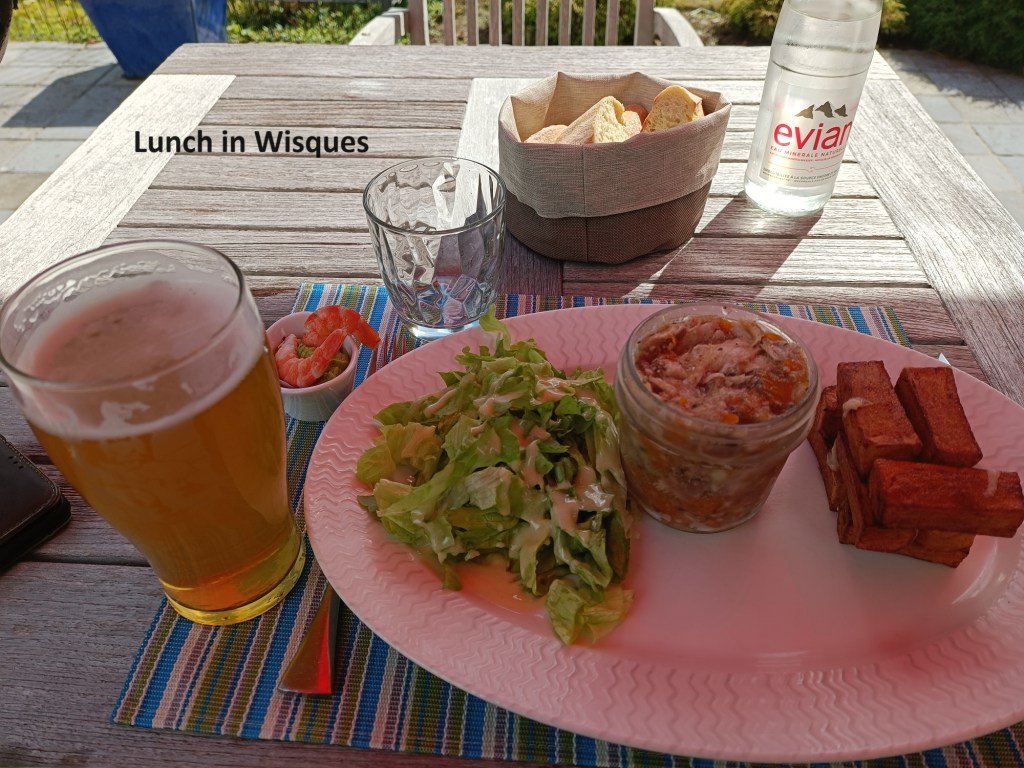
There are two Abbayes on the edge of Wisques, the Abbaye Notre Dame and the Saint-Paul Abbaye. Maybe I should have tried to book accommodation at one of those, but I didn’t and had booked a different place. I passed both of those, and went on into the town. I stopped at the Hotel La Sapiniere that is close to the southern edge of the town. I was just in time before they stopped serving lunch. I enjoyed a traditional dish, whose name I can’t remember, together with a very welcome beer. It was nice to sit in the sunshine and relax over a good lunch.
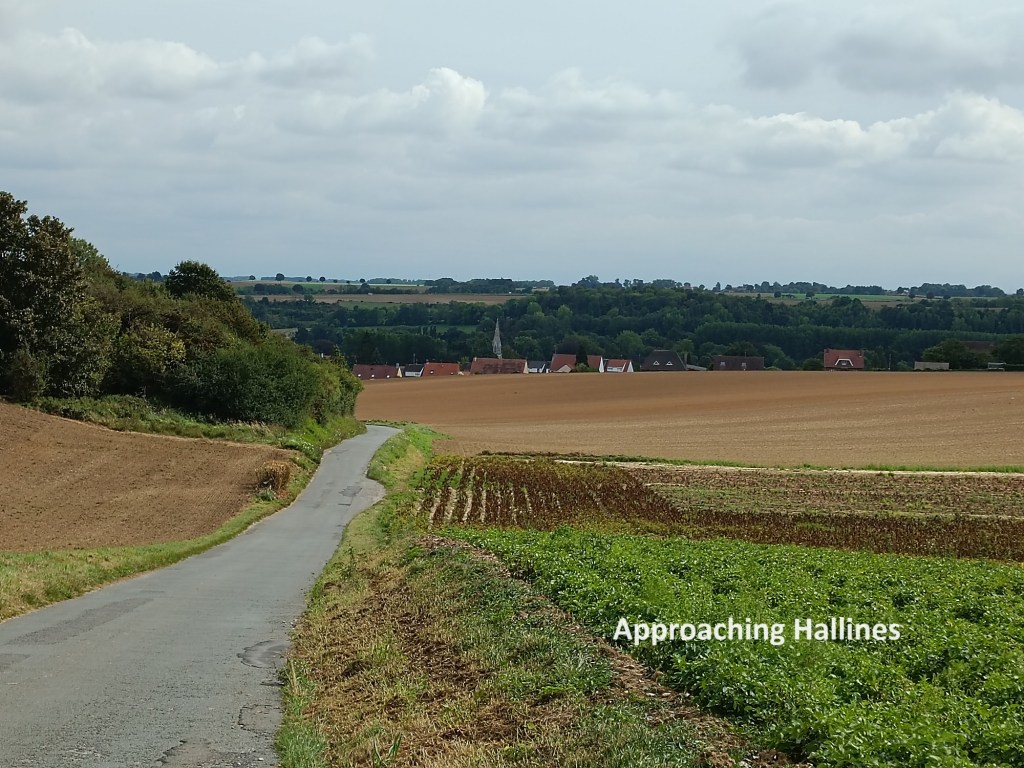
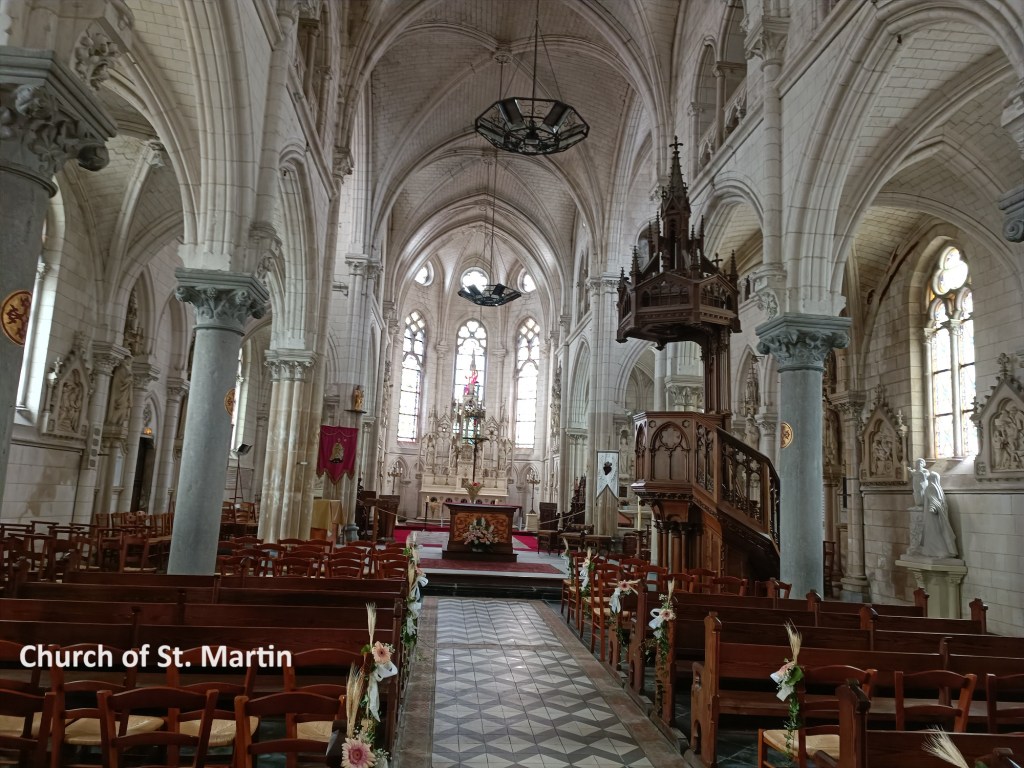
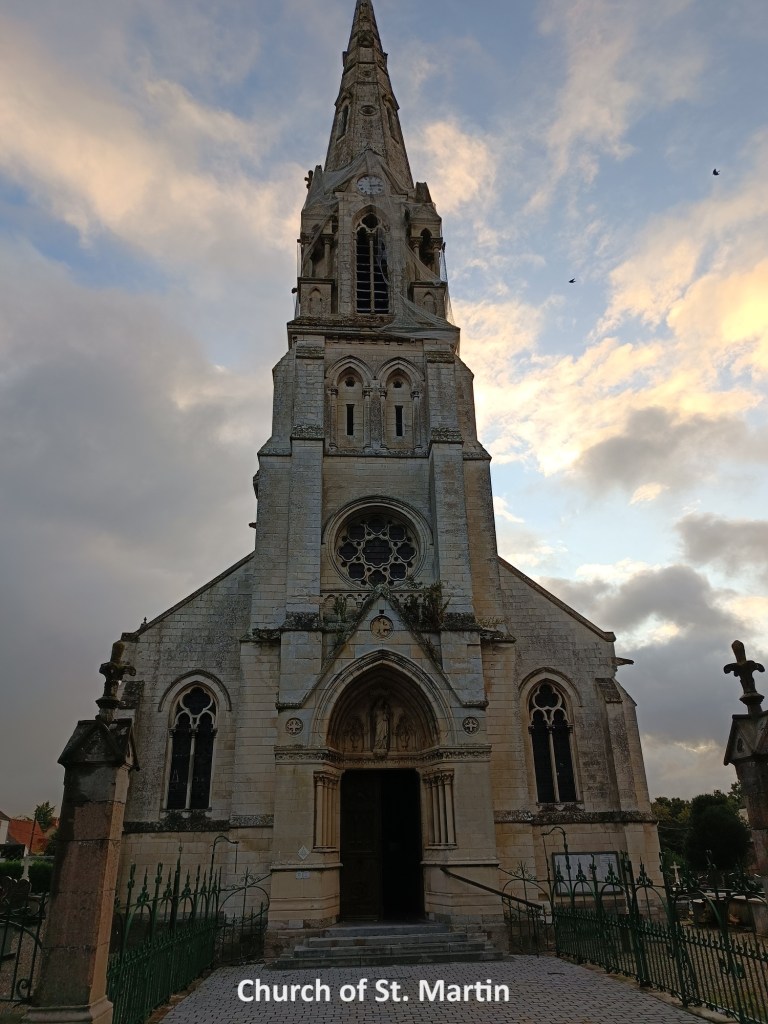
Once I was appropriately refreshed, I went on. There were only a few kilometres to go, but it took a few minutes to get my legs back into the rhythm of walking again. Nevertheless, I made my way through Wisques to the south. I left the official trail route and went down the Route de Hallines into the village of the same name. In the centre of the village, I crossed over the D211, and went straight on. There is an interesting church in the centre of Hallines, the Church of St. Martin, built in the 19th century. It has remained in good condition, not like others that I would come across later on. There was a bit of a disconnect between Booking .com and Google as to how to get to my accommodation, but I decided to go with the former, which turned out to be the right choice, and soon I was there..
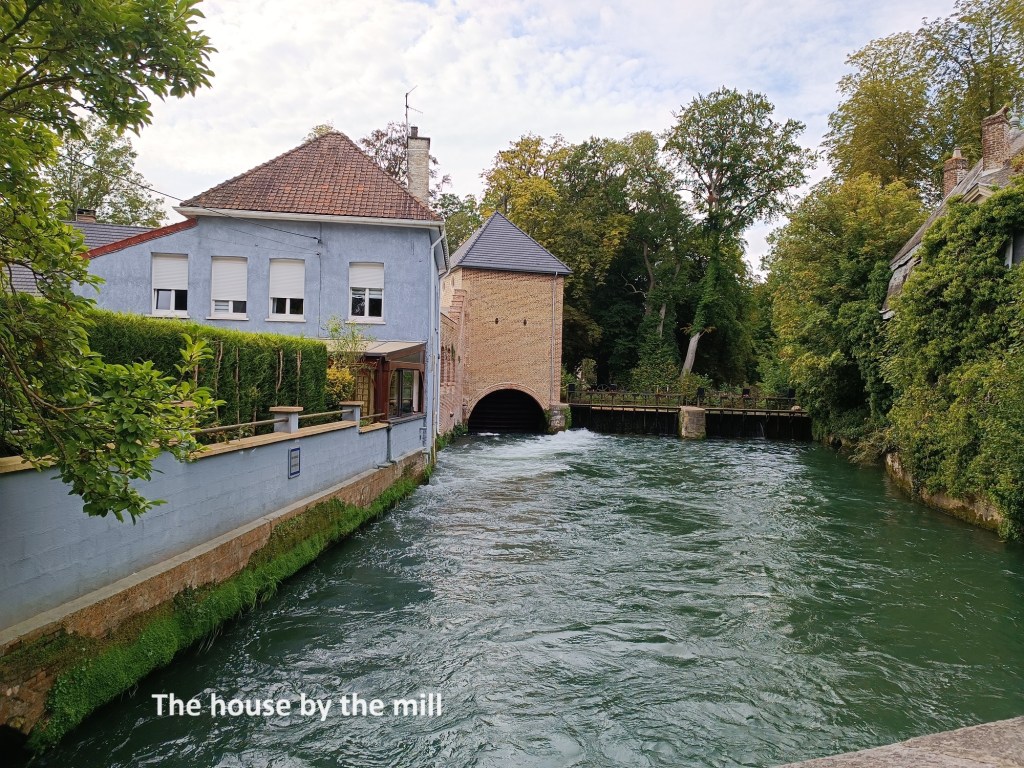
The accommodation was a B&B in an old mill building. The lady who runs it appears to do so completely on their own, except for a black cat which was lazing in the sunshine when I arrived. She could not have been more helpful than she actually was. Thanks to her, I enjoyed a good evening meal before enjoying my well earned rest and sleep for the night.

 Walkingman