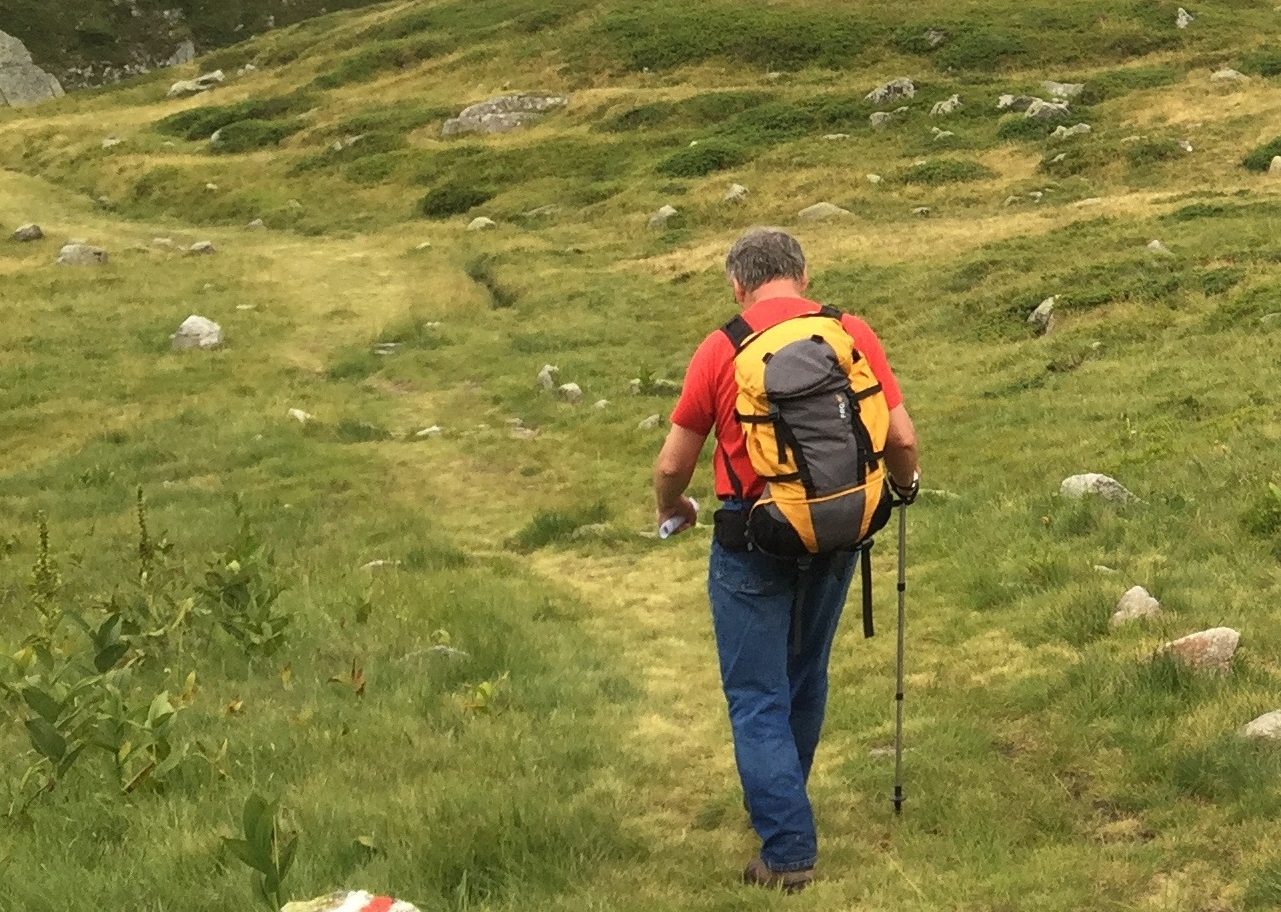
There was a heavy dew during the night. I had left a damp t-shirt and a damp towel out to dry, and now in the morning, they were very wet. But no matter, there was a dry day forecast, and if I hung them off the rucksack, both t-shirt and towel would dry easily.
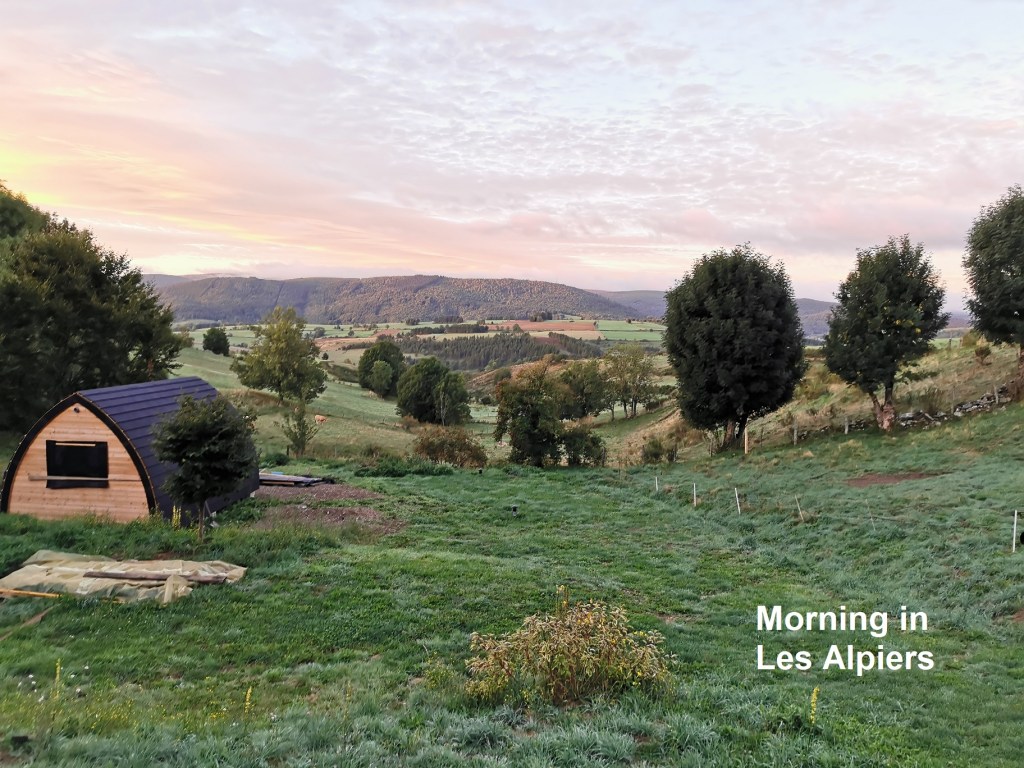
I also had a more serious problem. I had made an error in my accommodation bookings, and I had booked a place for the next evening that was just over seven kilometres away from les Alpiers. That was far too short for a day’s walk. We had the option of cutting the day short and stopping at the place booked, or we could go on farther to Pont de Montvert. It only took a short discussion to decide on the latter option. It would be 21km of walking, but that should be no problem. After six days on the trail, my mojo was in good order, and I had no worries about facing the walk to Pont de Montvert. The only worry was that I had no accommodation booked there, so we might find ourselves without a roof over our heads when evening came.
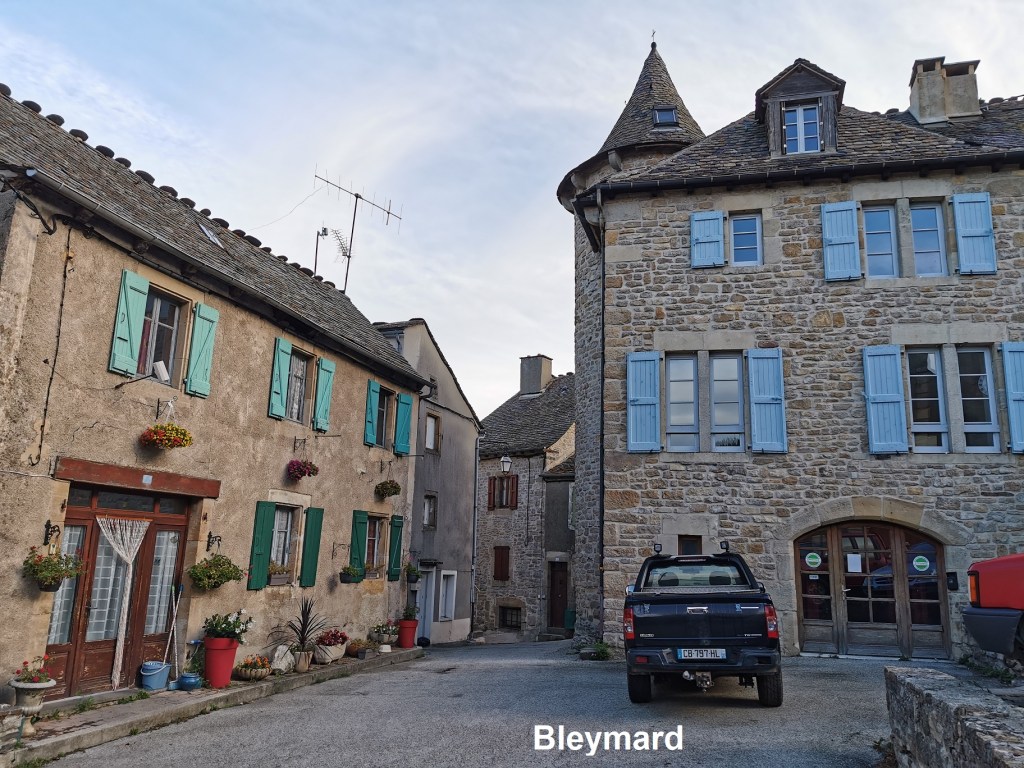
After a hearty breakfast in the gite, and with our water bottles full, we set out. It was only two kilometres of easy walking to the village of Bleymard, where we stocked up on bread, cheese, and sausage for a break later on. It was still early morning when we left Bleymard. By comparison, Stevenson only left the village as night was falling, and he camped in pinewoods on the slopes above. He found the experience so pleasant, that he left the money equivalent to the charge for a night’s lodging on the grass before he went on his way. We had no such plans, intending to go much farther.
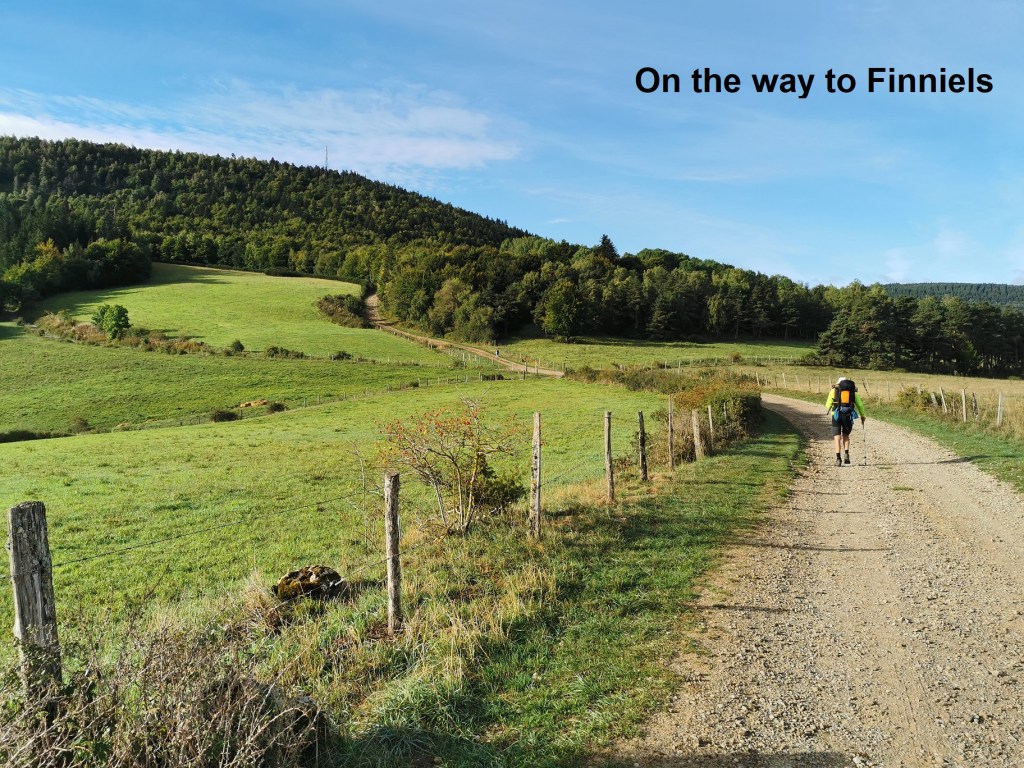
Stevenson describes the route out of Bleymard as “an ill marked stony drove-road”, but in the beginning we found it quite pleasant. There is a sharp ascent initially, but it is brief, and we were soon out into the countryside. There then followed a stretch of the route past grassy fields, ascending gradually, before going into the forest once more. At that point, the route becomes steep and stony, though not ill marked as Stevenson describes it. We passed other walkers, including Jim, whom we had not seen for several days. He too was making for Pont de Montvert today. Eventually we emerged from the forest onto a road close to the ski station of Mont Lozere. There was a group there with a donkey, only the second we had seen on the entire route so far. After the route emerged from the forest, it was only a flat short walk to the ski station. Although it was early in the day, I was thirsty, and with the restaurant open, Joff got the beers for both of us.
As Joff and I sat there, Jim came up to the ski station, and laughed at my having a beer so early in the day. With more time than is given when just passing other walkers, he explained where he had been. At Langogne, he had taken bus and train back to Le Puy. He had initially parked his van in Le Puy and was worried about leaving it in the public car park there. So he drove it down to Langogne and re-joined the route. As we talked, and compared notes, it turned out that Jim is a walker of much experience, having walked the Camino de Santiago from Amsterdam, and the entire Via Francigena.
From the ski station, a line of stone pillars leads the way towards the summit of Finniels. Stevenson must have also come this way, for he mentions exactly that line of pillars in his narrative. He describes it coming to an end at the col, and says that he went directly onward, so it is doubtful if he went to the summit of Finniels. We did, heading westwards from the end of that line of pillars, on a gentle slope, to reach the summit. It was cooler at these heights, and I was forced to put on a fleece against the cold. At 1699m, Finniels is the highest point on the entire route, so we allowed ourselves time for some congratulatory photographs.

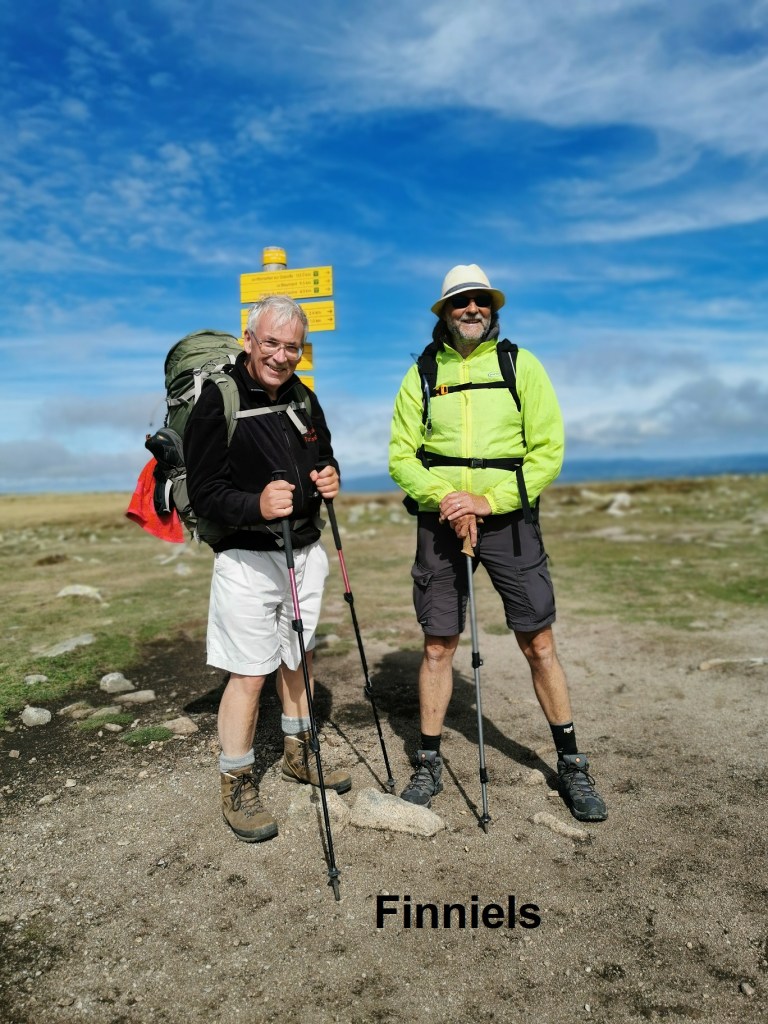
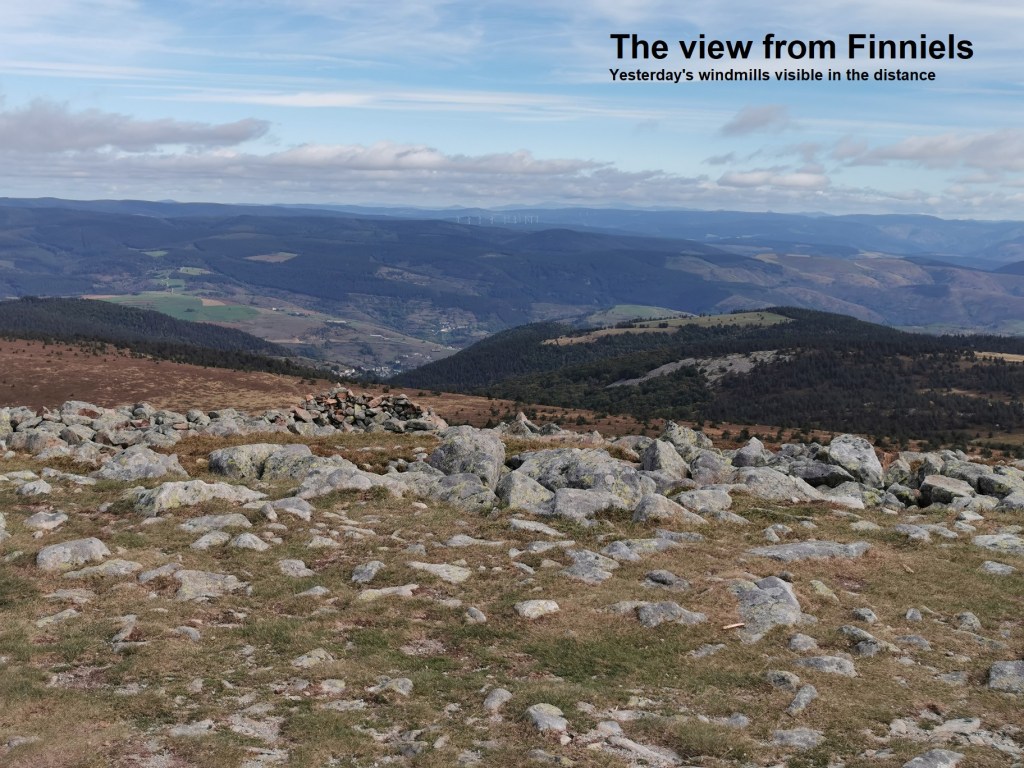
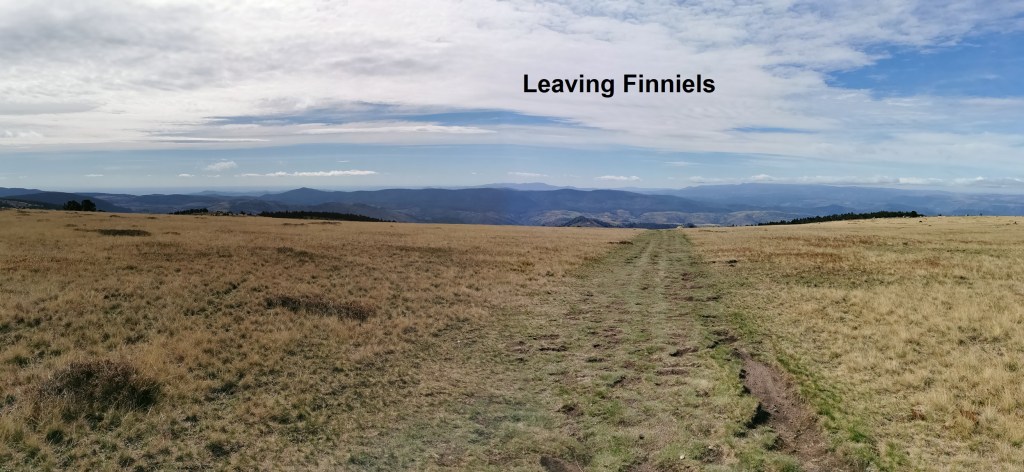
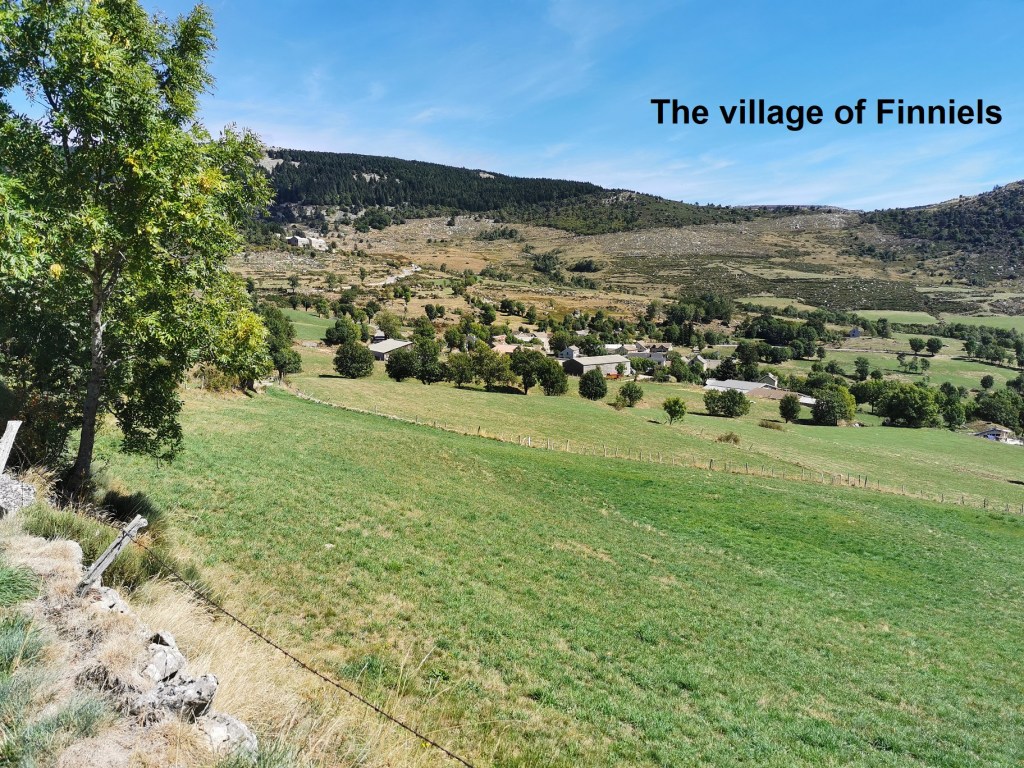
The descent southwards from Finniels is gentle at first, but then more rapid. We stopped a little below 1500m where we were back in warm sunshine. It was time to take that break and enjoy the provisions bought in Bleymard. We did not stay long, but soon went on our way again. It did not take long before the village of Finniels came into view. We could also see vehicles labouring their way on the road up to the pass and the ski station on the northern side. In Finniels, there was a water point, so a very brief stop allowed us to slake our thirst. There then followed a long descent through rocky terrain to reach Pont de Montvert. It seemed to go on forever, but is in fact just five kilometres from Finniels village to Pont de Montvert. Most of that distance is a very gentle descent, but the last kilometre is steep.
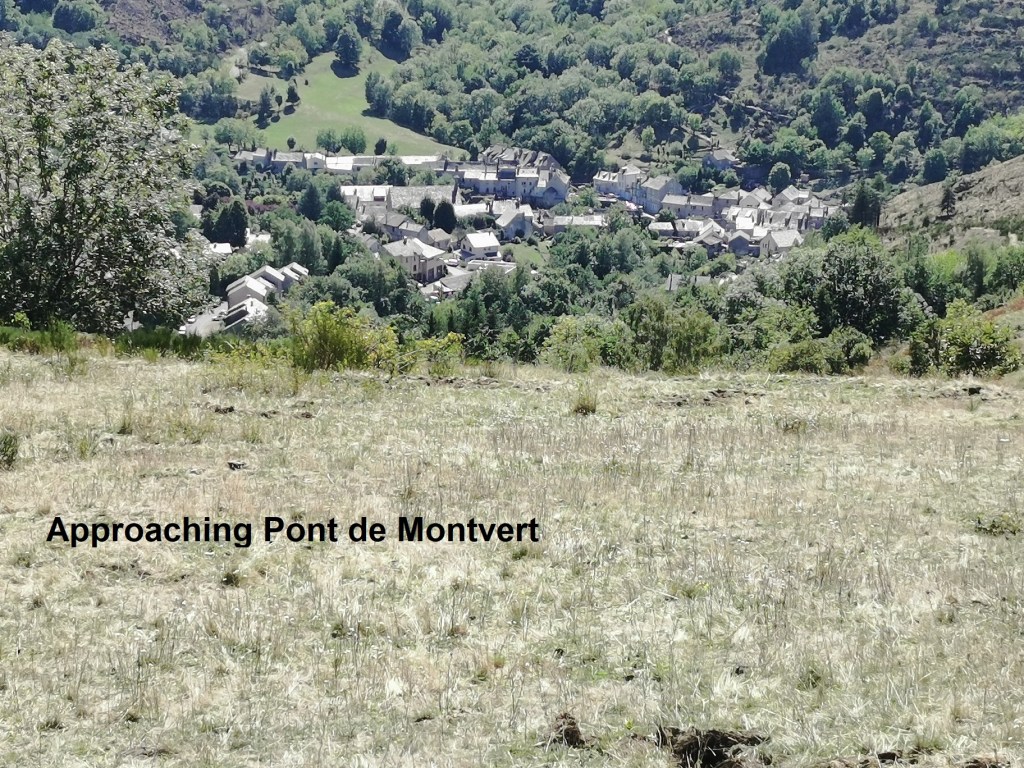
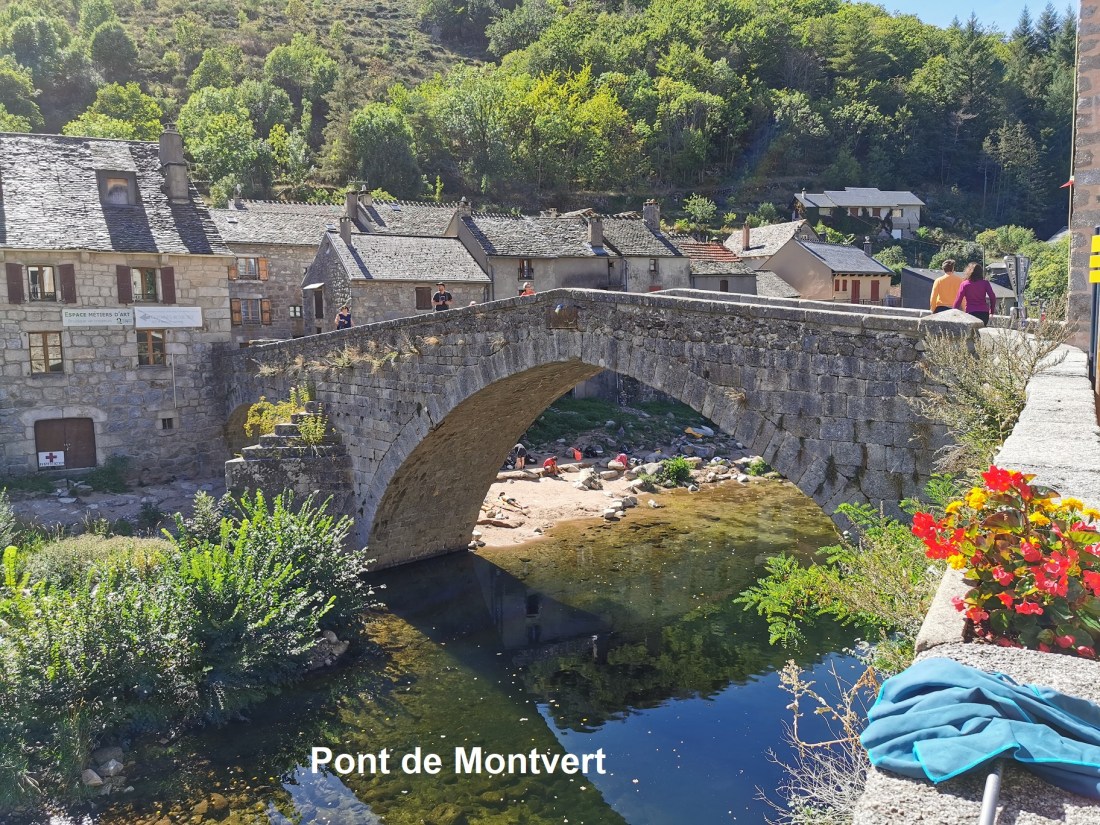
Pont de Montvert features prominently in Stevenson’s book. We had now left the region of Gévaudan behind us, and we were into the country of the Camisards. The Camisards were a Protestant sect, centred on the Cevennes. After the Edict of Nantes in 1598, Protestantism was tolerated in France, but that edict was revoked in 1685. There followed a crackdown on protestants throughout France. That crackdown involved executions and deportations of people who refused to give up their religion. Things came to a head in 1702, and Pont de Montvert, a small village in a remote valley of the Cevennes was one of the flashpoints. Stevenson recounts the events in detail in his book. A group of about sixty people came to the residence of the Abbot and politician Francois du Chayla. The abbot was holding prisoners at the residence, and the crowd demanded their release. In the confusion, one of the protestors was shot, and the rest stormed the residence. The abbot initially escaped, but was hunted down and killed, while the prisoners he was holding were freed. There followed a vicious war, partly of a guerrilla nature, lasting until 1704. Even after that, the region was a troubled area with guerrilla actions and reprisals until peace was finally achieved in 1715, though the edict outlawing Protestantism was not revoked until 1787. The house of Du Chayla still stands, and a plaque on the bridge over the Rieumalet, a tributary of the Tarn, tells the story.
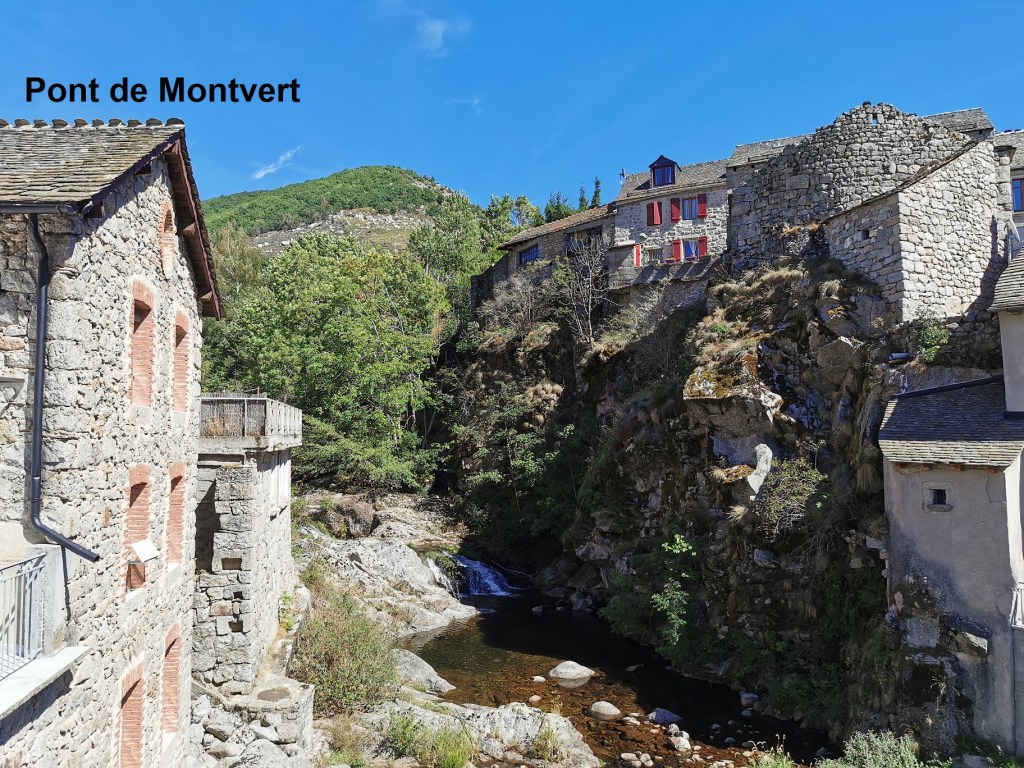
However, I had more pressing issues than the history of the Camisards to worry about when we reached Pont de Montvert. We had nowhere booked to stay that evening, as I had cancelled the original booking, which was at the ski station, and we were now about fifteen kilometres farther along the trail. The tourist office in the village was closed when we got there, but it would open later. There was also a bar nearby, so waiting was not unpleasant. We watched the traffic struggle as motorhomes worked their way through the narrow streets of the village. Jim arrived while we were there, and once again was amused to find me having a beer. As soon as the tourist office opened, I was in there, and asked the young lady there if she could help me to find a place for that evening. She rang a couple of places, but they were fully booked. She asked me if I would mind staying somewhere about one kilometre outside the village. I told her that would not be a problem. So she rang a gite in the nearby community called Viala. Yes, the owner could accommodate us.
“Il parle bien le français,” I heard the young lady say to the proprietor. And so it was arranged. With that done, I went back to Joff at the bar, and finished my beer.
What the young lady in the tourist office had not told me was that the one kilometre walk to this gite was uphill on a rocky path to Viala. I might call it a suburb of Pont de Montvert, if villages have suburbs. Viala is not a separate village, but a small community of just a few houses. The path up the hill was not too steep and the distance was not long, so we soon arrived there. The gite was luxurious, with far more facilities than we would ever need, and very reasonably priced. We washed, showered, and prepared for the next day. We planned to hack the route the next day, taking a slightly shorter route than what the guidebook advised, so studying the route was necessary.

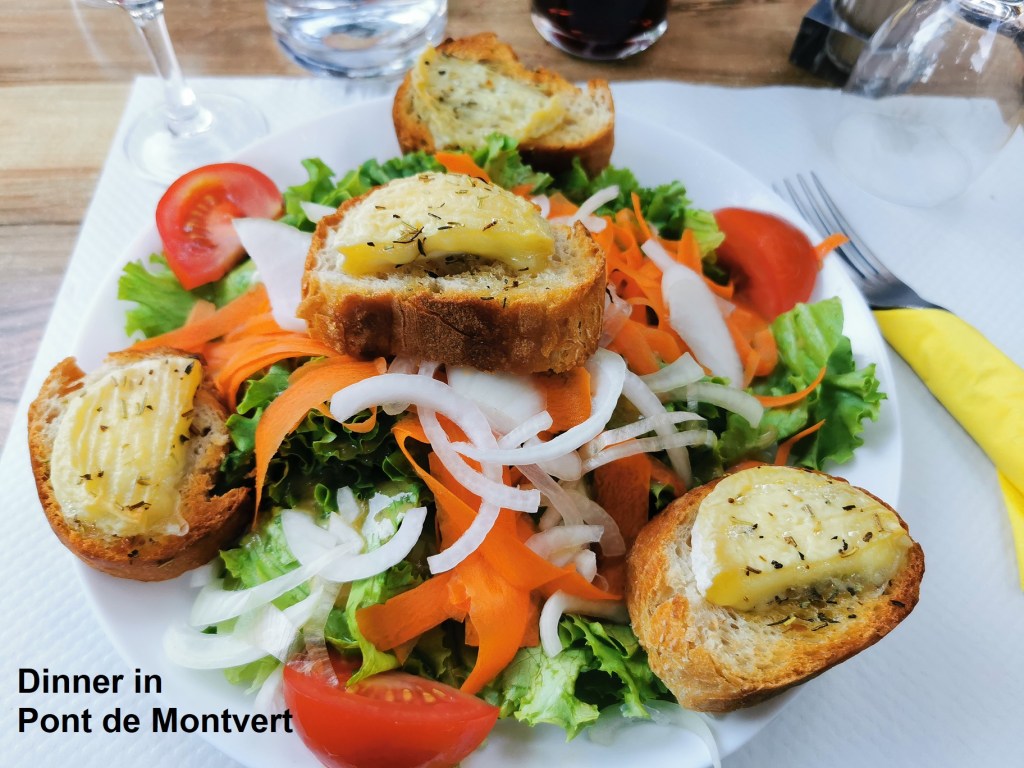
With that done, we went back down the hill to the village and dinner. A good dinner in one of the village’s restaurants satisfied our hunger and had us ready to face the next day. We needed our headtorches going back up the hill in the dark, and turned in. It had been another good day.

 Walkingman