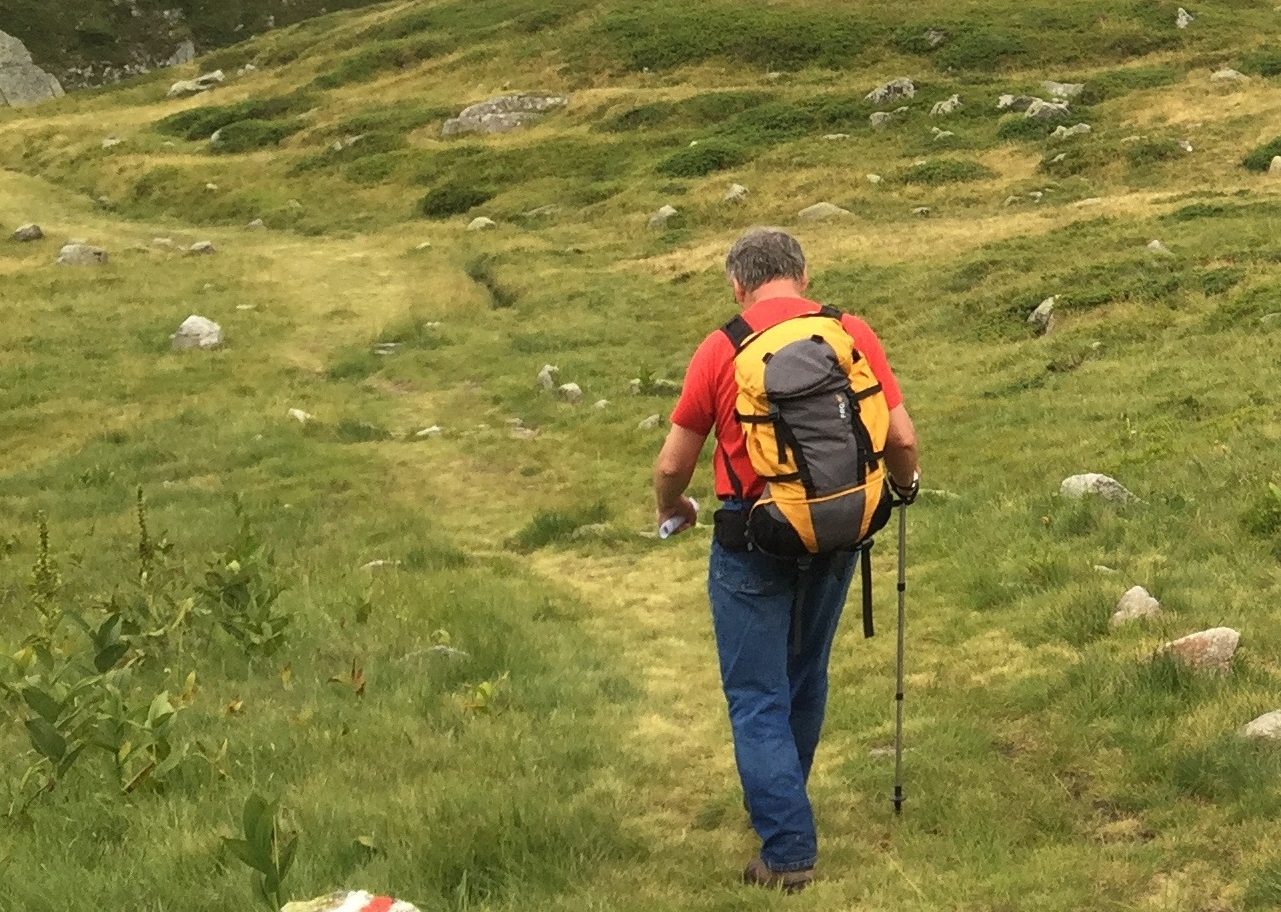
We breakfasted early next day. Breakfast was a do-it-yourself affair. The food and everything else were there, but just had to be prepared and brought to the table. Then the crockery had to be washed and put away, and that was it. We were soon ready to get on the trail again. It was a cool autumnal morning as we set out, first going past the monastery and its chapel, and then through a countryside that seemed to be just waking to the day.


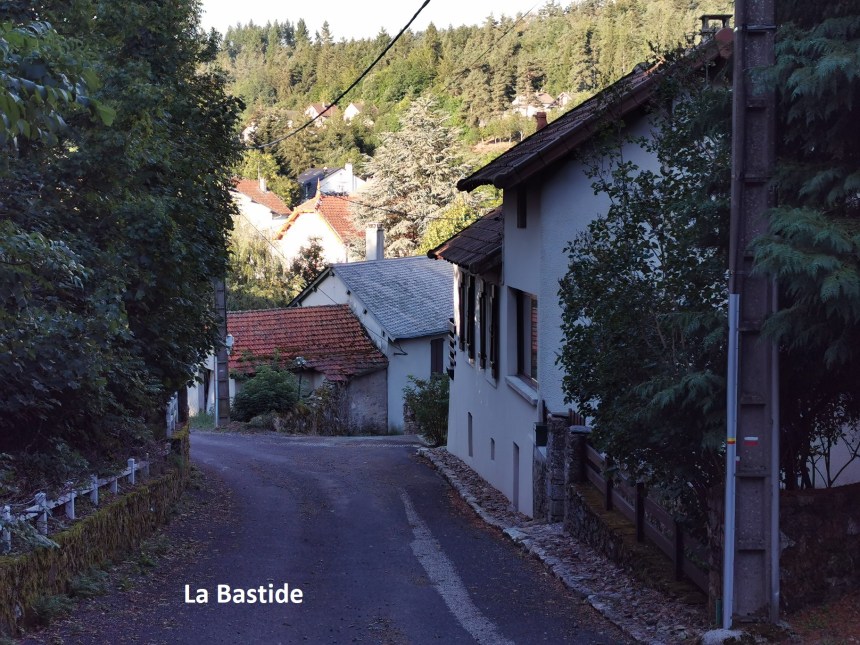
It was not long before we were coming into La Bastide. As we went through the little village, we could see people emerging from various places of accommodation to start their day’s walk. Joff and I already had momentum at that stage, even though it was still quite early in the day. We went quickly through the village without stopping. We passed the small railway station, crossed the tracks, and started up the hill on the other side. Britain’s Queen Elizabeth had died the previous day, and I remarked to Joff that the flags on the village Mairie were not lowered. It seems that different countries have different priorities.
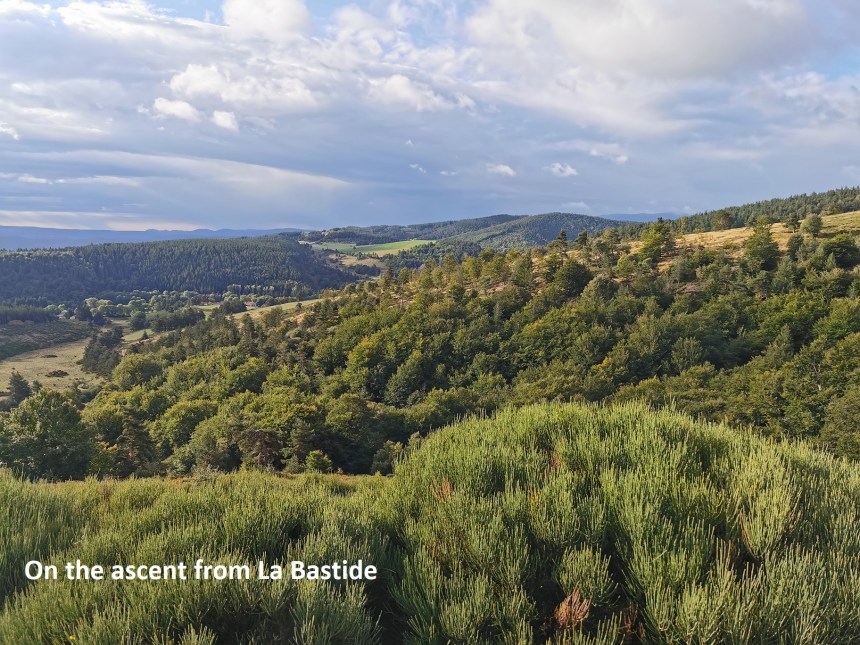
It was a long but gentle track upwards and we made good time, soon reaching the plateau at the top. Just like the previous day, there were several cars parked on the forest track, and we saw mushroom pickers with their bags and baskets. However, these woods were coniferous, whereas yesterday we had been going through deciduous forests. I do not know how much difference that makes to the mushrooms, but I would expect that the leaf mould from the deciduous trees would favour different mushrooms from those that would come from a bed of pine or spruce needles on the ground. I can only presume that the pickers know what they are doing, though none seemed to be carrying any great quantity of mushrooms.
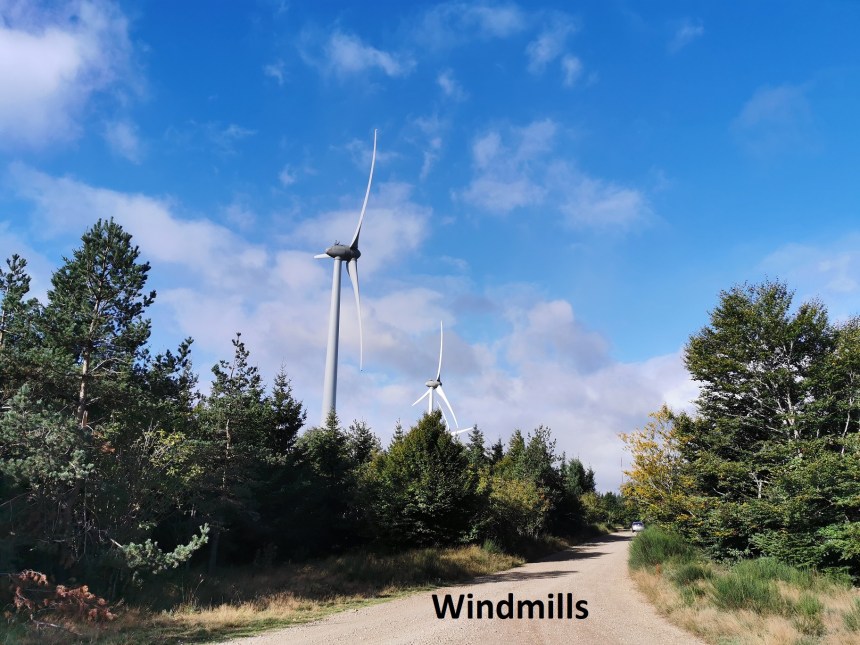
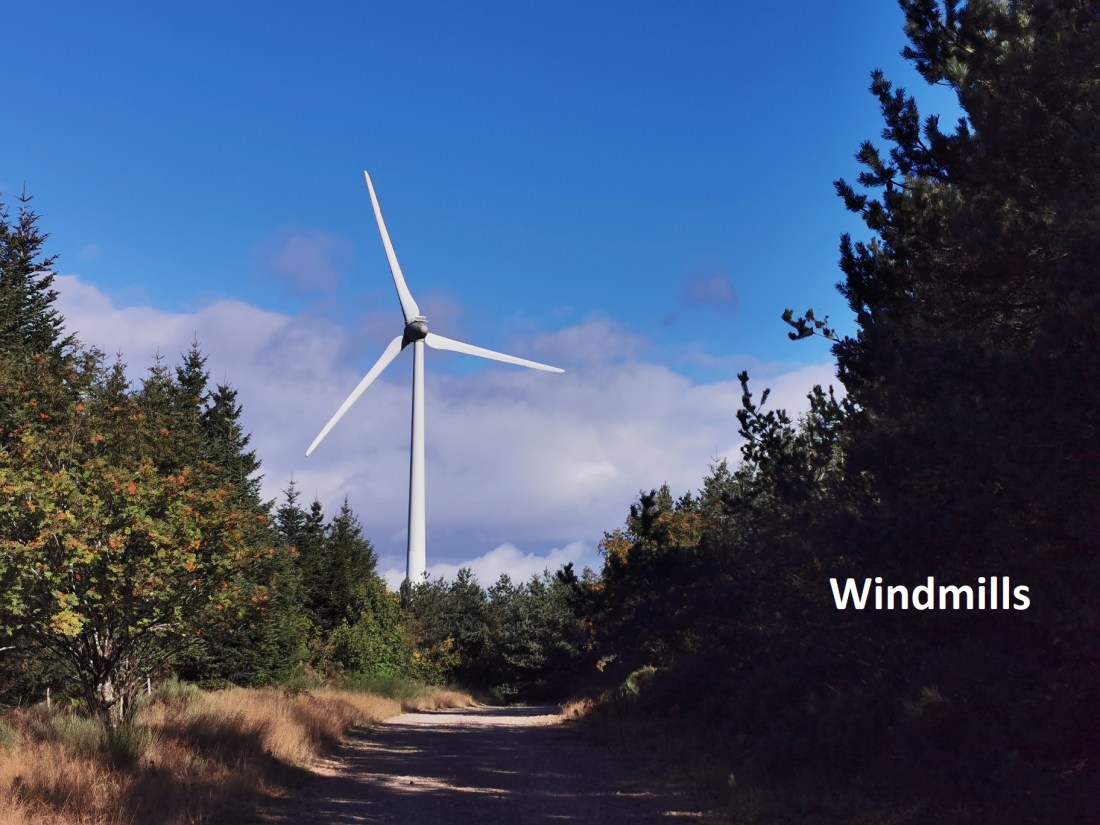
A line of windmills stretches along the top of the mountain. The large blades provided a constant whoosh sound as the background to our walk. They truly are majestic constructions. We wondered if some of the vehicles belonged to engineers servicing the installation.
And then we found ourselves descending again. The forest track eventually joined a road, which continued on downwards until we reached the village of Chabalier. As we entered the village, a young lady was wheeling a child in a buggy on the road. One of the elderly residents asked her if she was there for the weekend, to which she replied that yes, she was. It sometimes seems that these small villages face a shortage of younger people, with their residents aging all the time.
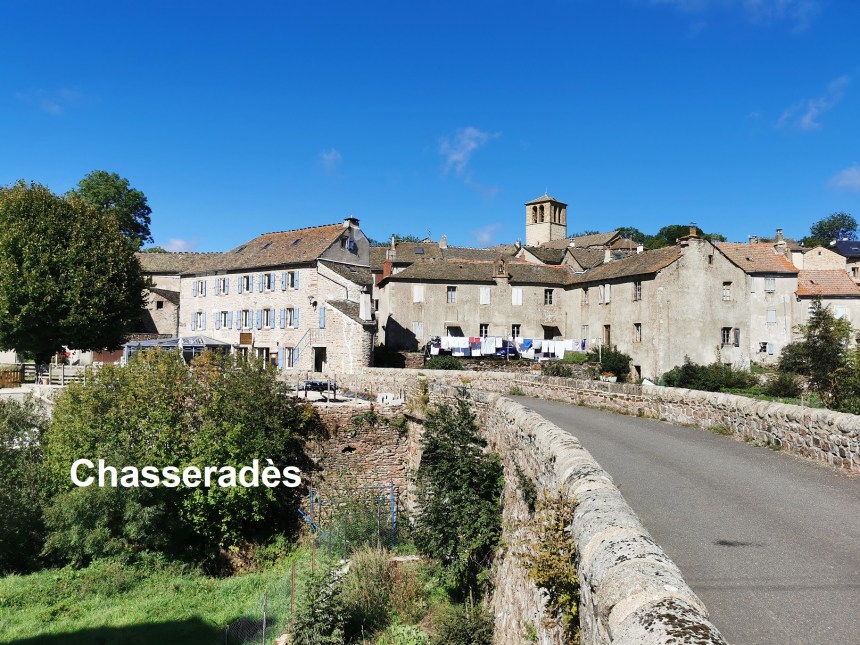
We rested briefly in Chabalier, time enough for another group to pass us. When we set out again, they were well ahead of us. But we caught up with them two kilometres later close to the railway station of Chasseradès. A lady in the group asked where we were from, and on hearing that Joff was from England, expressed her condolences on the death of his queen. Joff hastily replied that he was no royalist, and I jokingly quipped that it was shameful that the flags at La Bastide were not at half mast. And so we all good-naturedly continued on to Chasseradès itself. Along the way, the lady told me that she was from Metz, and that she and her husband lived in the western Pyrenees. We conversed in German, which for someone from Metz is probably easier than in English. Entering Chasseradès, Joff and I parted from the gat group, wishing them well for their continued journey. We passed the hotel just outside the village in the belief that we would find a restaurant in the centre. But it was not to be. The place marked as a restaurant was in fact a gite, and like so many on our trek, it was closed until late afternoon. If we wanted lunch, we would have to go back to the hotel and this we did.
Such is the influence of Stevenson’s account of his travels that the hotel stocked one beer called La Stevenson, and another called La Modestine. We were two early for lunch as it was not yet noon, so we sampled La Stevenson. It was good, but not special. We followed this up with lunch, eating heartily. And then it was time to be on our way again. Stevenson stayed overnight in Chasseradès, but we were going farther.
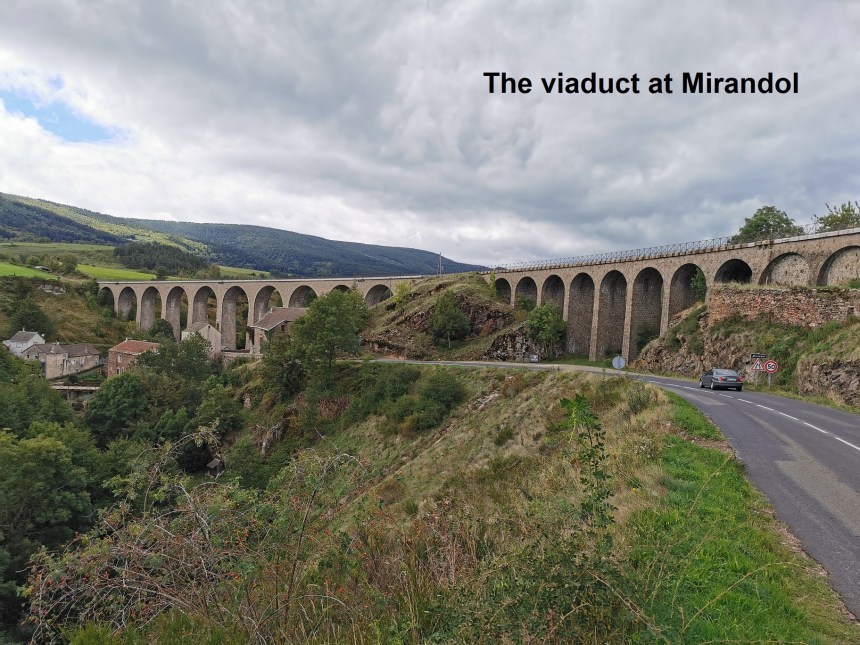

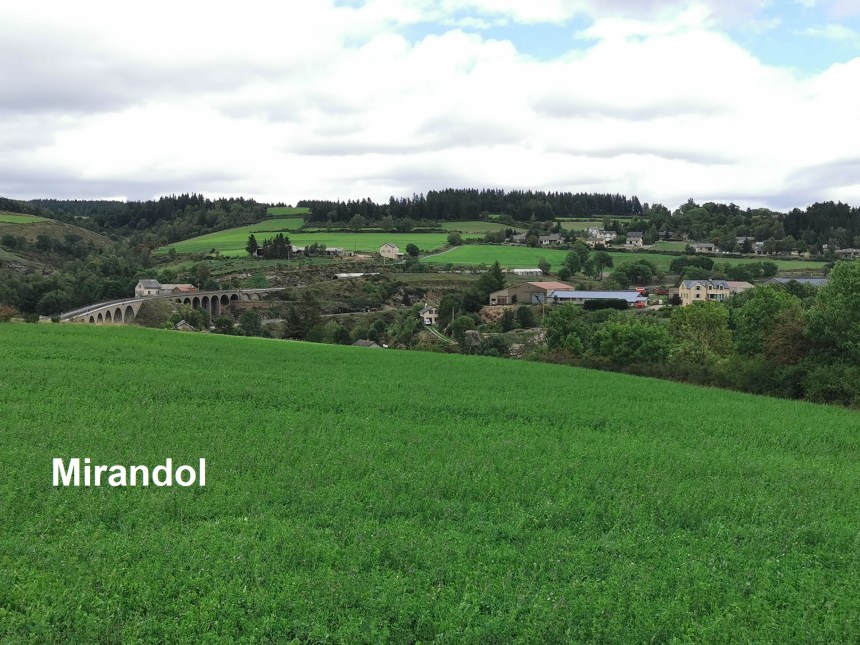
From Chasseradès, the trail goes to Mirandol, where it goes under a magnificent viaduct. This railway line is a working line, unlike the one we passed at Arquejol, and there are regular passenger services to places as far away as Nîmes. But our journey was at a slower pace, and from Mirandol, we began the long ascent through the Forêt de Goulet. The ascent is gradual at first, and through fields, not a forest at all. But it soon becomes steeper as the route enters the forest. Though as Joff remarked, it was not as steep as the cathedral steps in Le Puy. Still, it was a strenuous work-out going up the path through the forest, and I was glad that I was doing it on a full stomach. Stevenson remarked that over the summit of Goulet, there was no marked road, but things have improved since then. We emerged from the forest patch onto a road that took us to the highest point of our day at about 1360m. From there, it was downhill, gradually but steadily. Eventually we came into fields, and then the village of les Alpiers came into view. It is a small village, with no amenities for the traveller. But it does have a gite, and that was out destination for the day.
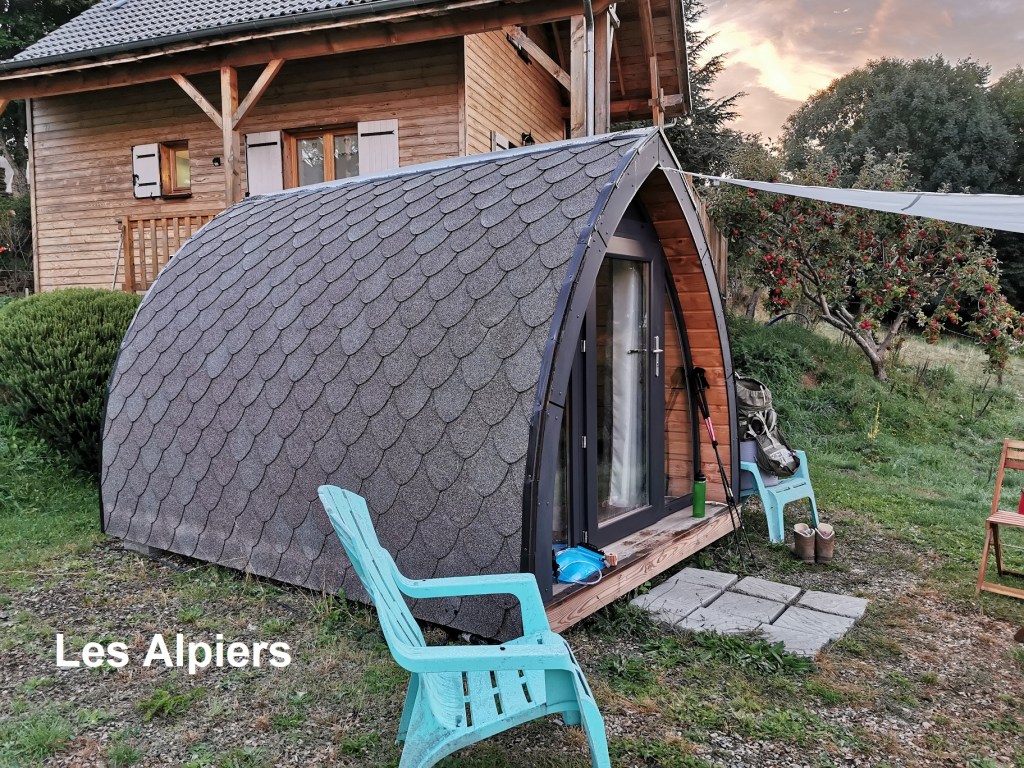
Our accommodation at the gite was a small cabin, that reminded me in its shape of the Gallerus Oratory back in Ireland: an arched frame with gable ends and just enough space inside for two beds. We showered in the accommodation building a timber framed cabin beside ours. And then we had time to site out and enjoy the evening sunshine before dinner.
Dinner itself was in the main house of our hosts. Altogether we were ten people, including the group that we had met at Chasseradès. With the dinner and wine, the conversation flowed, straining our knowledge of French somewhat, but in a friendly way. The camaraderie of walking overcomes language barriers. In the darkness, then, we went back to our little cabin after dinner and slept soundly.

 Walkingman