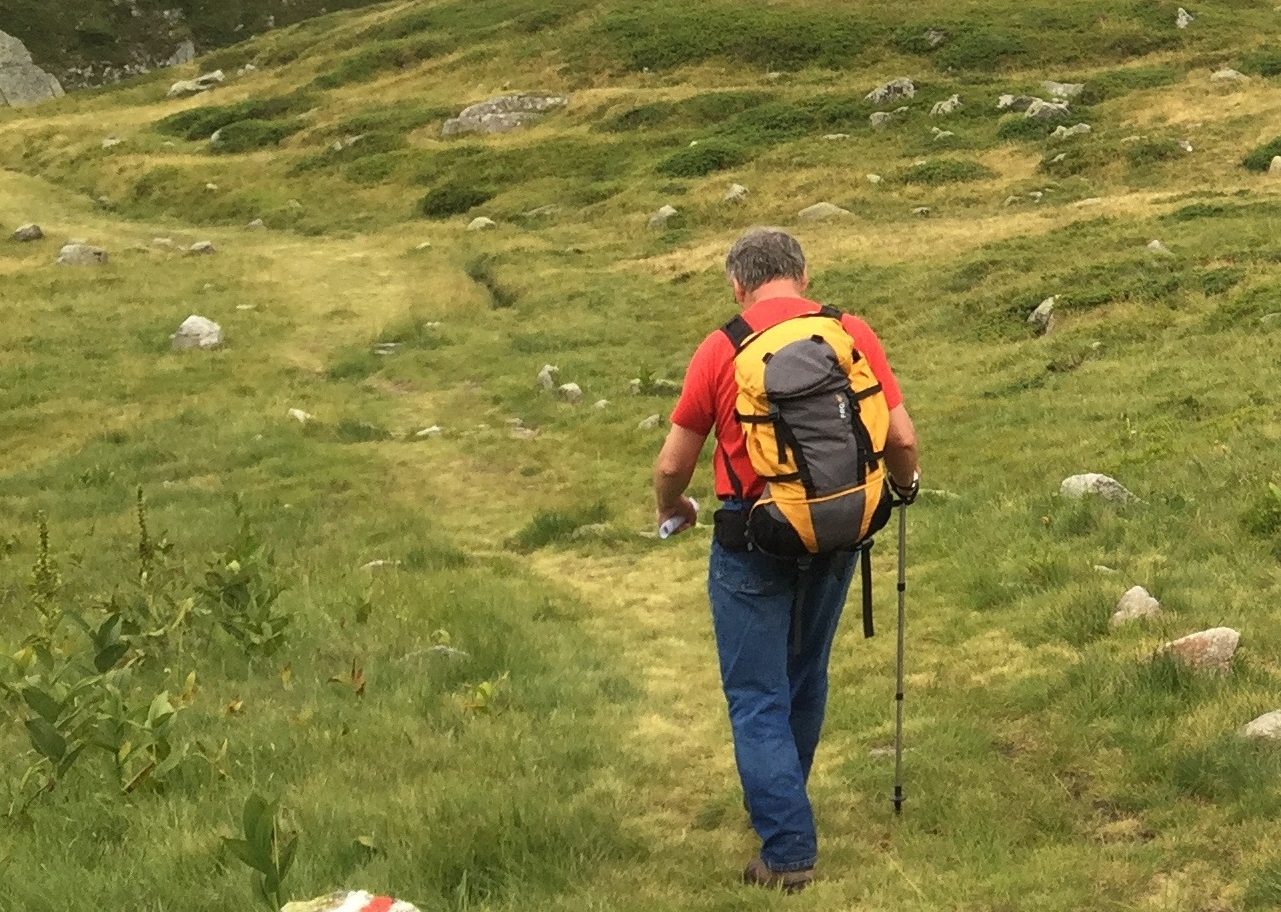
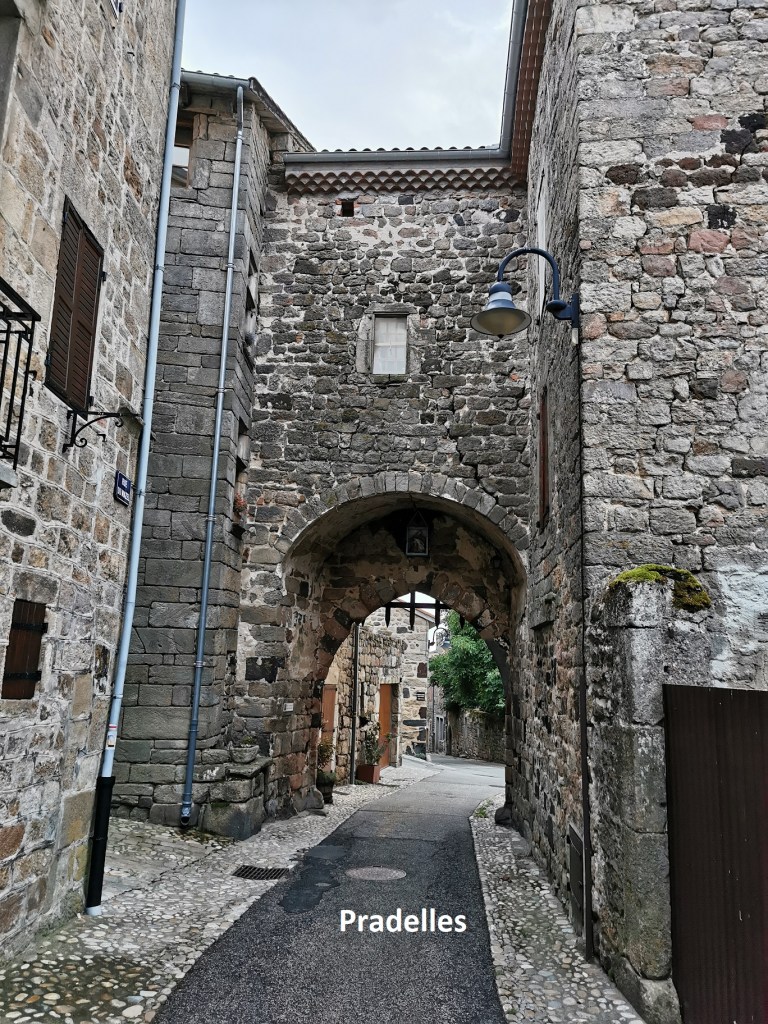
We had agreed with the proprietor of the gite that we would have breakfast at seven o’clock in the morning. We arrived down to find the two ladies we had met the previous afternoon. Shortly after us came the two younger ladies that we had met over dinner in Le Bouchet-St-Nicolas. We had not seen them arrive at the gite. They were now on the last day of their walk, since they were only going as far as Langogne. We all ate a hearty breakfast, and then Joff and I prepared to go. Once again, we were on our way before eight o’clock, wishing the other guests well in whatever they had planned for the day. The route out of town was straight across the square from the gite, through the older part of town., past the graveyard and out into the countryside.
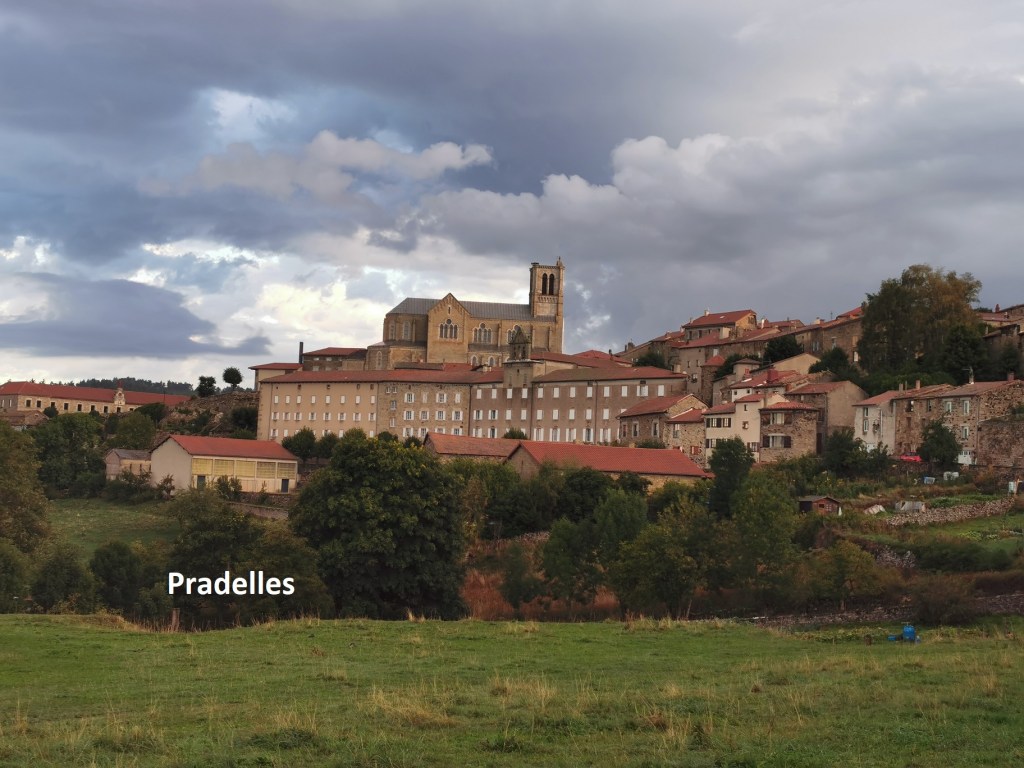
After the thunderstorm of the previous evening, the sky was still a light grey. The clouds had not yet fully dispersed. The ground underfoot was damp, though not really wet. To the north of our route, we could see in the valleys low cloud waiting to be dispersed by the sun.
The distance to Langogne from Pradelles is just six kilometres. The route is flat at the beginning before descending slightly, and then it is flat again until the final descent into Langogne.
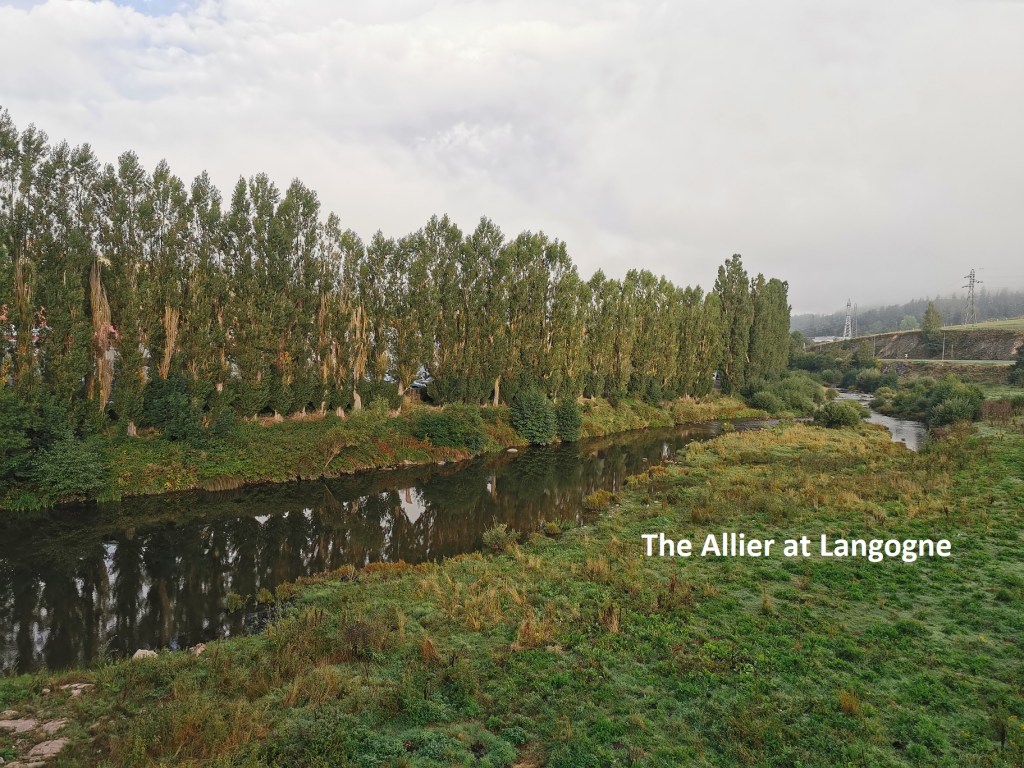
Entering Langogne took us out of the Velay region and into Gévaudan. Stevenson does not say much about Langogne, he records only a brief unsatisfactory conversation with some peasant girls as he asked for directions, but it is a pleasant little town. Langogne was founded in 998 and became another staging point on the Path of St. Gilles. Unlike Pradelles, the town was sacked by the Hugenot army in 1568. The railway came to the town in 1860, and it has grown to be larger than its neighbour a few kilometres away.
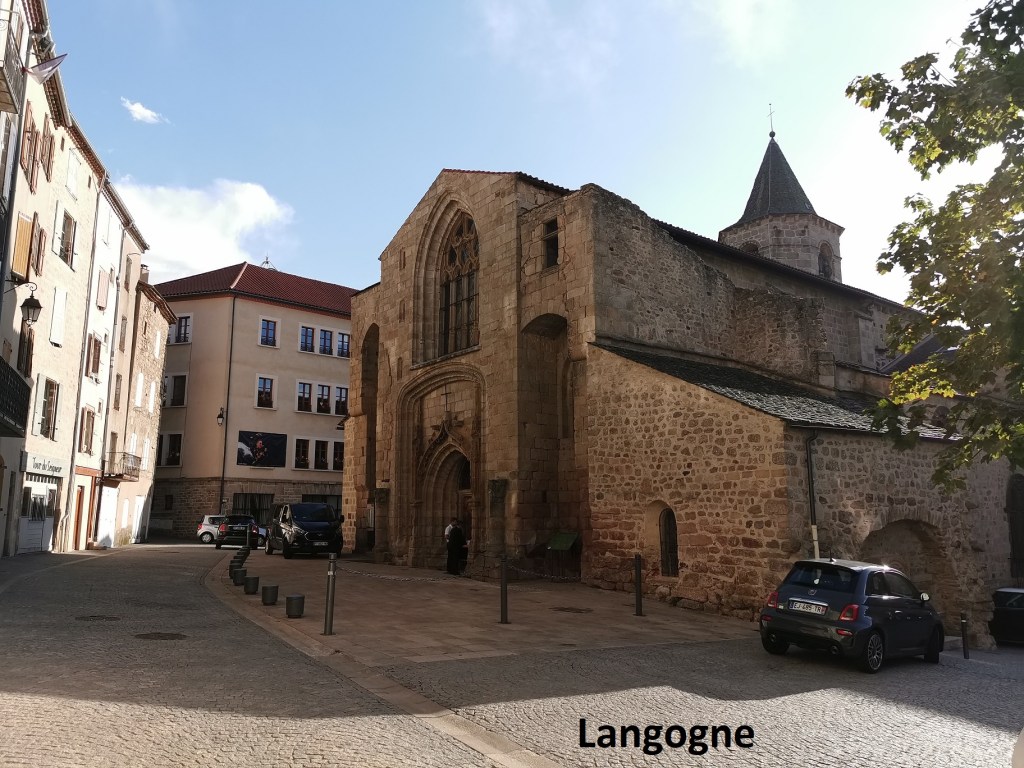
The route of the Chemin de Stevenson goes around an outer circle of streets, but we went into the inner area where the church is. The church, in a Romanesque style was first built by the monks who founded the town. It has been destroyed in war, and damaged by fire, but it still stands. The church was open for a funeral to be held later that day, with a book of condolences at the door. We resisted the temptation to write something and went on our way. After buying some food, we headed out on the road to Cheylard.
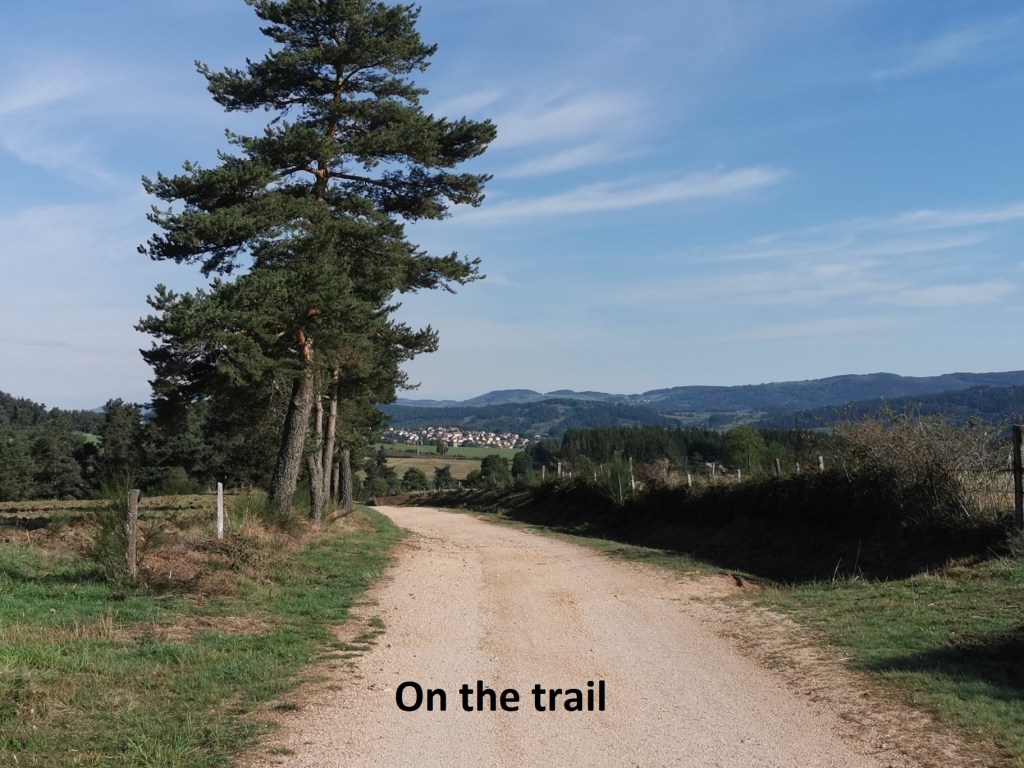
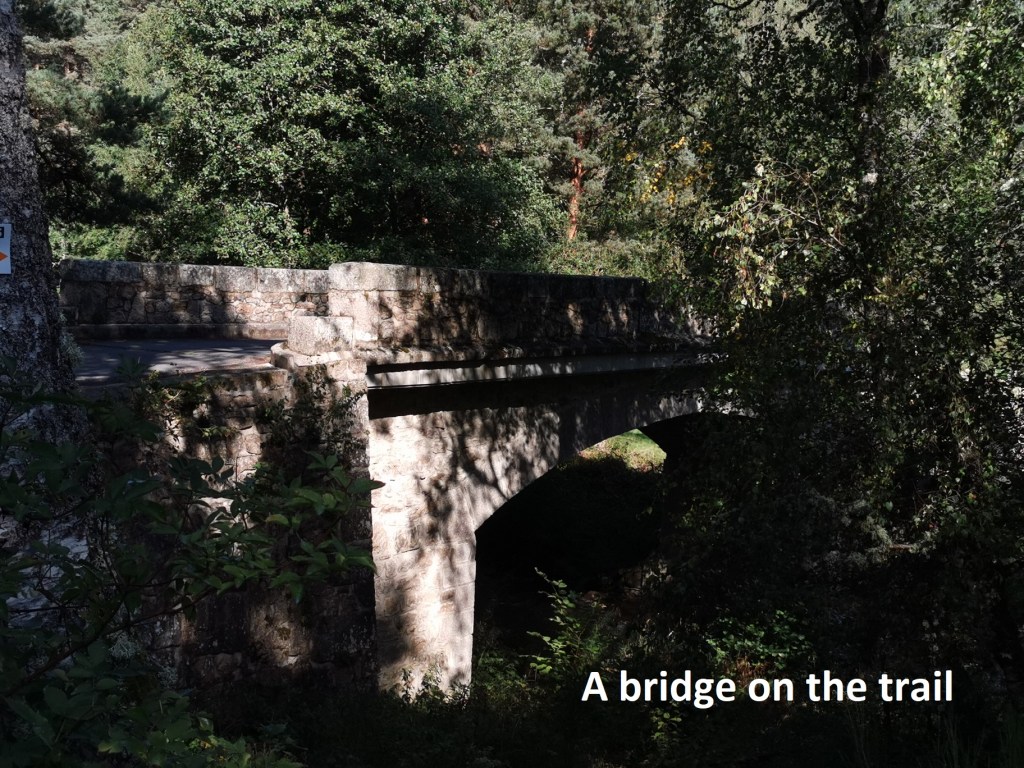
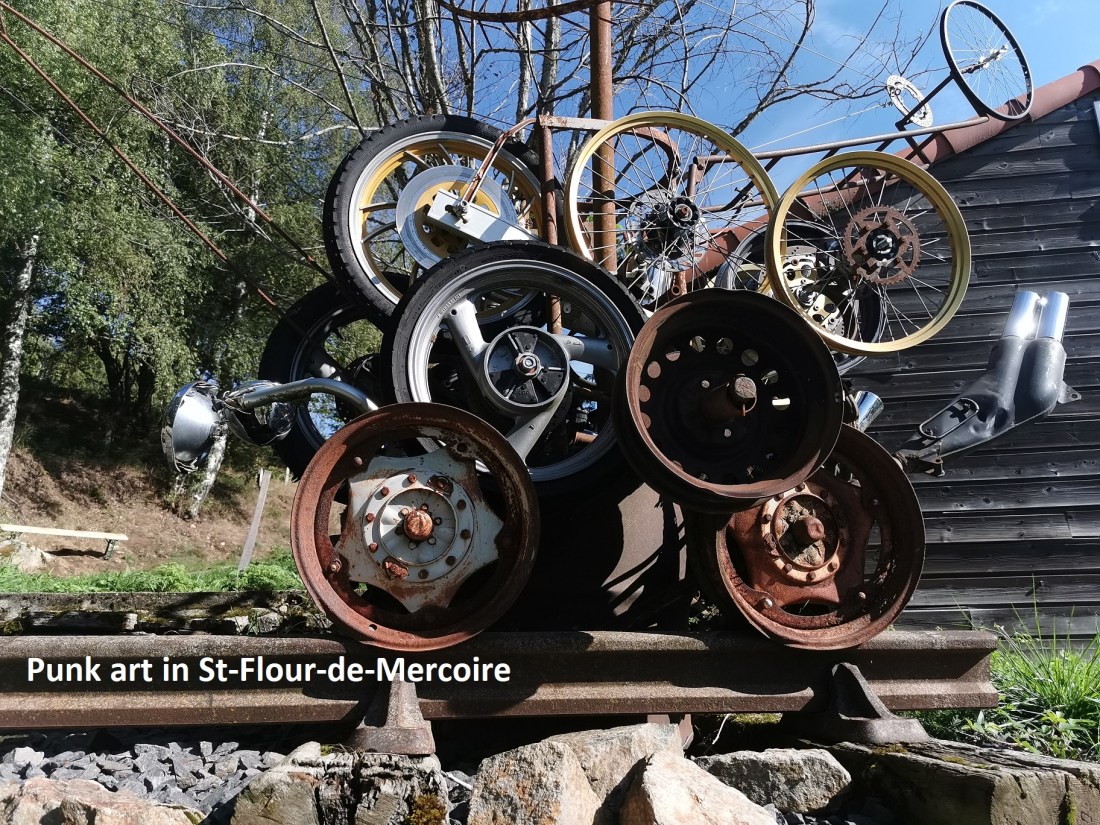
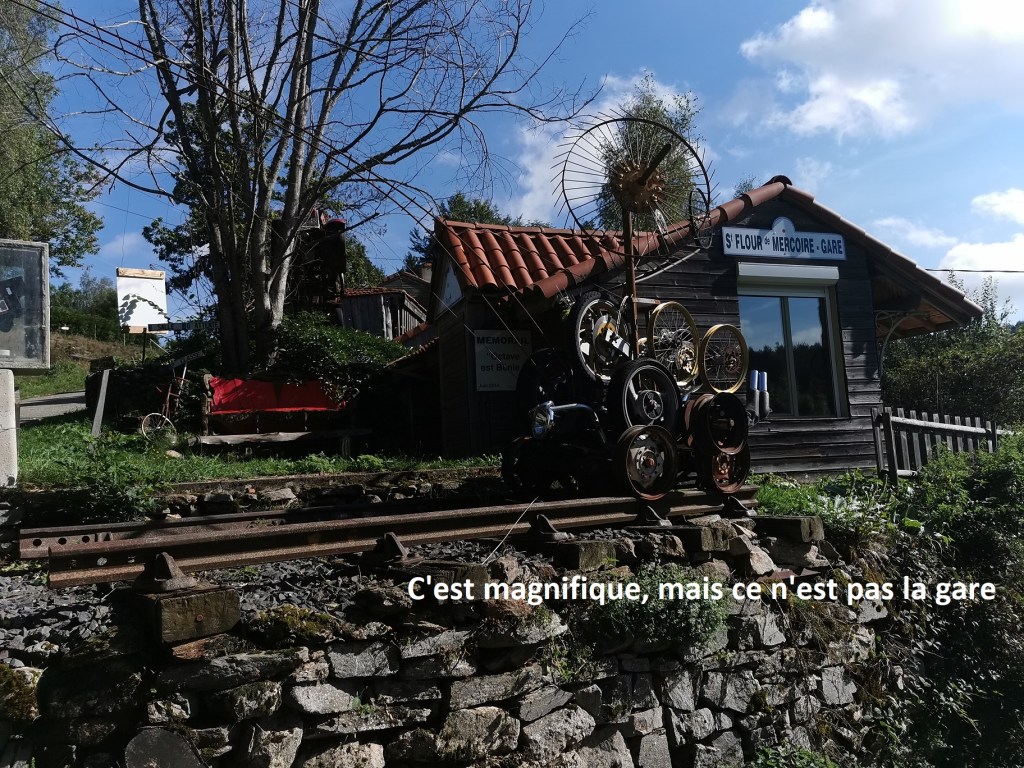
The route rises gradually through open countryside, with patches of forest here and there. After a few kilometres, we turned westwards into the forest. Stevenson had to endure bad weather on this part of the route, but we were bathed in sunshine. The route took us past a building marked as St. Flour de Mercoire Gare, with a strange steam-punk art installation outside. Soon after, we were in St. Flour de Mercoire itself, and looking for a bar or café. We met a local, who advised us that there was nothing in the village, but that we might find something in the next village, l’Herm. There was actually a theatre on the way out of St. Flour. How is it that a village can have a theatre, but not a bar or a cafe?

By now, the morning was progressing toward noon, and we went on towards l’Herm more in hope than in expectation of somewhere that we might get a lunch. Those hopes were based on the mobile phone app that indicated a restaurant. But those hopes were dashed quickly. The place where we hoped for food was a gite, and it was closed, reopening only at four o’clock. As we stood figuring out what to do, a woman came out and told us in no uncertain terms that it was closed. We went around the corner to where there was a potable water point, and sat on a wall to rest, eating out bread and sausage while considering the situation. Partially refreshed, we went on our way again.
This region is famous for the Beast of Gévaudan, a wild animal that terrorised the area between 1764 and 1767. The beast made its first appearance when it tried to attack a woman herding cows. The bulls in the herd drove it off and she was unharmed. Not long afterwards, the beast claimed its first victim, a fourteen year old youth from the area. Over the course of the next three years, the beast killed hundreds of people, mostly people who were out alone. There were several organised attempts to capture or kill the beast, all of them unsuccessful. It was eventually shot in 1767 by a local hunter. The beast and the terror that it caused became part of local folklore to the point that over a hundred years later, when Stevenson was walking in the area, many people were afraid to go out at night. Stevenson remarks that based on his encounters with the local people, he could sympathise with the beast. And I can sympathise with Stevenson.
Our route onwards from l’Herm took us through the hamlet of Sagne-Rousse to reach Fouzillac. Fouzillac is one of two places with similar names that are close to each other. The second is Fouzillic, a few hundred metres to the southwest. Somehow, Stevenson came to Fouzillic first, then going on to Fouzillac. In the book, he recounts how in Fouzillac, in foul weather, he knocked on a door looking for help and directions to Cheylard. The peasant who answered refused to help, resulting in a heated exchange between the two. But the peasant obstinately refused to help him, and Stevenson was forced to turn away from the house. This left him no option but to camp. It might be easy in these days of advanced technology, but with only basic equipment, and a spirit lamp to guide him, Stevenson managed to set up camp, dining on tinned sausage and black bread, with only neat brandy to wash it down. It says much for his perseverance that he did not give up the enterprise after that experience, but went on the next day.
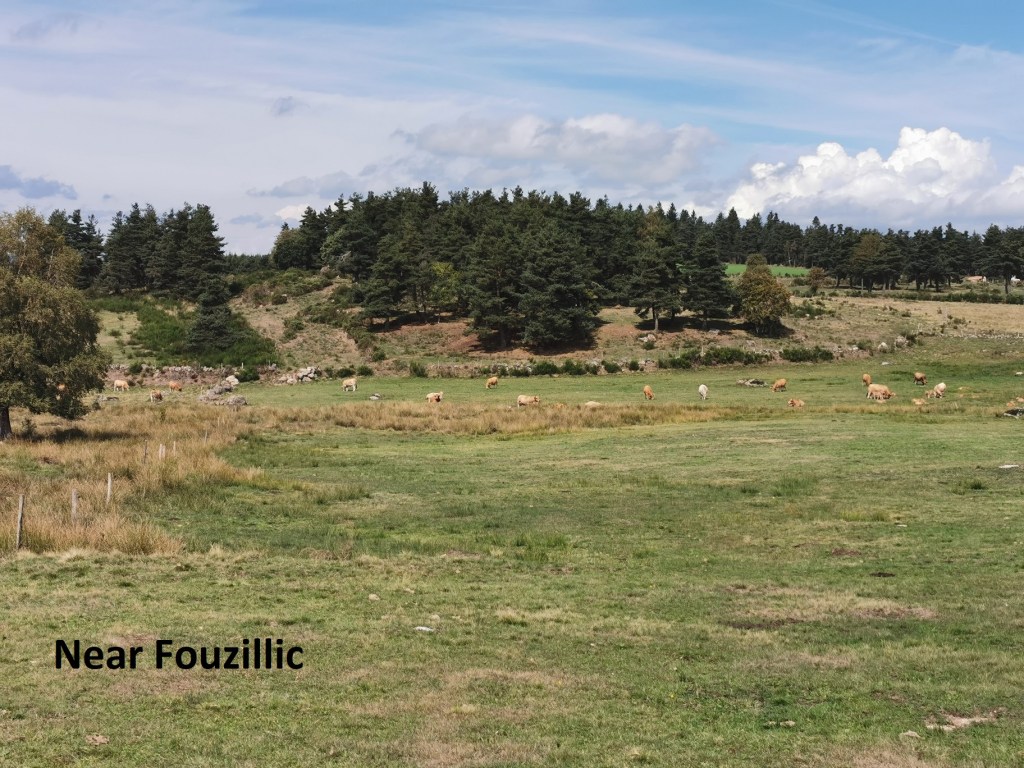
Fouzillac has not improved much in the almost century and a half since Stevenson was there. There is nothing to welcome the traveller, and there was no one in the fields or on the road as we passed through. Fouzillic was no better. Soon after Fouzillic, we came to an important junction. I had been unable to book any accommodation in Cheylard and had booked a room in a hotel off the route in the village of Chaudeyrac. It is two kilometres off the route, and the track there is well signposted. We arrived there and immediately went to the local bar, where a beer was a great restorative, especially when combined with the last of our sausage.
Refreshed by the beer, we checked in at the local hotel. The proprietor is one of those people who seems to regard customers as an inconvenience, even though his livelihood depends on them. At first, he seemed unsure about our reservation, but fortunately, I had printed out all the reservations before leaving Basel. And so we got our room The proprietor of the hotel also had an interesting taste in decoration. Almost everything was themed based on the cartoon character Betty Boop. A clock, an ashtray, the “No Smoking” signs, and so on, all had Betty’s image.
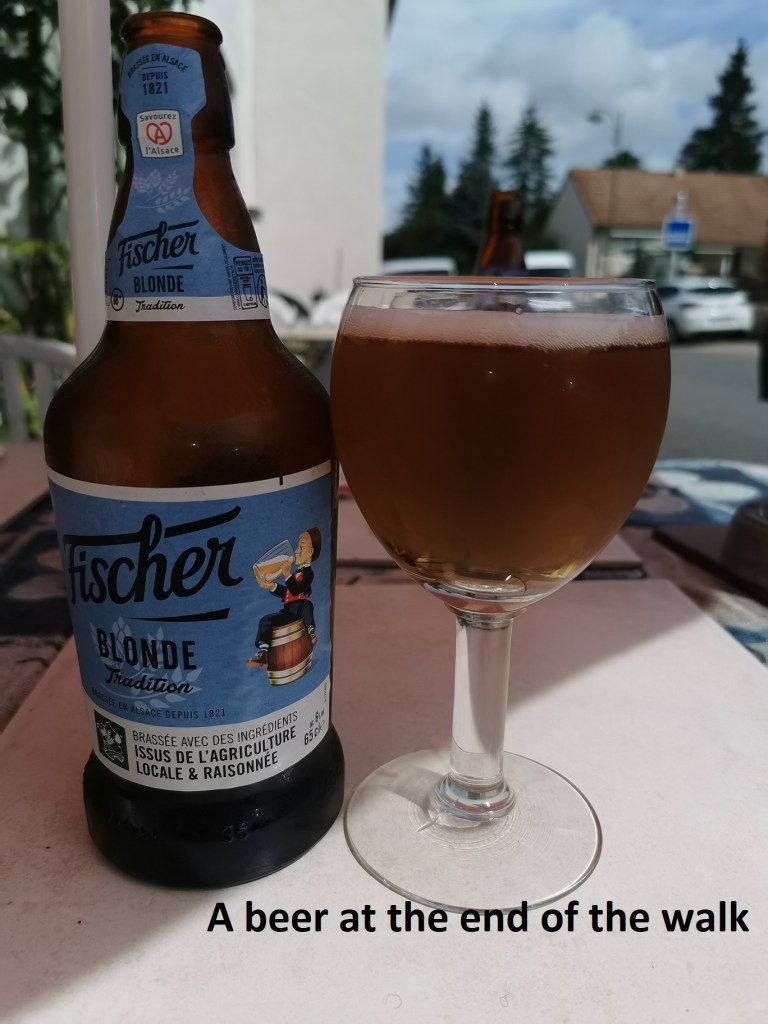
After a shower I took a rest to study the route for the morrow, but we also found time for one more beer before dinner. It was autumn, a season when many French people go to pick wild mushrooms, and they figured prominently in the dinner. As we ended our dinner, a thunderstorm rolled in. Torrential rain poured down for over an hour, while the lightning lit up the night sky. The road outside was covered in surface water. And then, as suddenly as it had started, the storm stopped. That was our signal to turn in for the night, to get some sleep and be ready for the morning.

 Walkingman