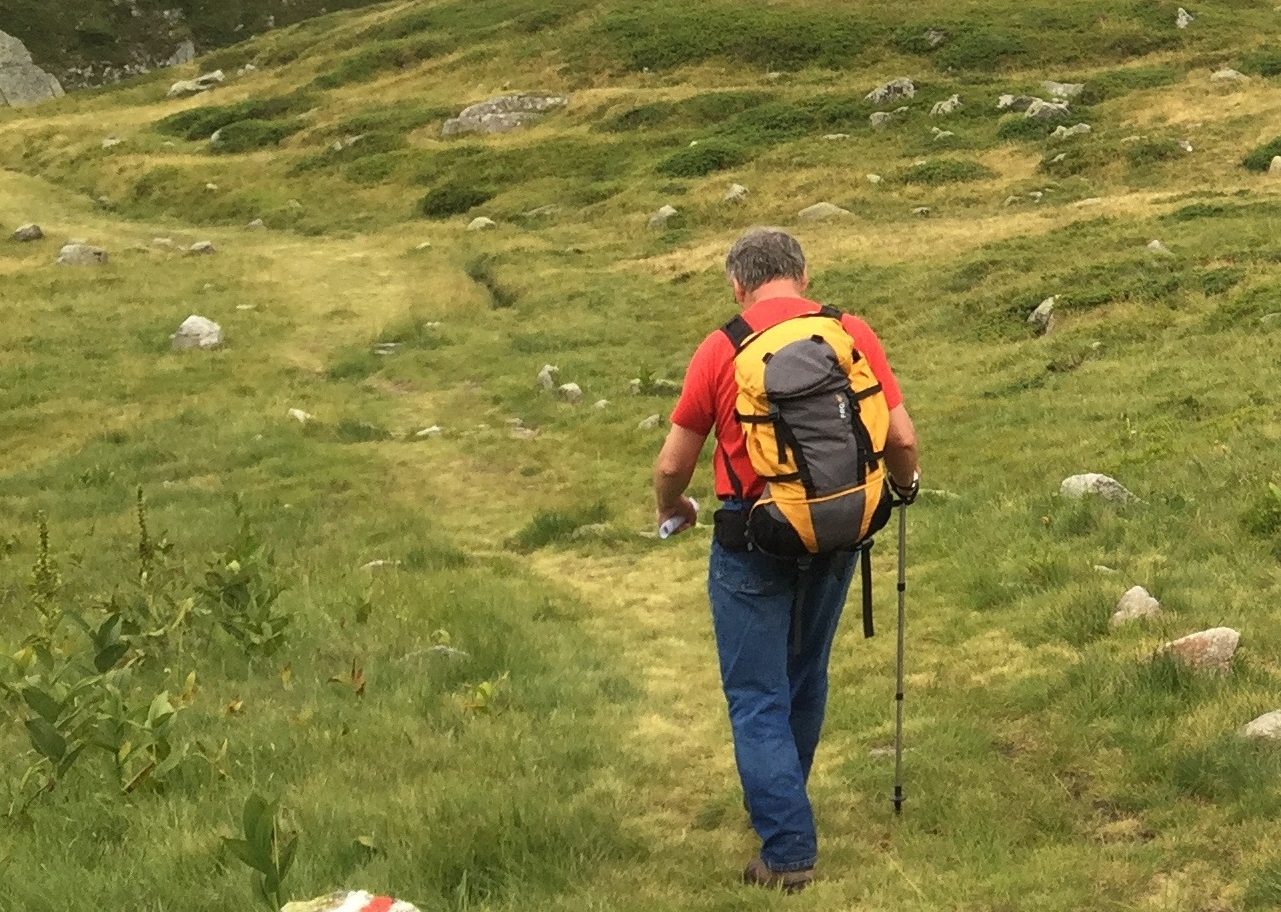
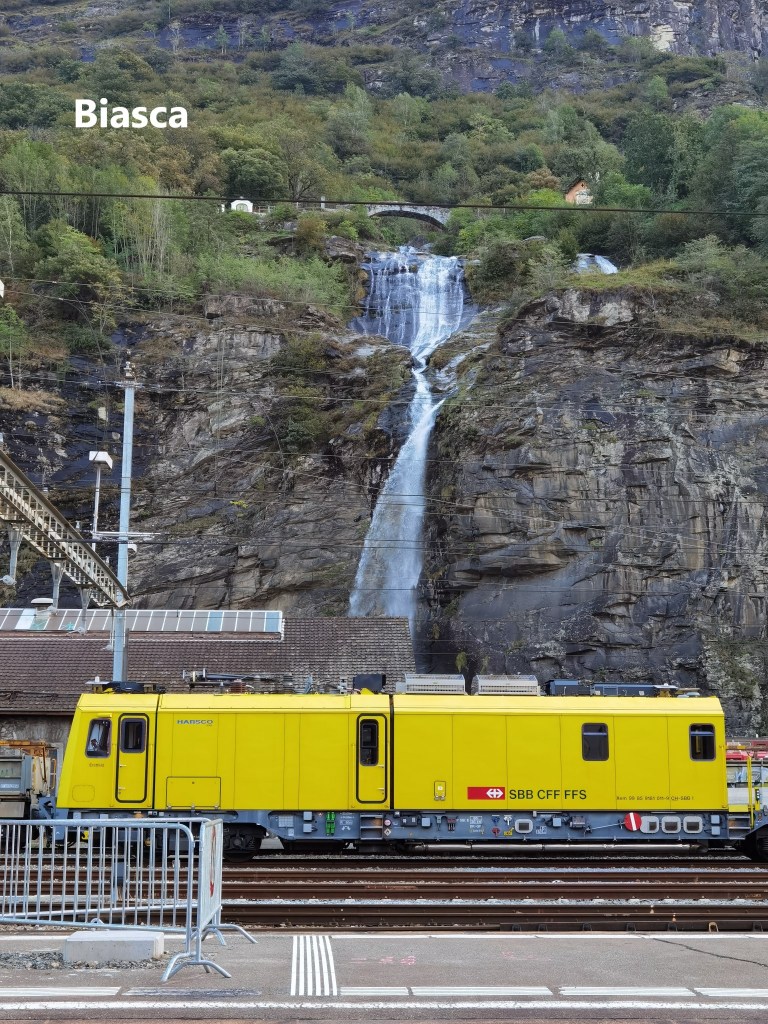
After the completion of the Camino de Santiago, as documented in these pages, for this post I am going back to the Trans Swiss Trail. When I left it to go off to Spain, there were three stages left to be completed, about 75km. This latest stage was to take me from Biasca to Bellinzona. Thus it was that last weekend, I made my way to Biasca to start walking.
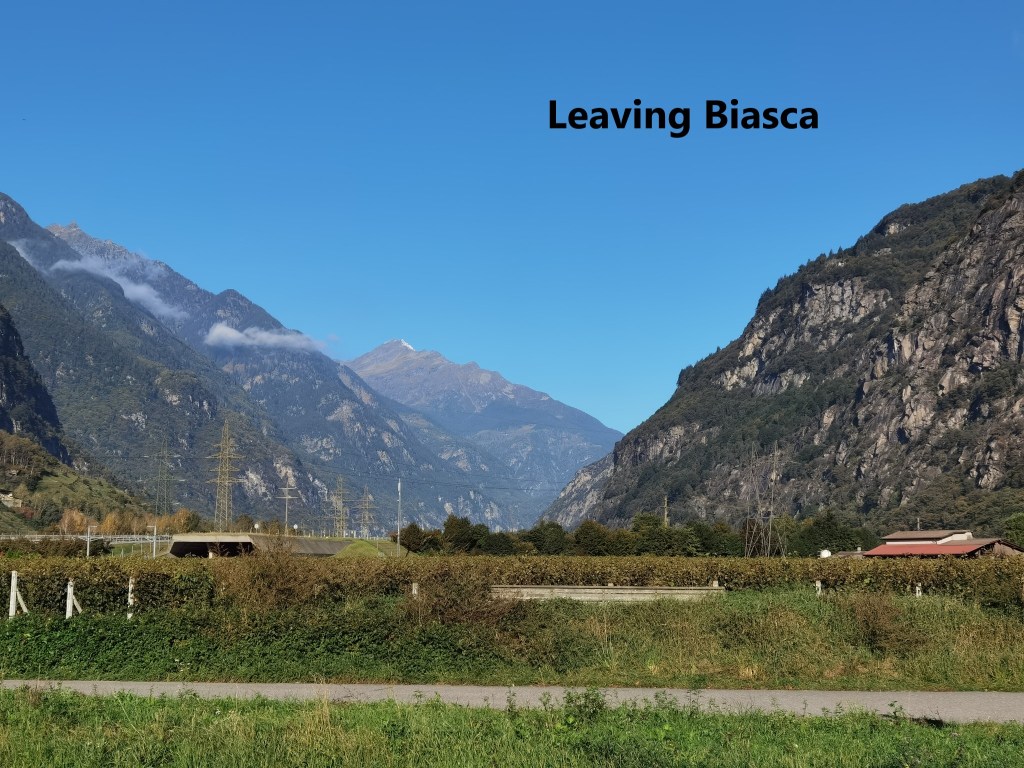
The weather has been kind this autumn, and I left Biasca with the sun in an almost clear blue sky, the last of the mists rising from the mountains around. As I left the town, heading back towards the Ticino river, there were clear views of the valley to the north, and the mountains I had come over in the last few months.
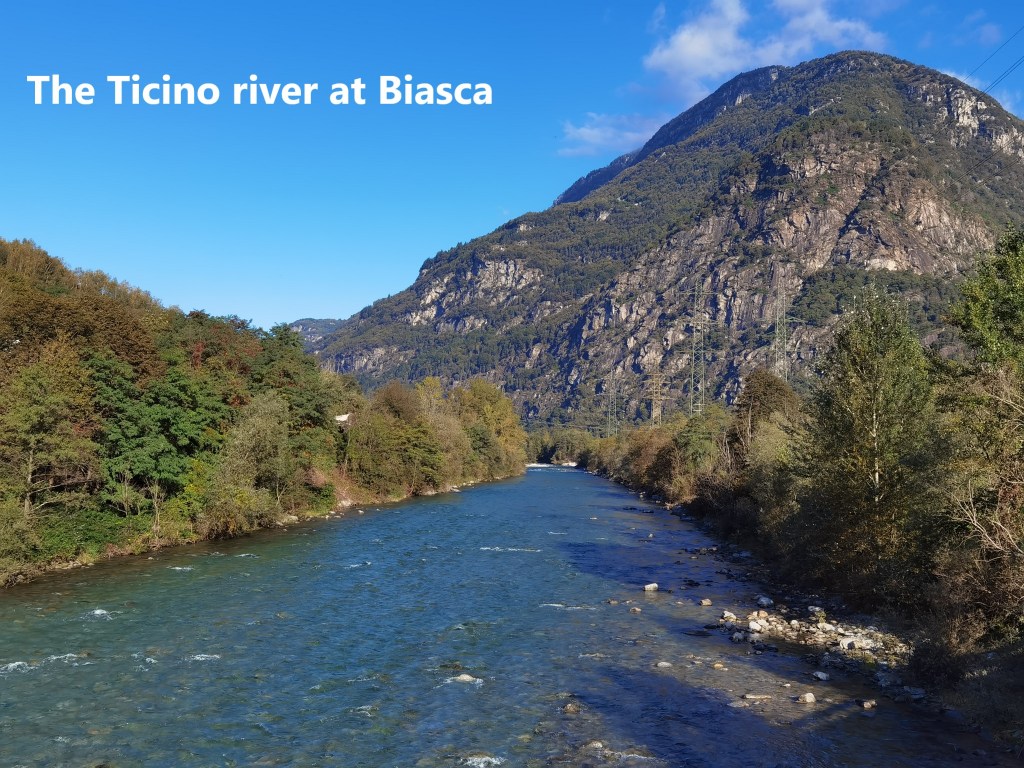
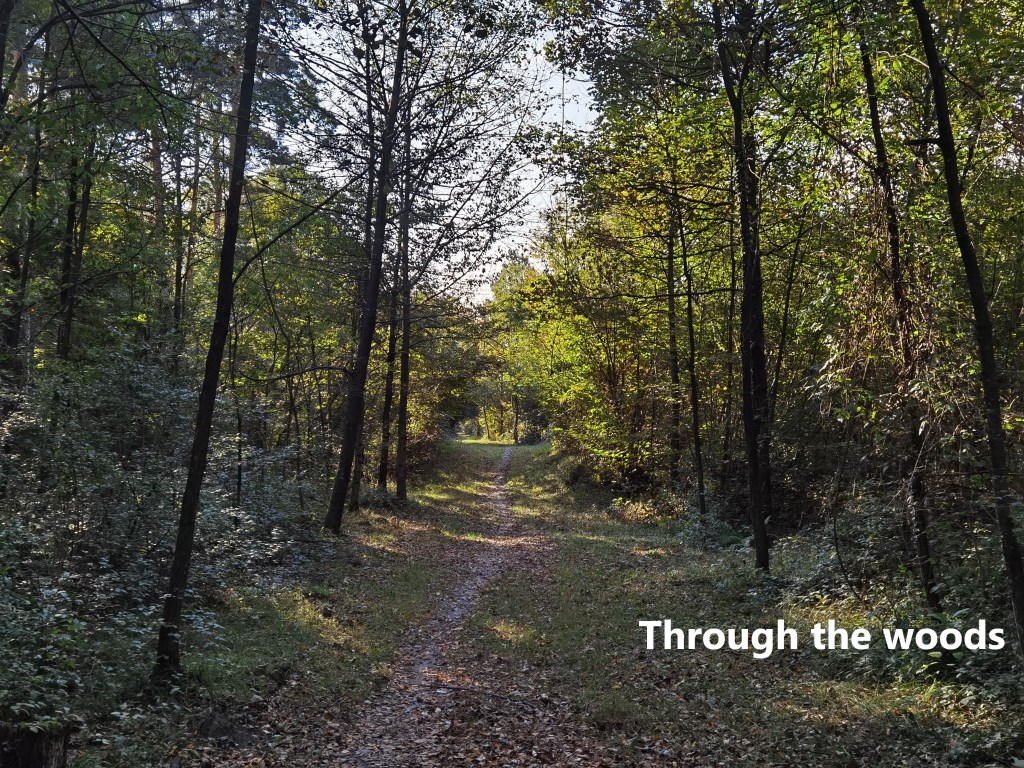
Track crosses the river and turns southwards. Initially, it goes through some light woodland before coming to the riverbank, which it then follows. Most of the walk for the day would continue in this way, a mixture of light woodland and riverbank. But that’s OK.

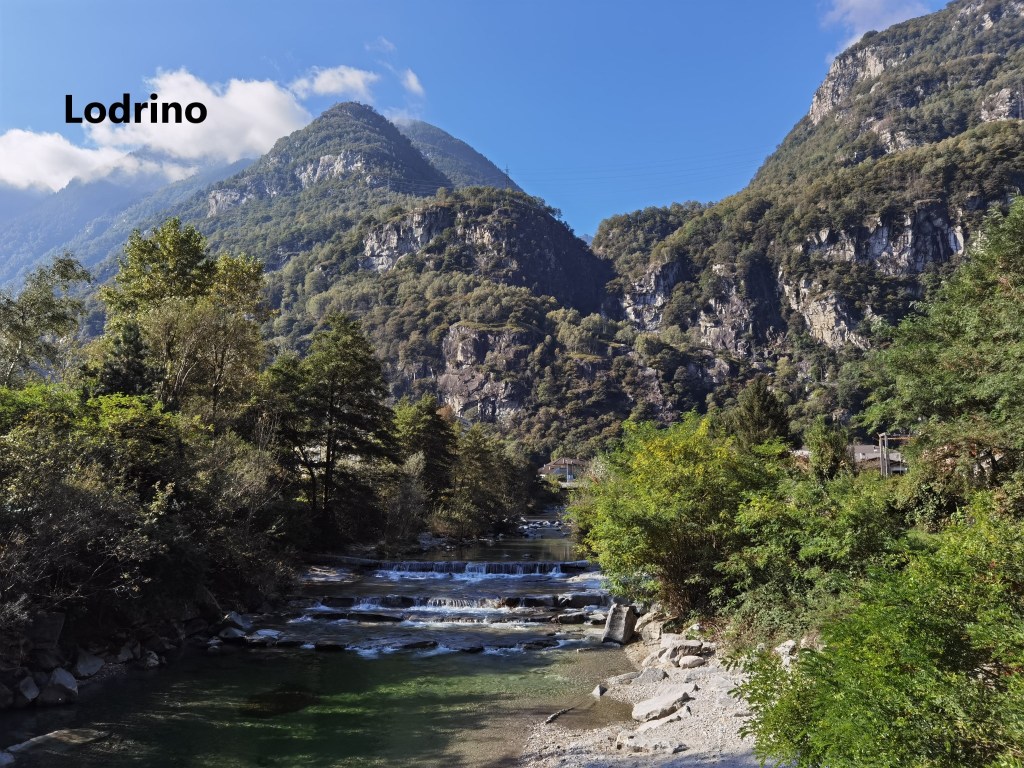

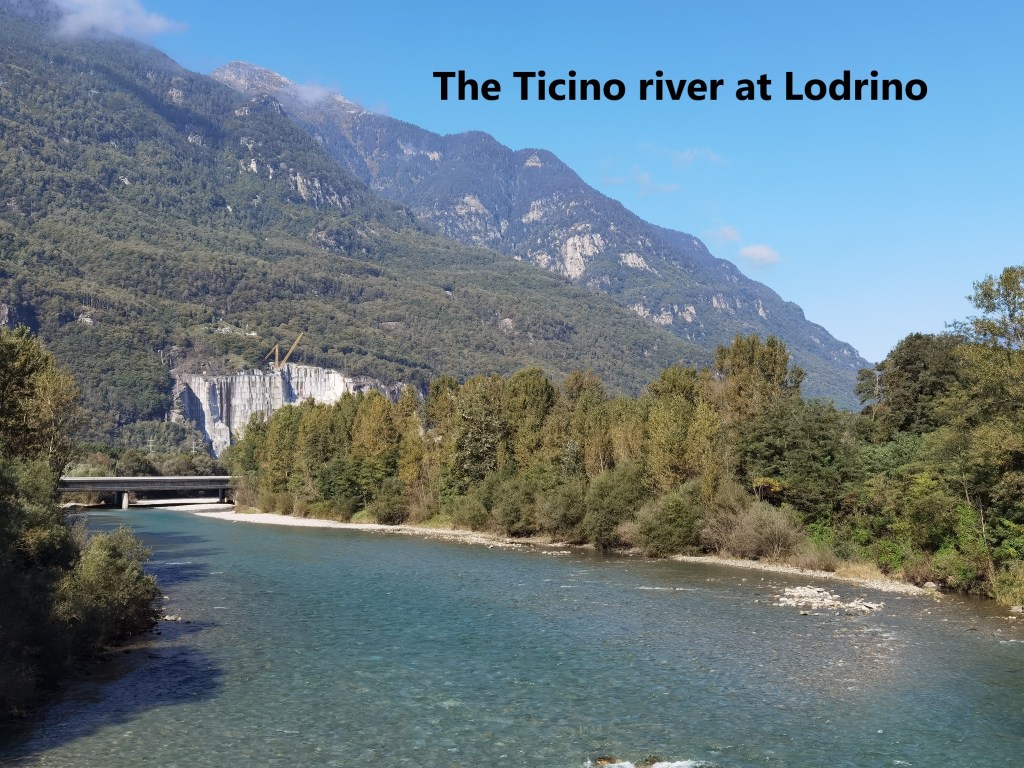
It wasn’t long before I came to the village of Lodrino. This was the first place where the trees opened out into fields and houses, and I had a good view f the surrounding mountains. Just after Lodrino, the trail turns eastwards, and crosses the river again.
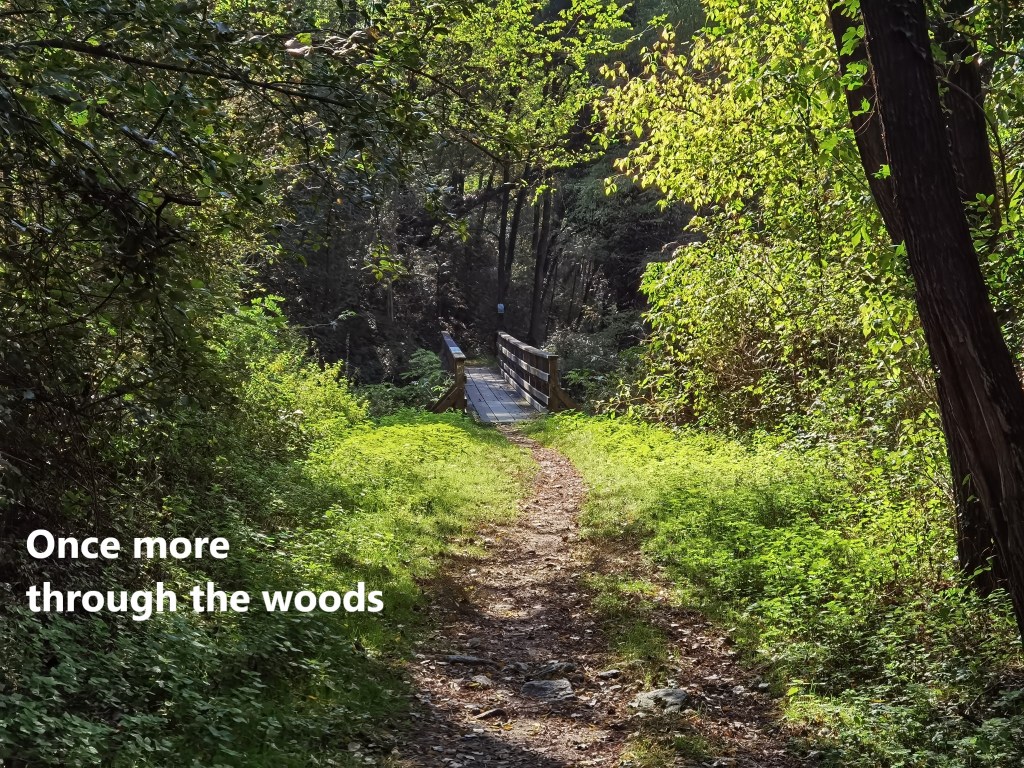
Once more the route goes south. It goes back into the woods along the riverbank. The Ticino river is a gentle current for most of the way after Lodrino. The trail is similar, with only the slightest of ups and downs as it makes its way south. I came across several people walking their dog, or out for a stroll. And so it continues all the way to Arbedo.
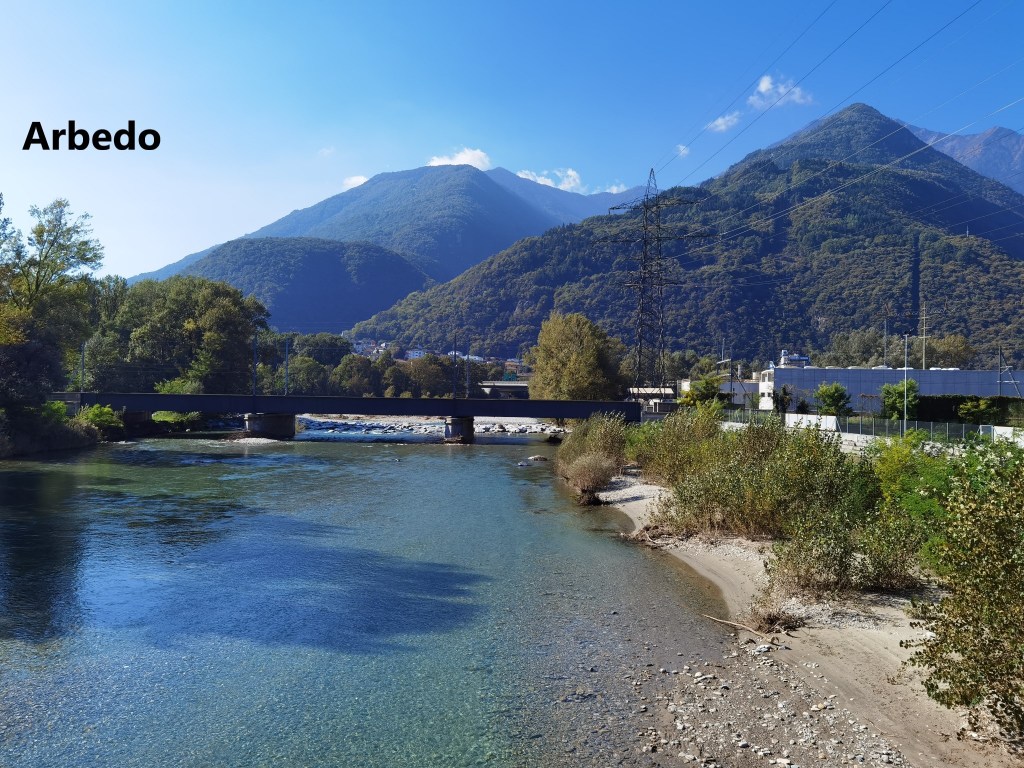
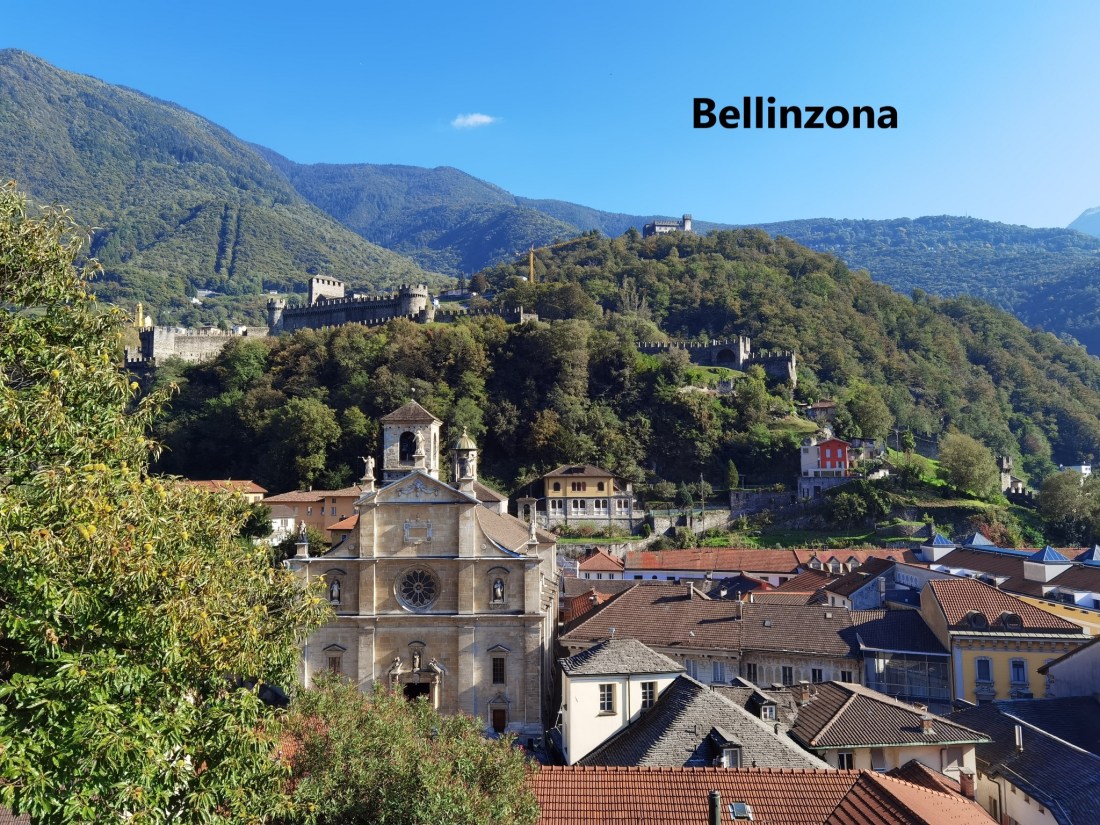
Arbedo is really an adjunct of Bellinzona, and the trail passes from one to the other without a clear signal of any border between the two. Also, the route does not go directly into the centre of Bellinzona, but initially skirts the town. In fact the true Swiss trail continues past the town, but there is a branch going into the centre. When the time came, I took that branch, and soon arrived at the railway station.
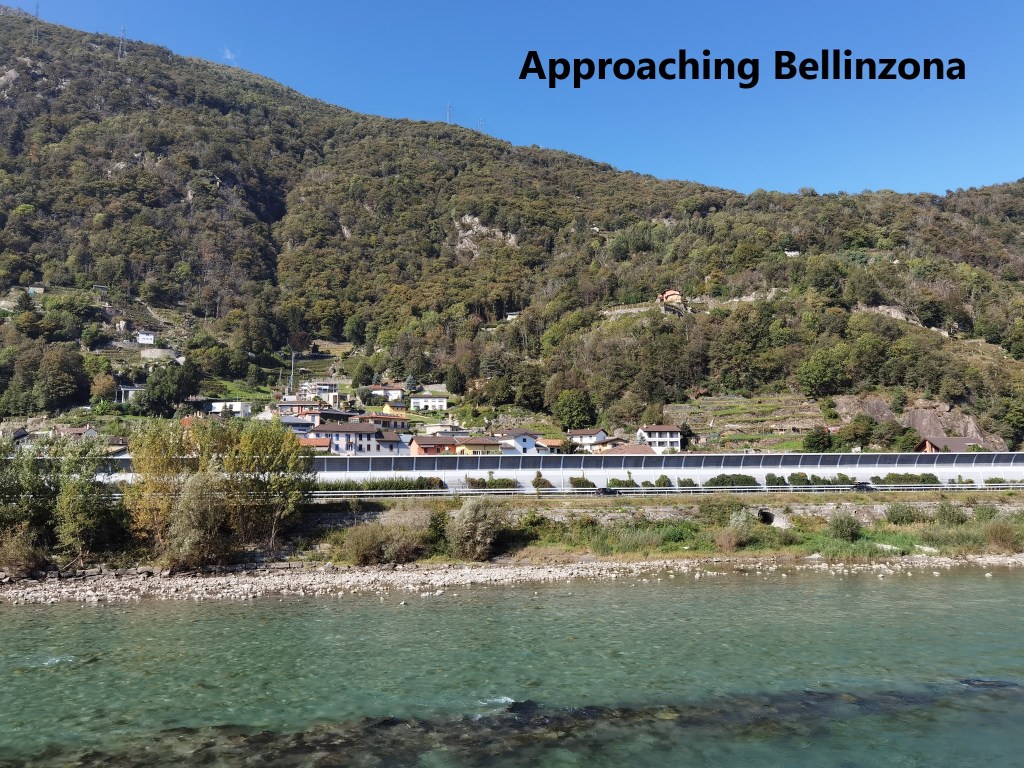
Like some of the towns and castles that I passed on some of the earlier stages of the Trans Swiss Trail, the town of Bellinzona has its place in Swiss history. Bellinzona was originally the site of a Roman fort. After the collapse of the Roman empire, the area was fought over by various groups until it came under the rule of the duke of Milan, About the year 1000, as the Gotthard pass began to be used as a trade route, rule of Bellinzona passed to the bishop of Como. But time passes, and within 300 years, control had passed back to the Duke of Milan. He expanded the town. But the Swiss cantons of Uri and Oberwalden had expansionist ambitions, and pushed south from the other side of the pass. They eventually took over Bellinzona in the fifteenth century. Within three years, Milan attacked and took back the town, defeating the Swiss at the battle of Arbedo in 1422. But within twenty more years, the Swiss defeated the Milanese and took over the entire valley except for the town of Bellinzona. The Swiss attacked the town unsuccessfully in 1478. As the century ended, the French entered the fray, and took over the town. The townspeople revolted, expelling the French, and accepting to be linked with the Swiss cantons. It stayed like that for almost 300 years. When Napoleon invaded in 1798, Bellinzona was made a cantonal capital. For a time in the twentieth century, that status was rotated between Bellinzona, Lugano and Locarno, but since 1978, Bellinzona has been the sole cantonal capital of Ticino.
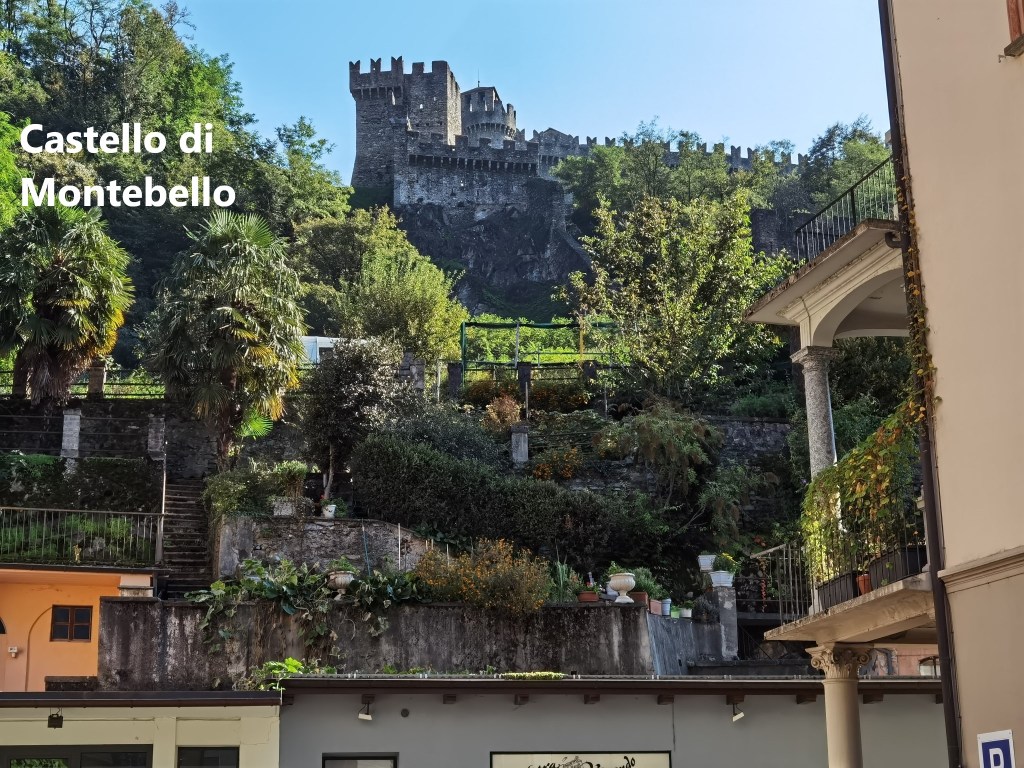
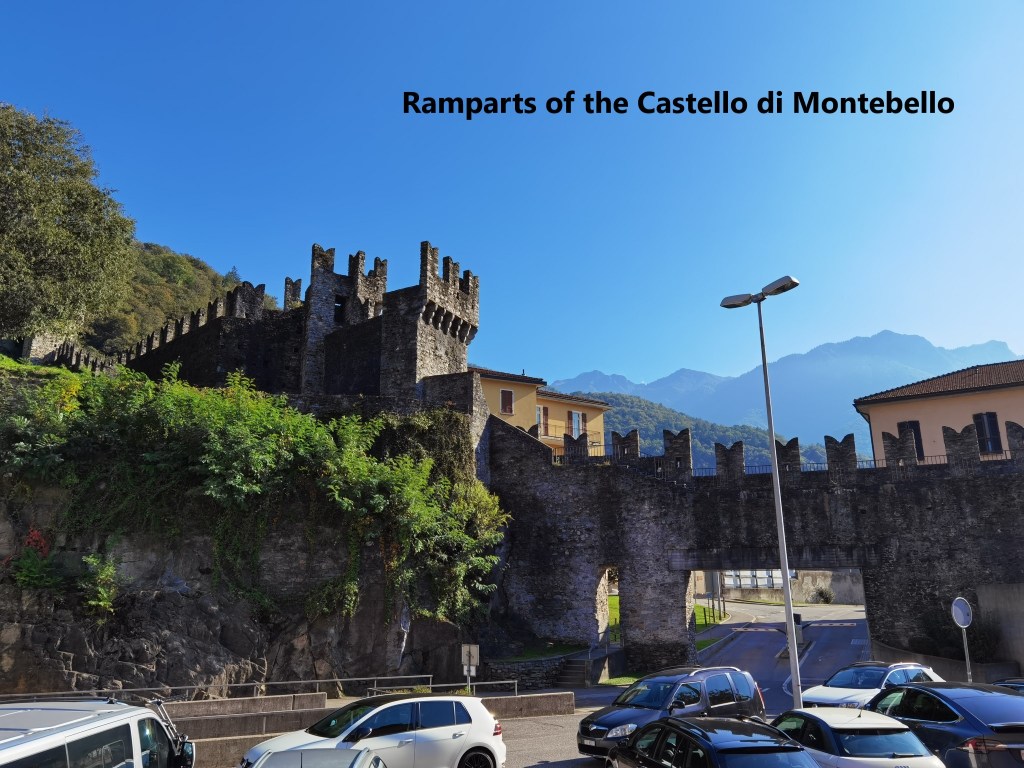
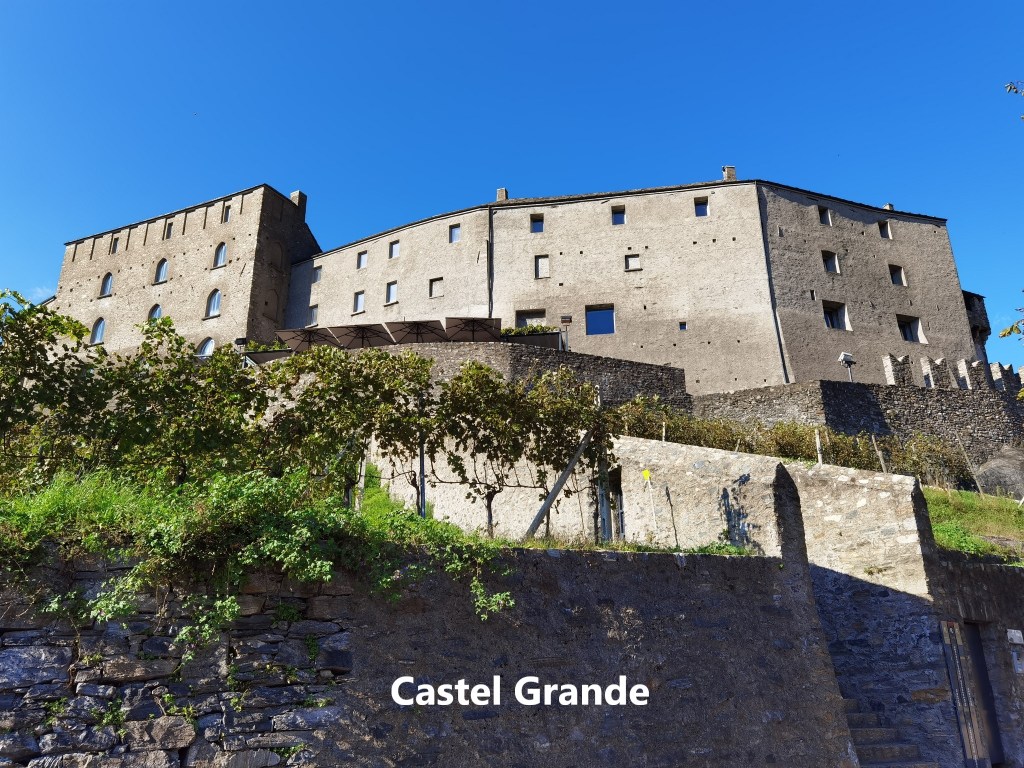
History is violent, and Bellinzona has seen its share of that violence, but when I arrived there, all was peaceful. In such a historic place, I just had to take a look around. The town centre is dominated by two castles: The Castel Grande on a hill just west of the town centre, and the slightly smaller Castello di Montebello to the east. There is a third castle on the hills, but I didn’t go to that one.

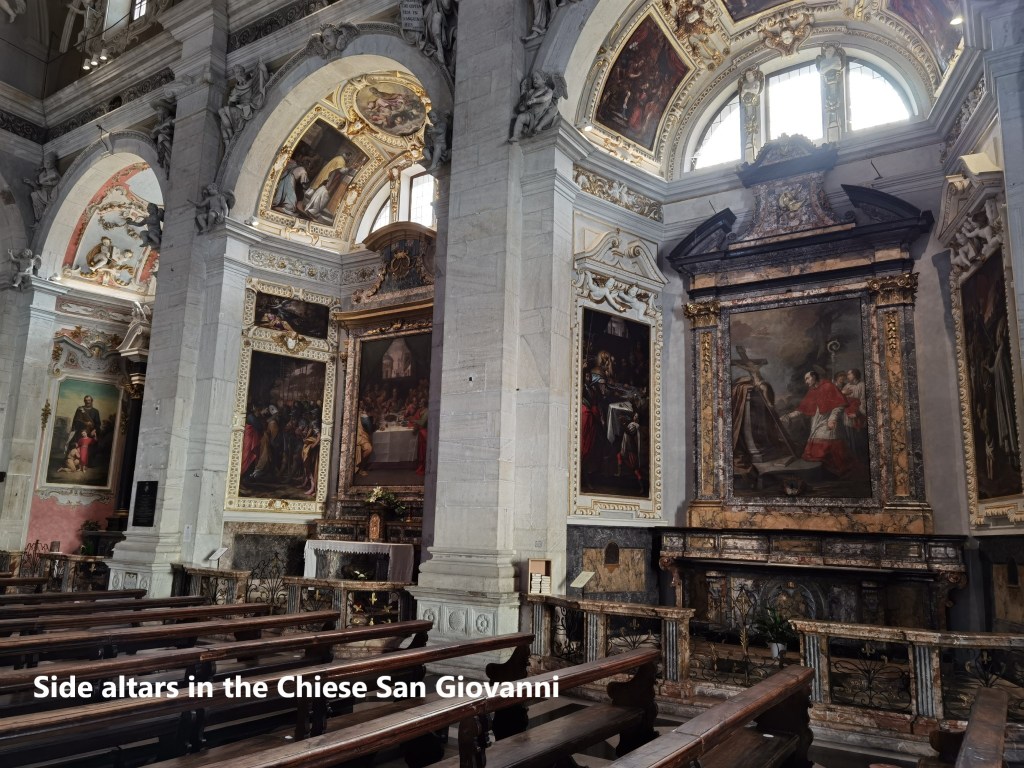
The church in the centre of the town, the Chiesa San Giovanni, goes back to the 11th century, when the bishops of Como were in charge, though most of the current building dates from the Milanese rule. The interior is quite spectacular.

And having enjoyed a few of the tourist sites, it was time to head for the train station. And my total step count for the day was 43,207.

 Walkingman