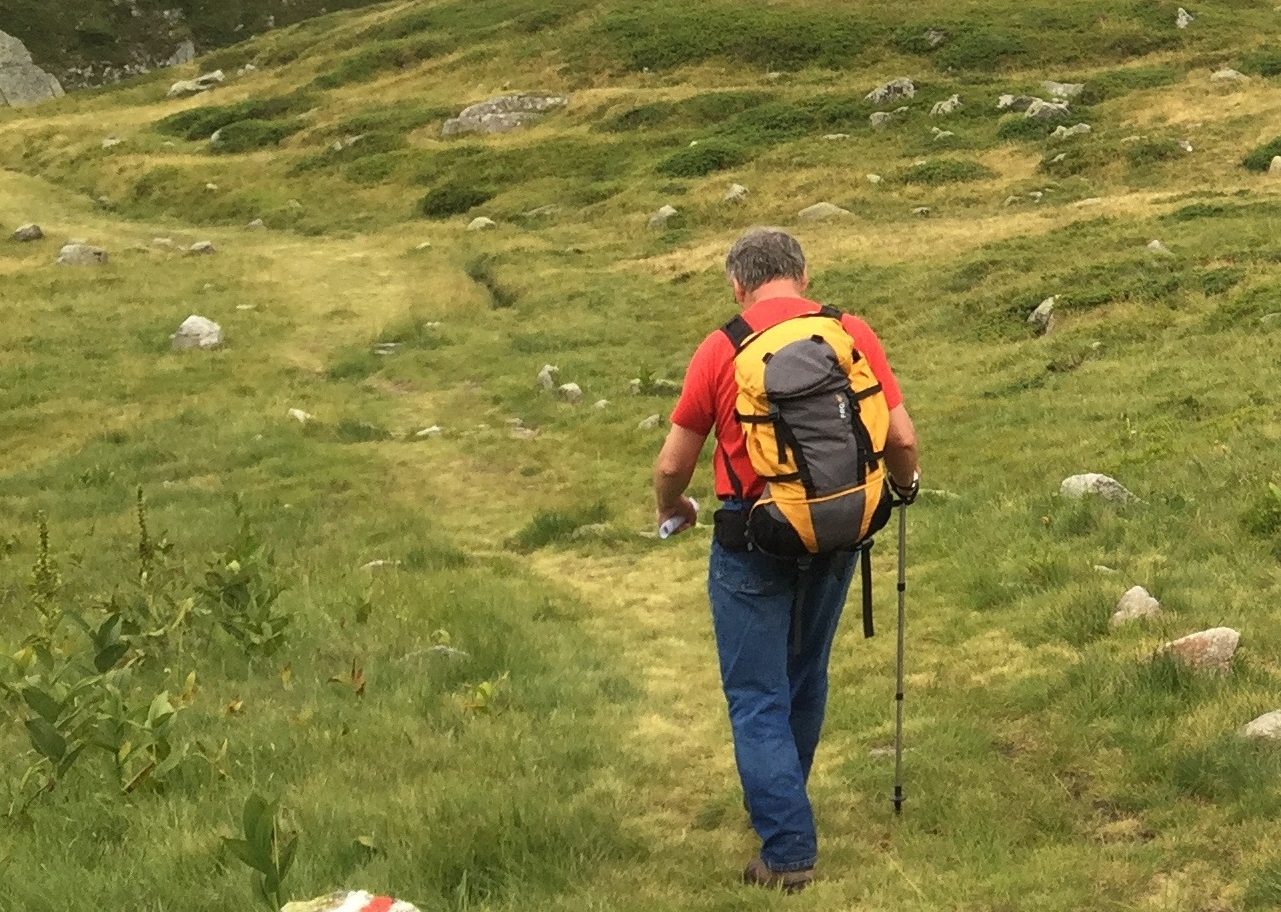
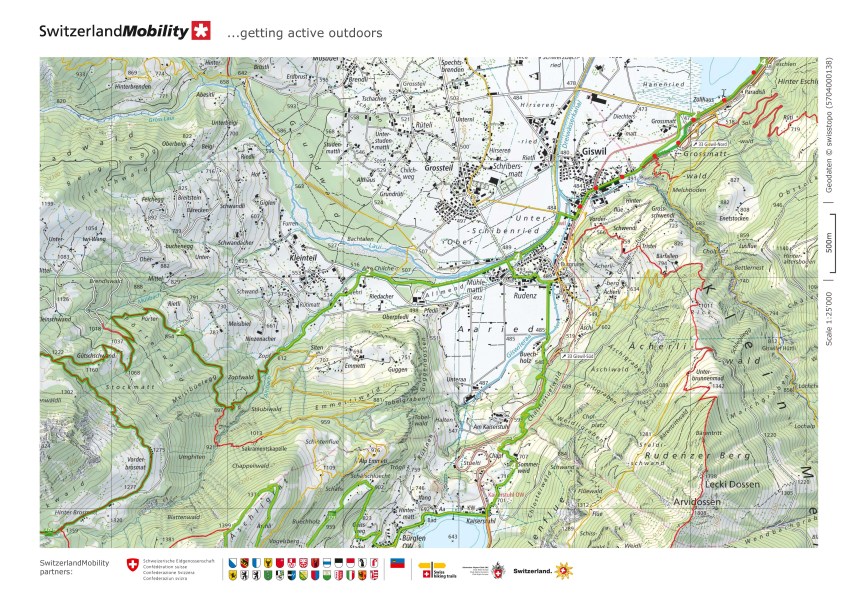
After the bittersweet experience of my attempt last week to go from Giswil to Stans over the mountains, I decided that I would take the more direct route at the earliest possible opportunity. So last weekend, I again set out early to get on the trail. The weather forecast was not good, with showers of rain due during the day. But the trail was calling, and I was not going to sit at home while this section of the route was waiting for me.
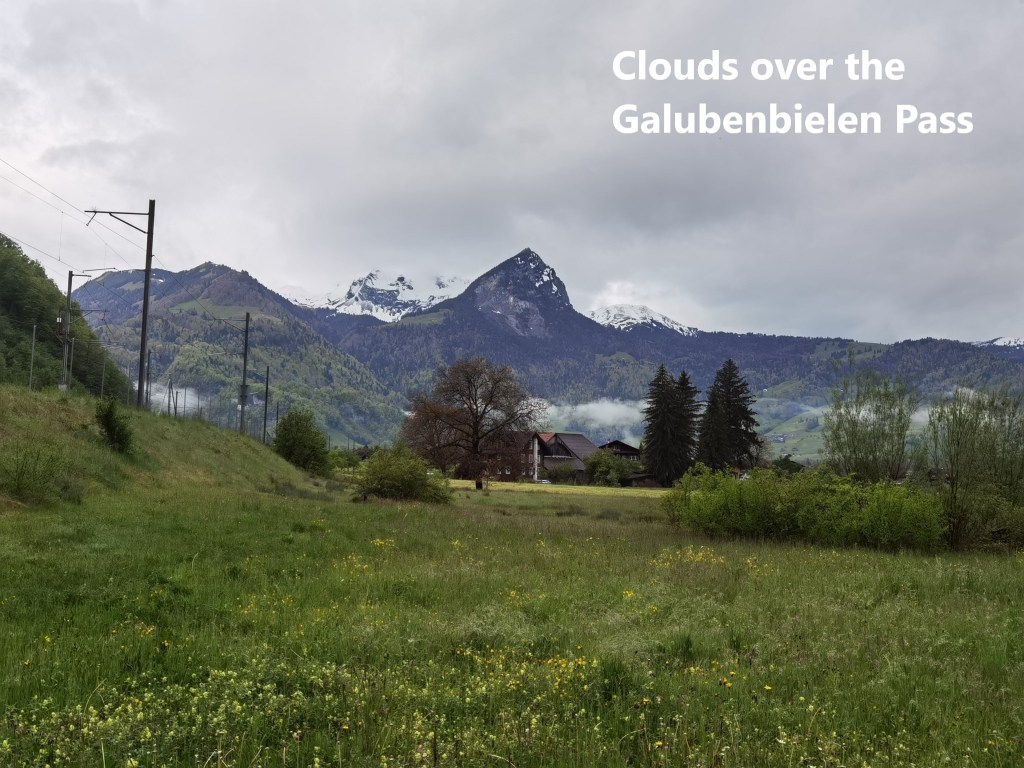
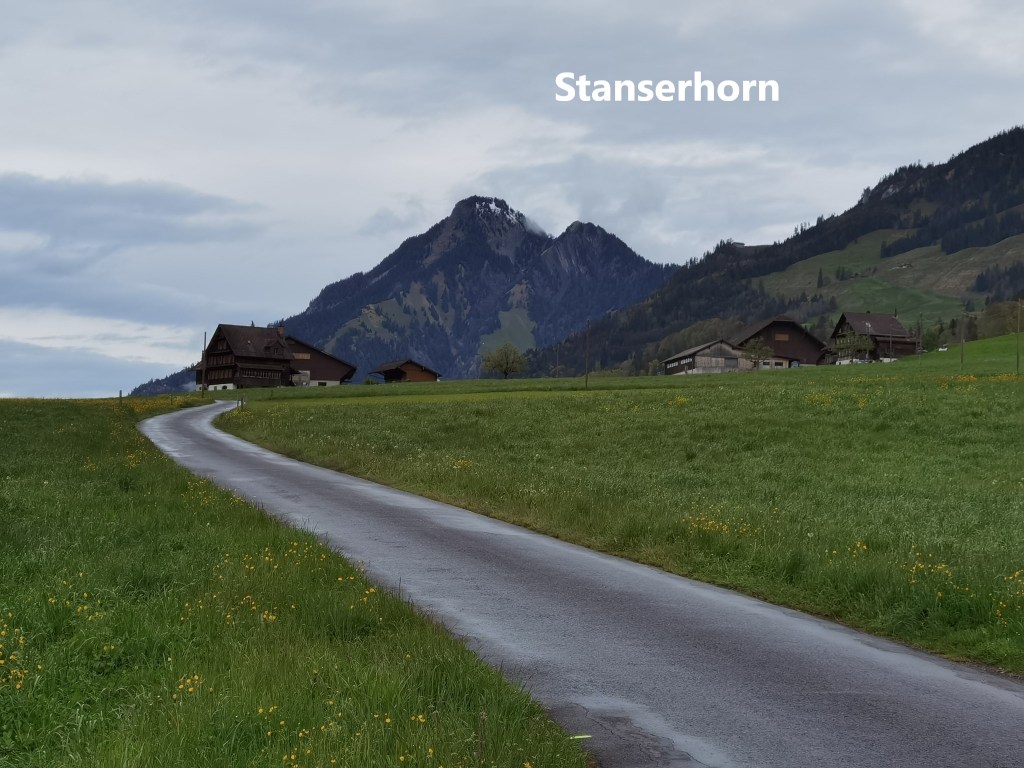
I left Giswil under grey skies, very different to the week before. The Glaubenbielen pass to the south was under cloud. So too was the Pilatus mountain to the northwest, though the Stanserhorn was clear.
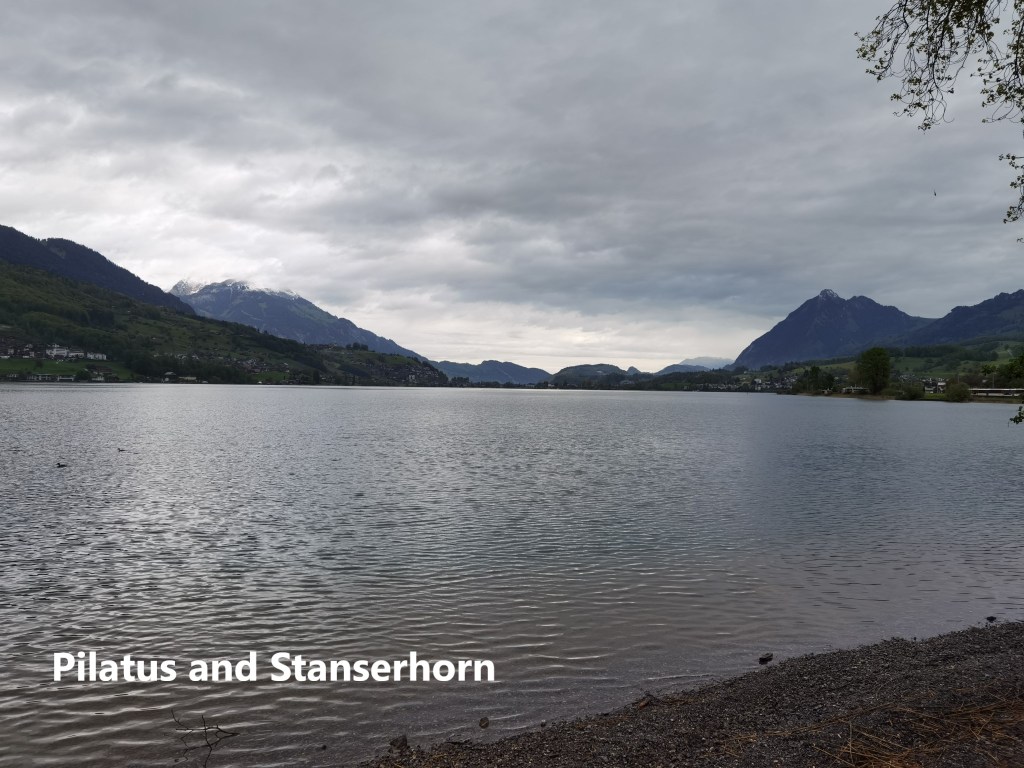
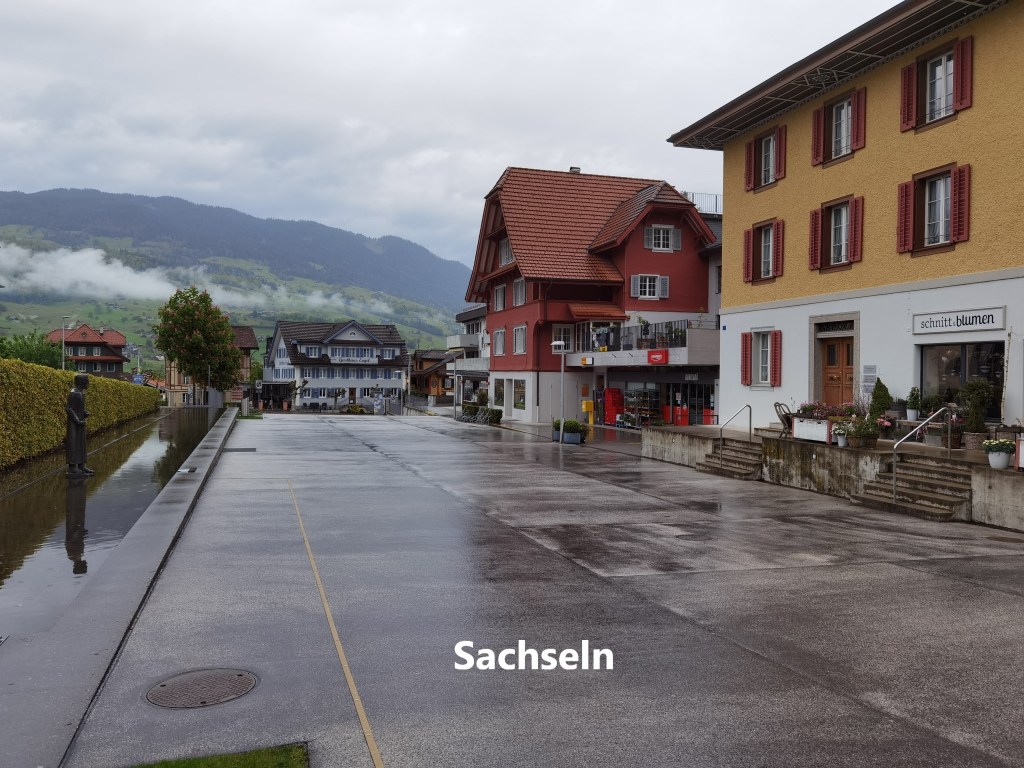
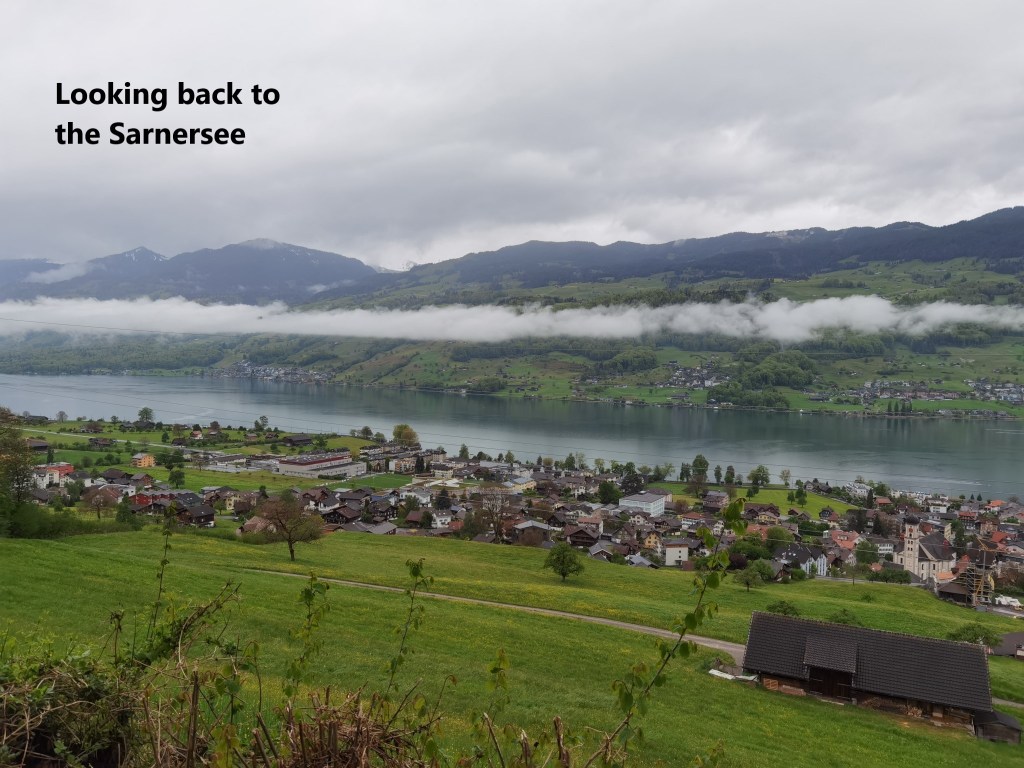
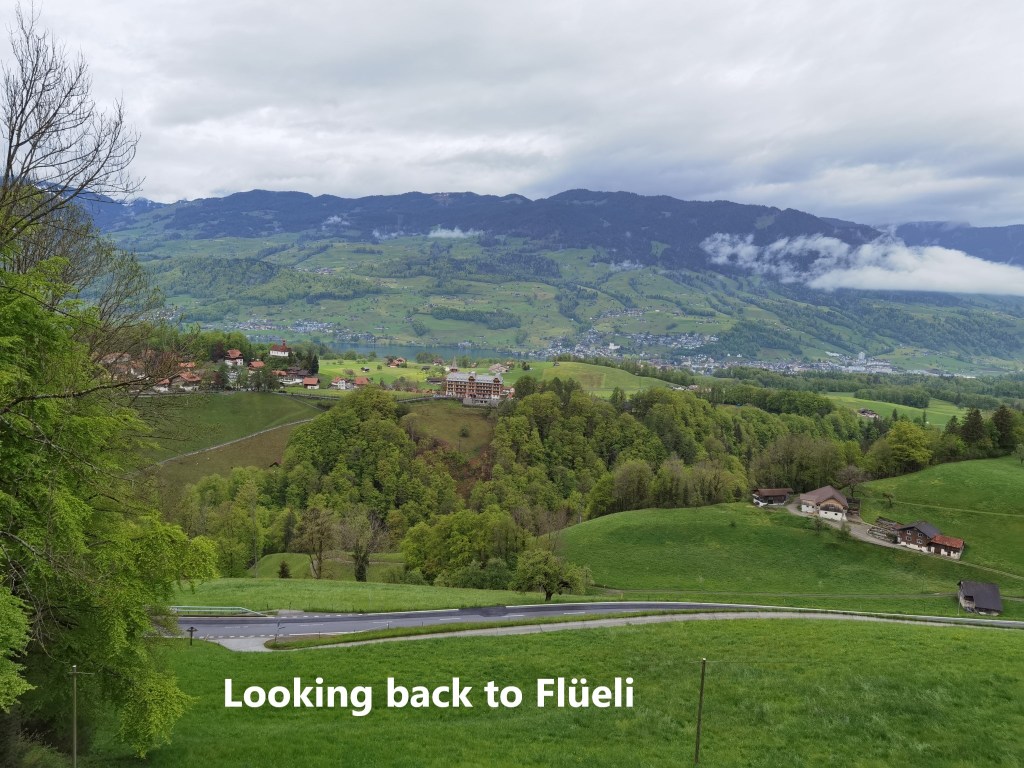
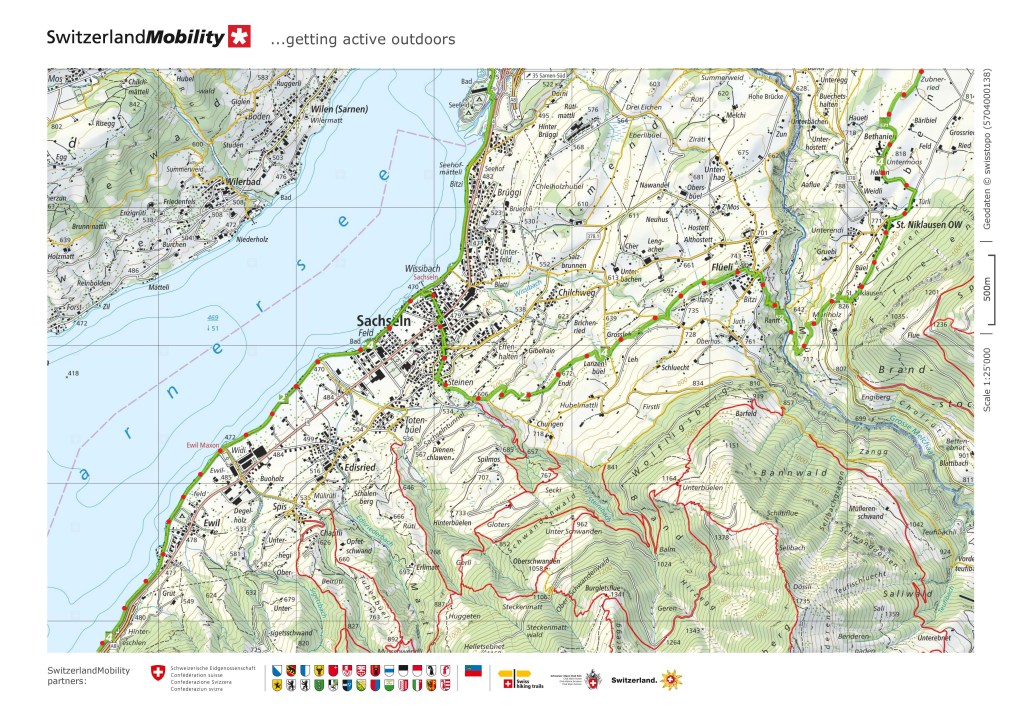
This time, I followed the trail exactly, and soon enough I was going through the town of Sachseln. It started to rain about that time, and my raingear was needed. From Sachseln, the trail climbed once again to Flüeli. Along the way, and looking back at the Sarnersee, a band of cloud had formed above the lake, but the view was clear, despite the rain.
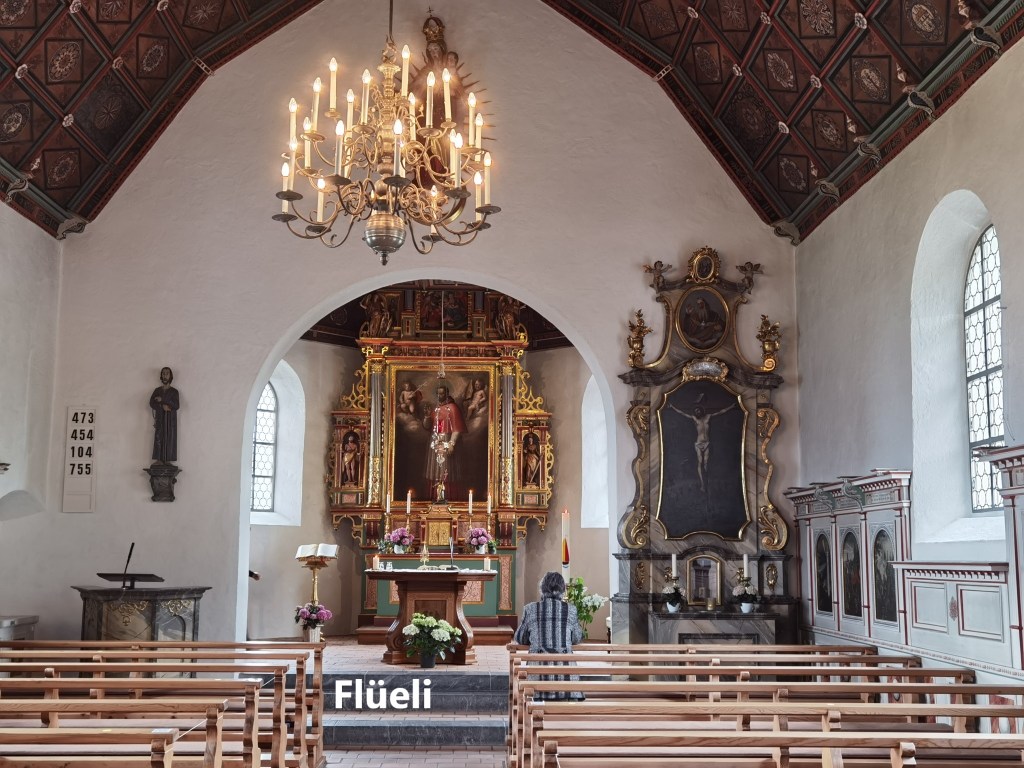
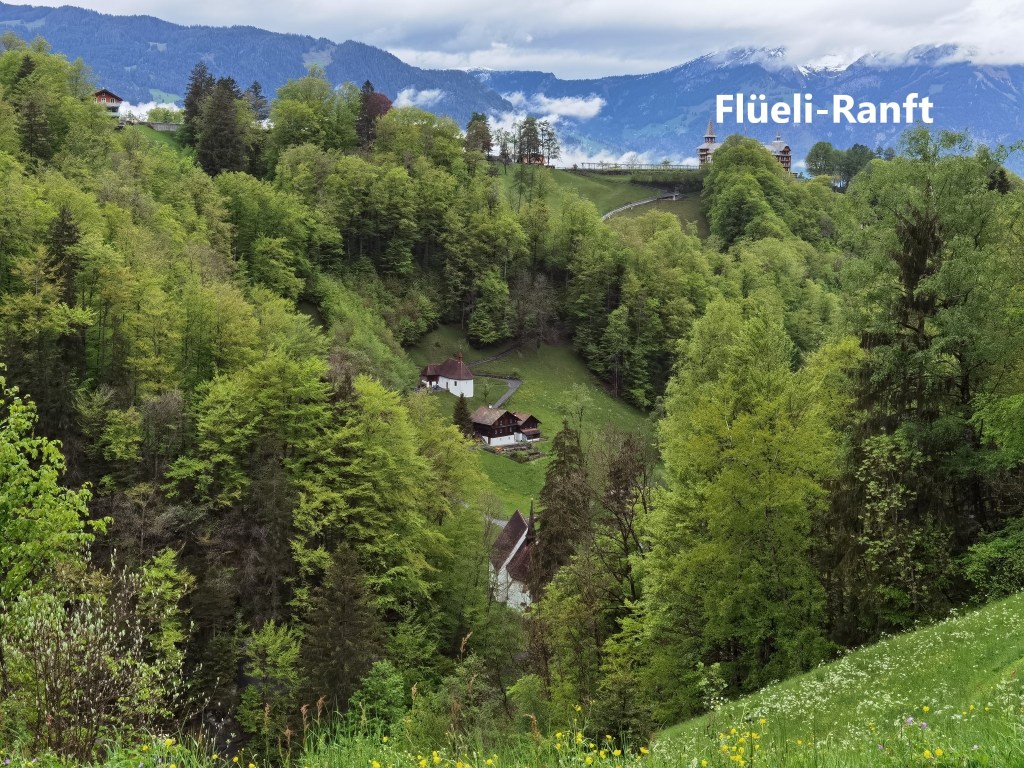
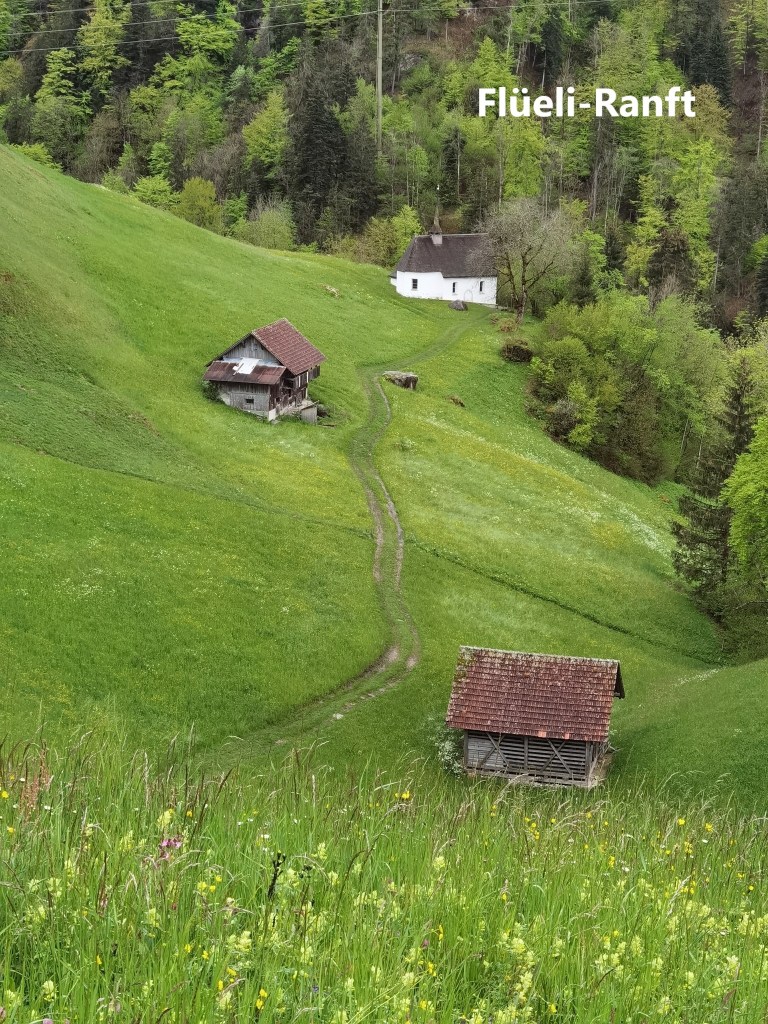
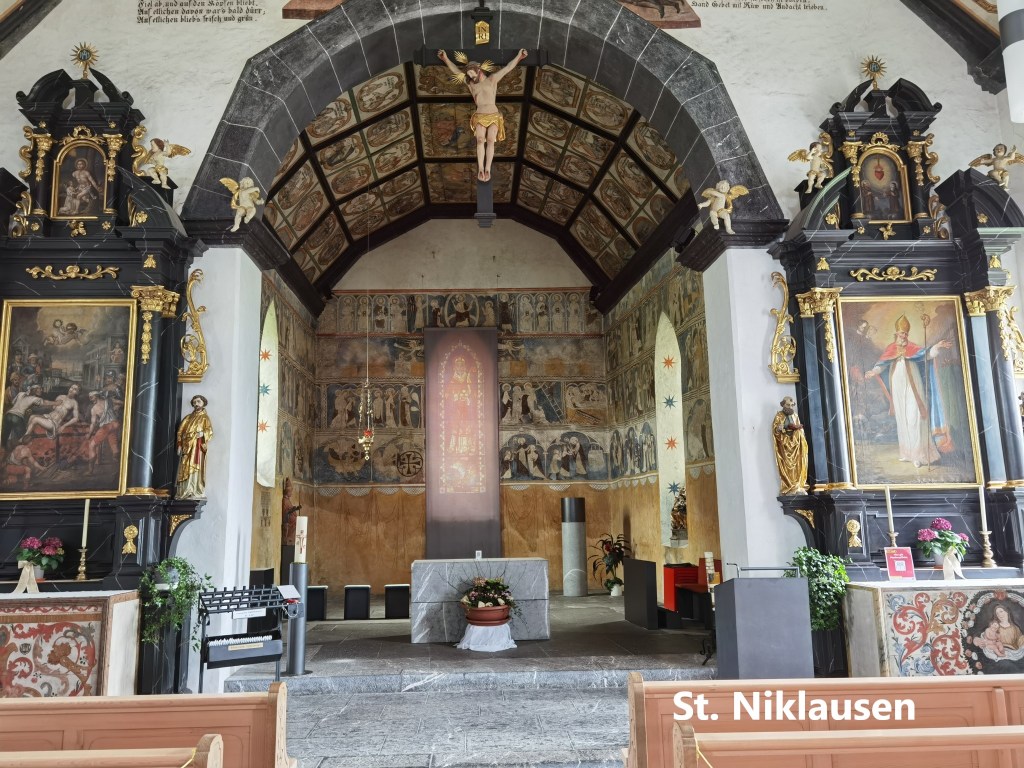
Because I intended to follow the marked trail and not go up into the high mountains, I tool a little bit more time in the village. The village church is richly decorated for such a small place. Once again, I descended into the gorge at Ranft, passed the small churches there, and came back up to the upper chapel. The trail continued on up to the church of St. Niklausen. This time, not in such a hurry, I had the chance to go in. Again, for a small village church, it is richly decorated.
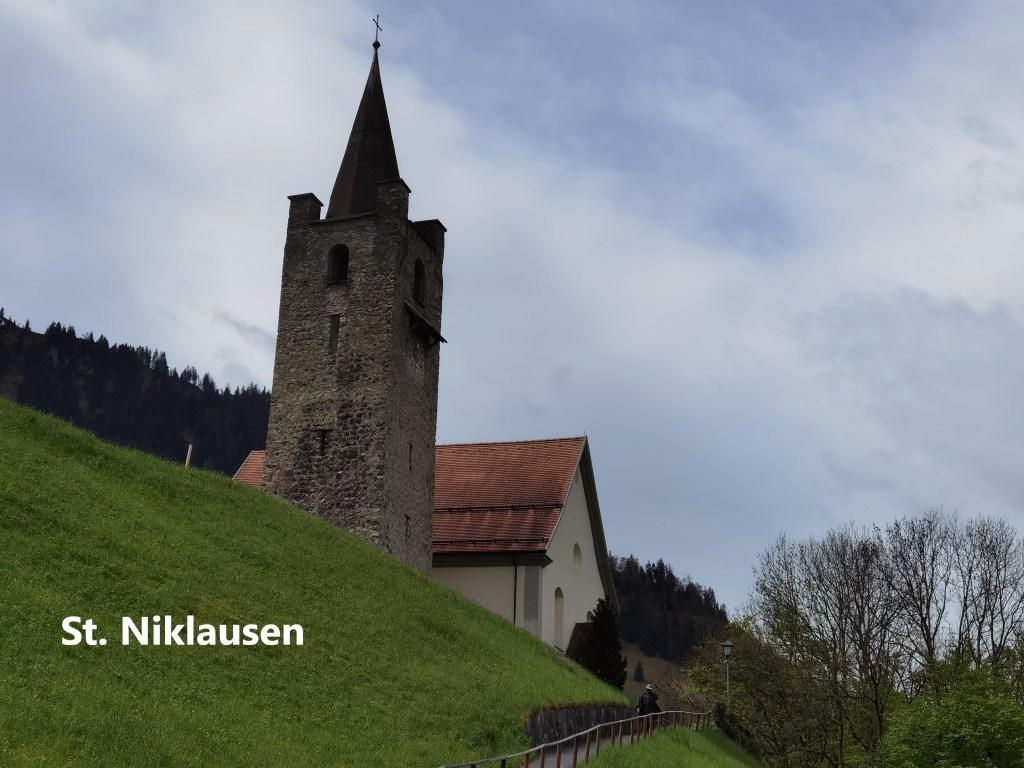
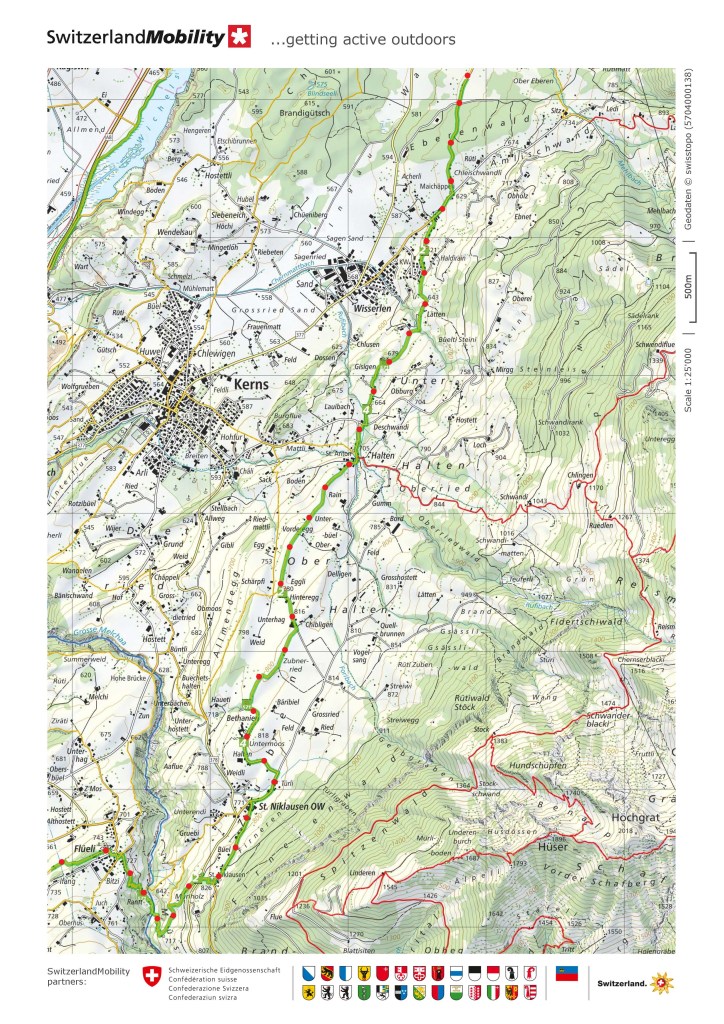
The church at St. Niklausen is the highest point on the trail. The route descends then to the village of the same name. I followed the route when it turned left, and looking to the south, I could see rainclouds not far away, though to the north, the Stanserhorn was still clear.
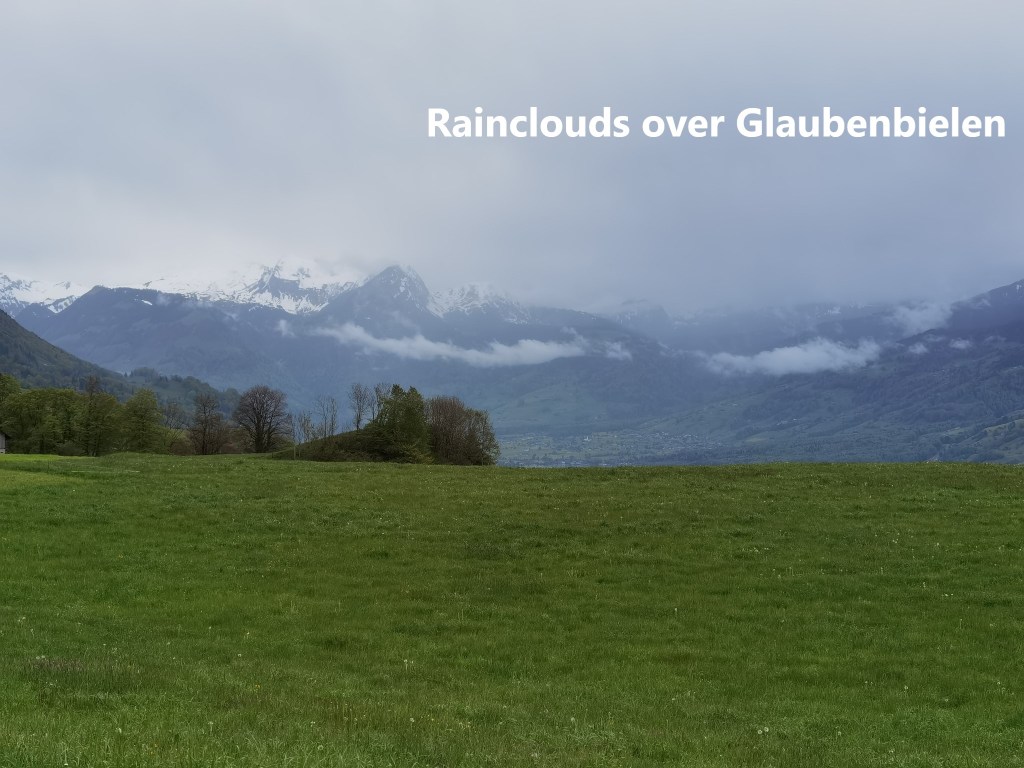
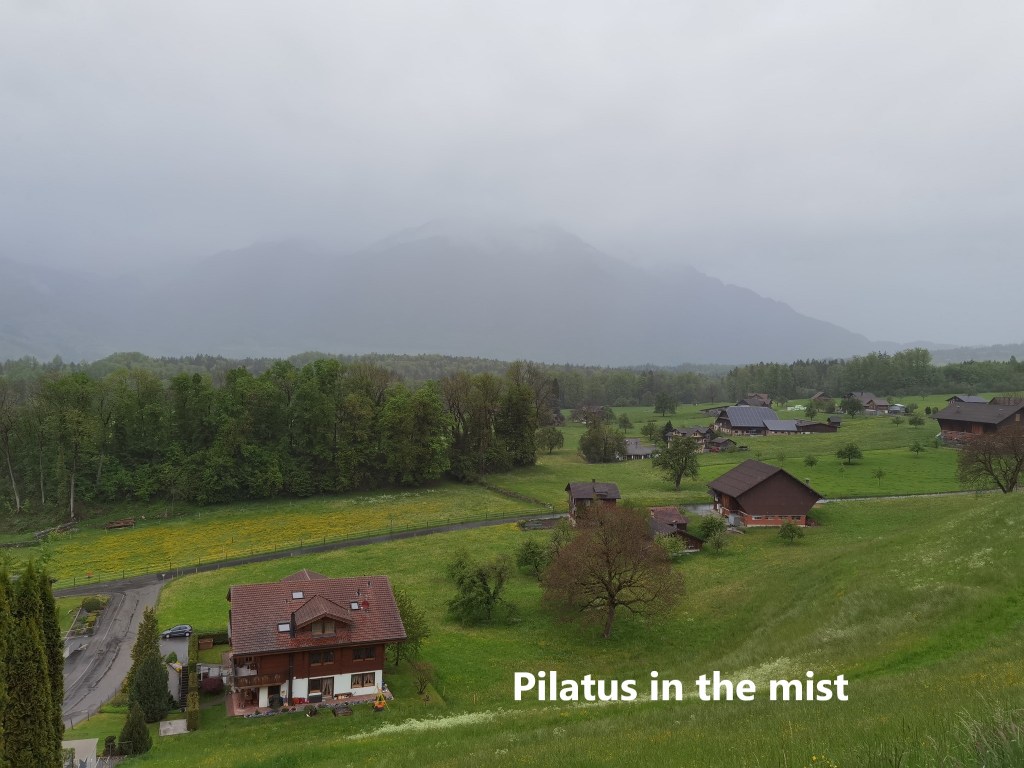
But it wasn’t long before the rain came my way. And soon even the Pilatus had almost disappeared completely in the cloud. I kept going though. This section of the route overlaps with the Swiss Via Jacobi, a feeder route for the Camino de Santiago. Because of that, there are a number of wayside chapels along the way.
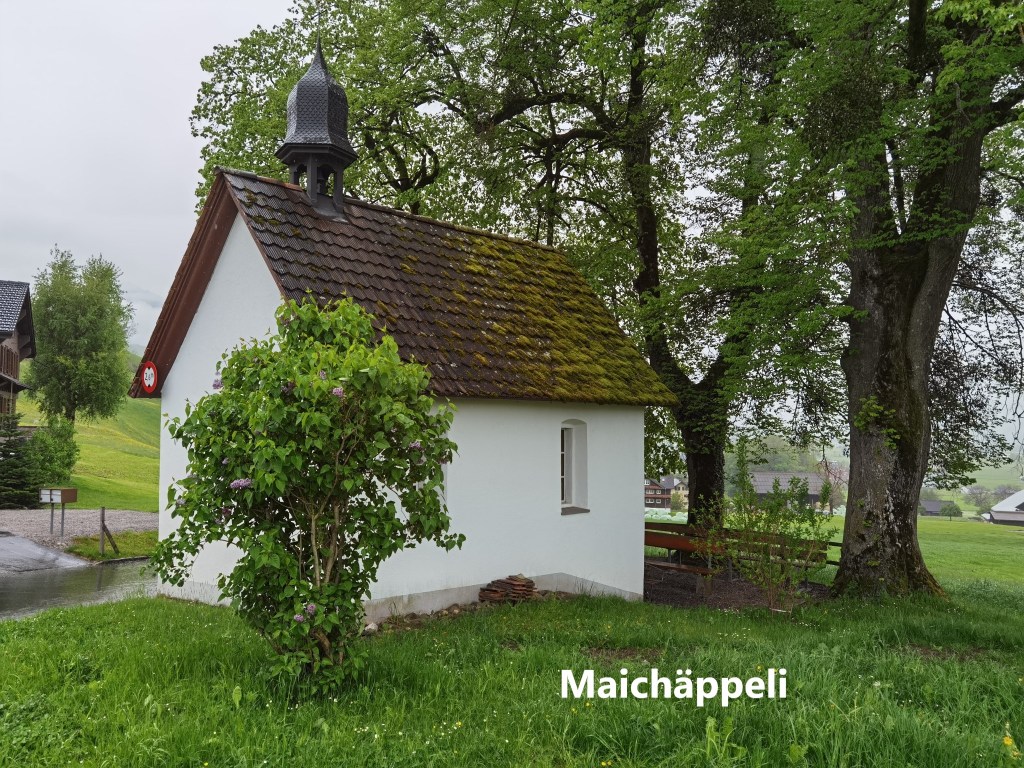

The chapel at Maichäpeli is older than it looks. It is mentioned for the first time in documents from 1676 because a Hans Josef Gabriel from Stans, at the age of 15, “took 3 Betti (rosaries) from the meyen Cäpeli unser lieben Frauen”, which his father subsequently paid for. Around 1930, a Lourdes grotto was built into the chancel from plaster stones from the Mehlbach, which collapsed during the earthquake of 1964 and would not be rebuilt on the advice of the monument preservation authorities.
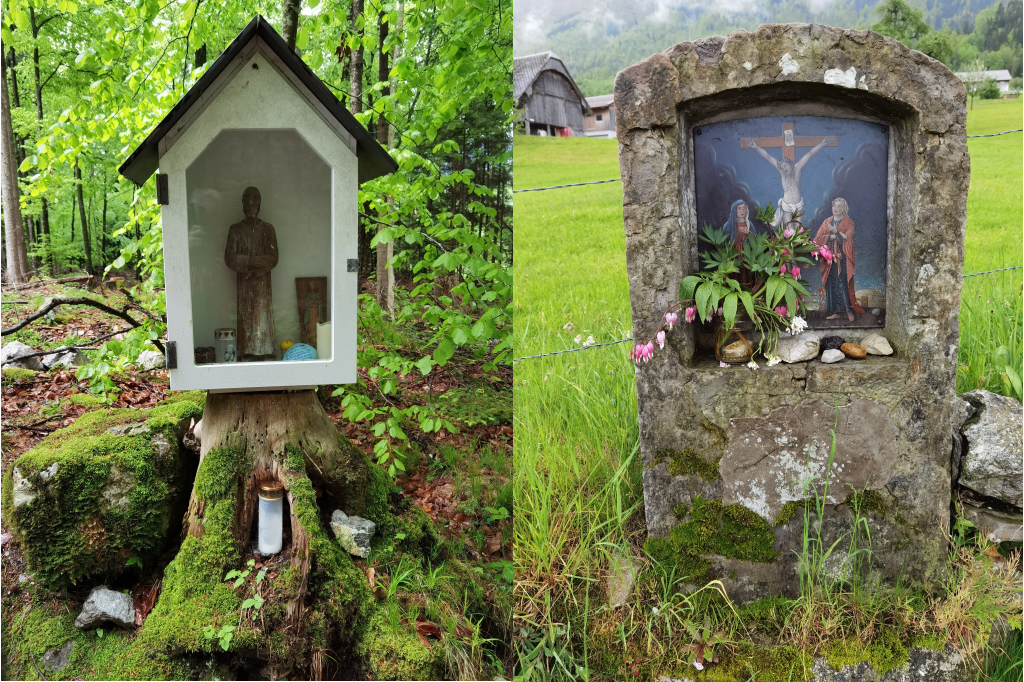
The route is also dotted with wayside shrines.
And somewhere along the way, I crossed from Obwalden canton into Nidwalden. It is one of the smallest of the Swiss cantons, with a population of just over 40,000. Back in the thirteenth century, it had joined with Obwalden to form a single canton called Unterwalden. It was under this name that Obwalden and Nidwalden formed an alliance with Schwyz and Uri at the end of that century to form the basis of what eventually became Switzerland. But the bond between Nidwalden and Obwalden was never very strong, and by the end of the fifteenth century, the two were moving apart form each other politically. When Napoleon invaded Switzerland in 1798, the people of Nidwalden resented many of the restrictions imposed and supported rebellions. Over 400 people were killed in those years. A sobering thought.
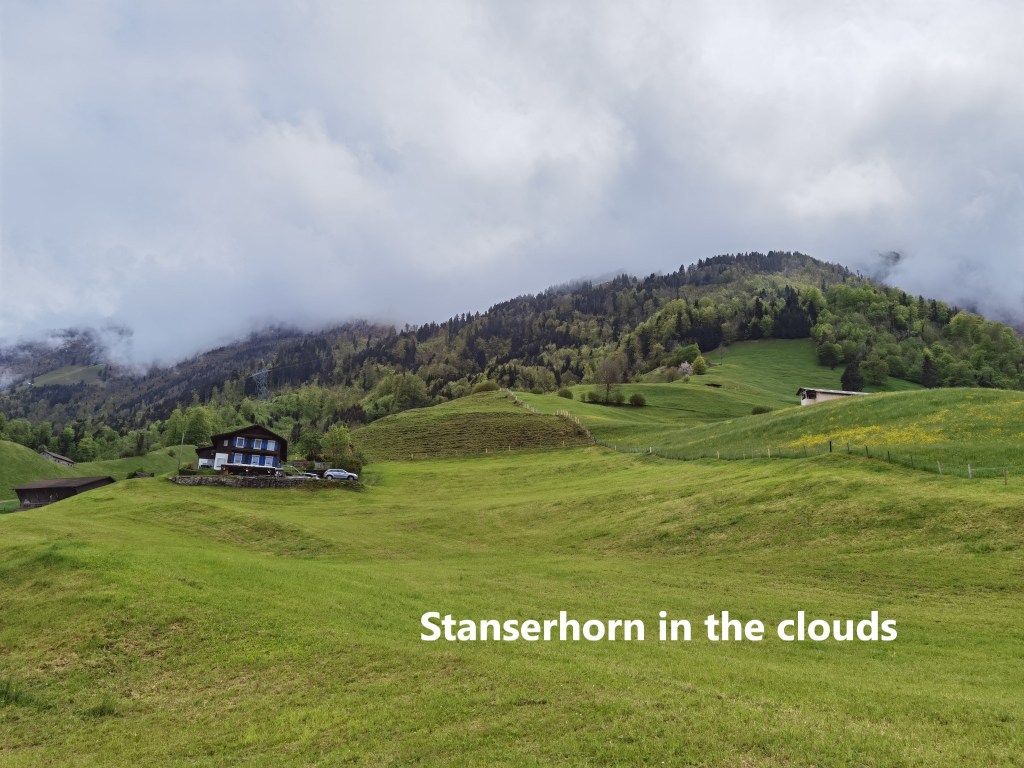
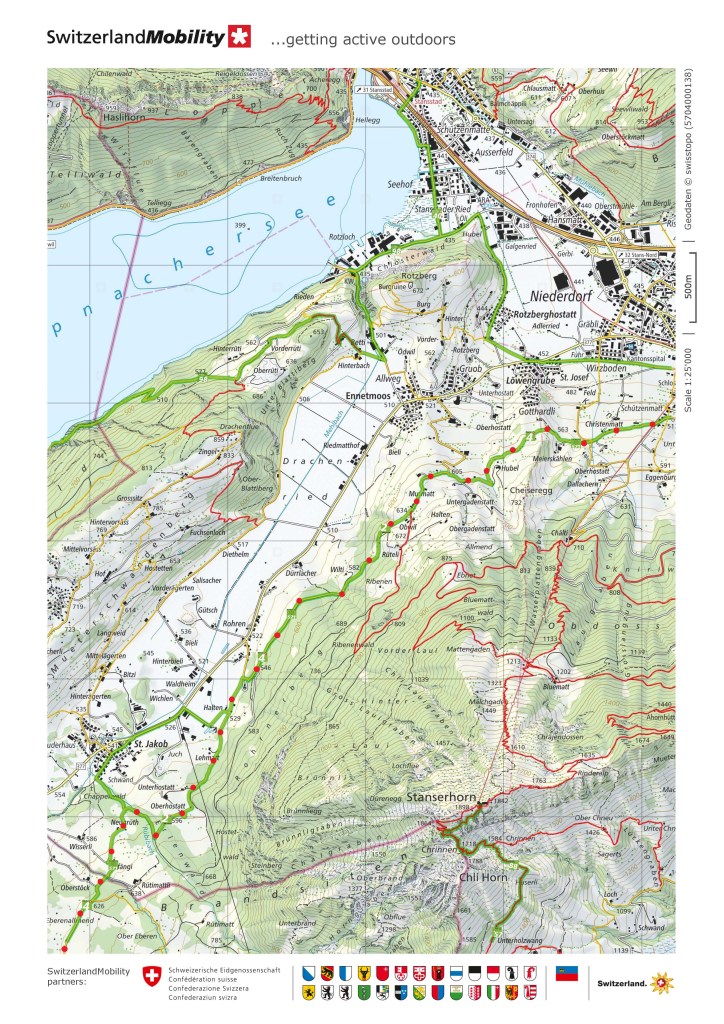
My route continued on swinging around to the northern side of the Stanserhorn, which was shrouded in cloud as I went.
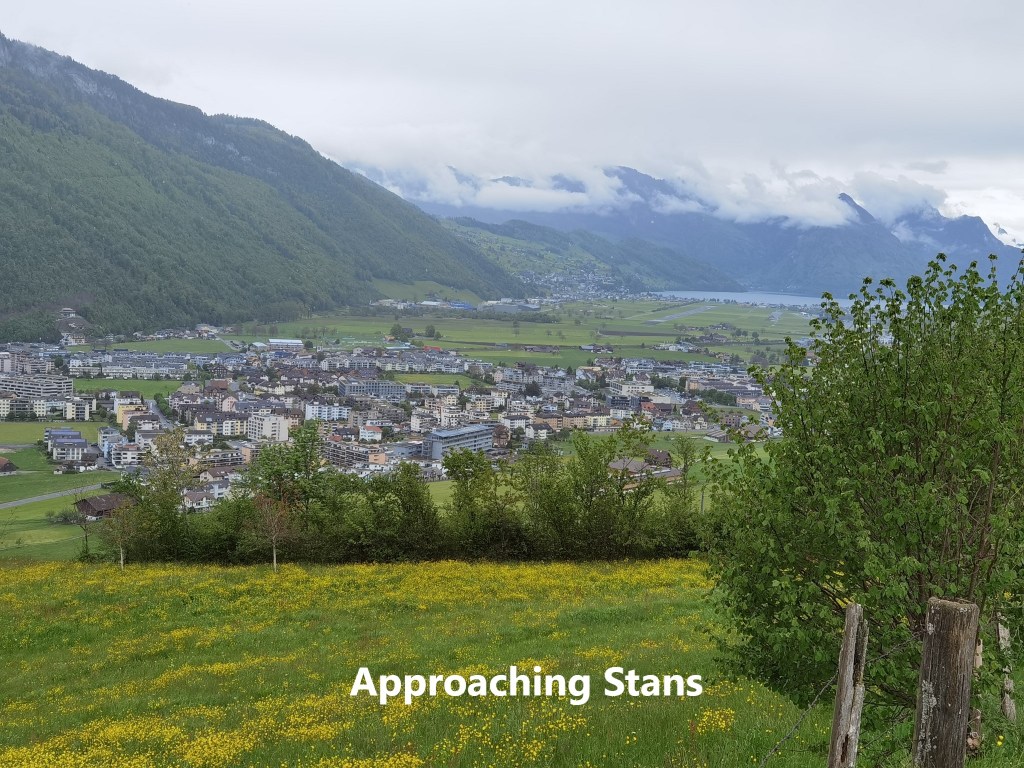
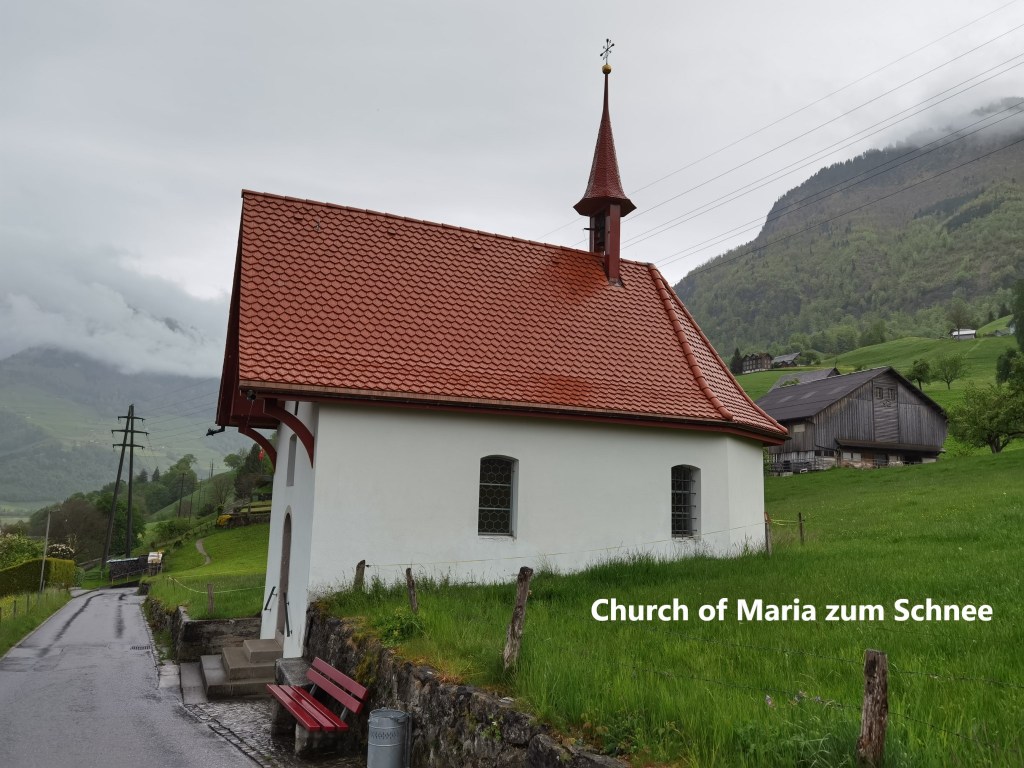
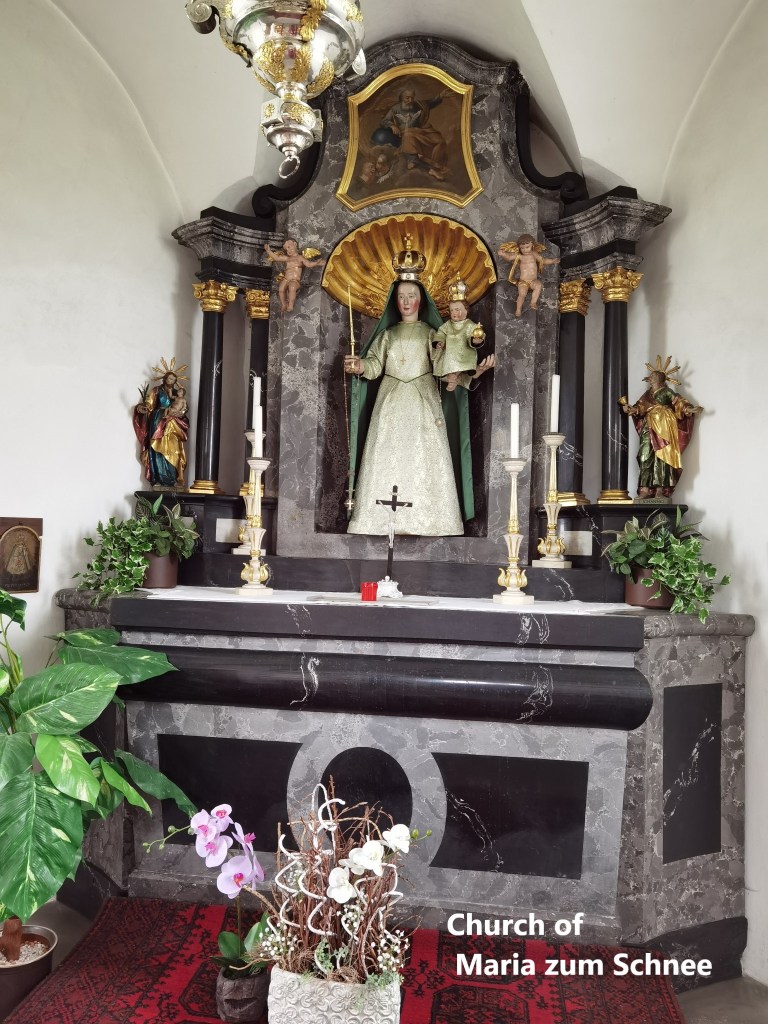
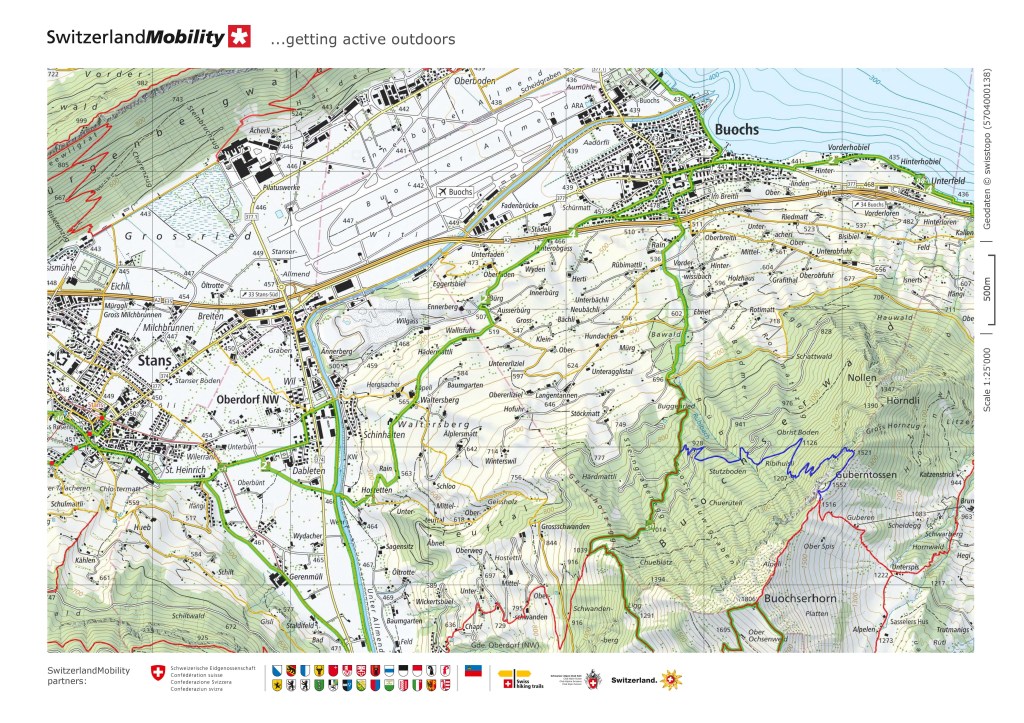
Coming near Stans, close to the end of the walk, I came to the little chapel of “Maria zum Schnee”. The legends tell that a big avalanche with a lot of debris rolled down to the valley and came to a miraculous stop in this place. In gratitude, the people of Stans arranged for the chapel to be built. The chapel was built in 1689 and consecrated in 1717 by Abbot Joachim Albini of Engelberg in honor of Mary of the Snows, Joseph, and the martyr Caesarius. According to the inscription on the back, the baroque image of the Virgin Mary attached to it was made by Franz Josef Murer from Beckenried in 1771. The two figures on either side of the altar are St. Joseph and St. John.
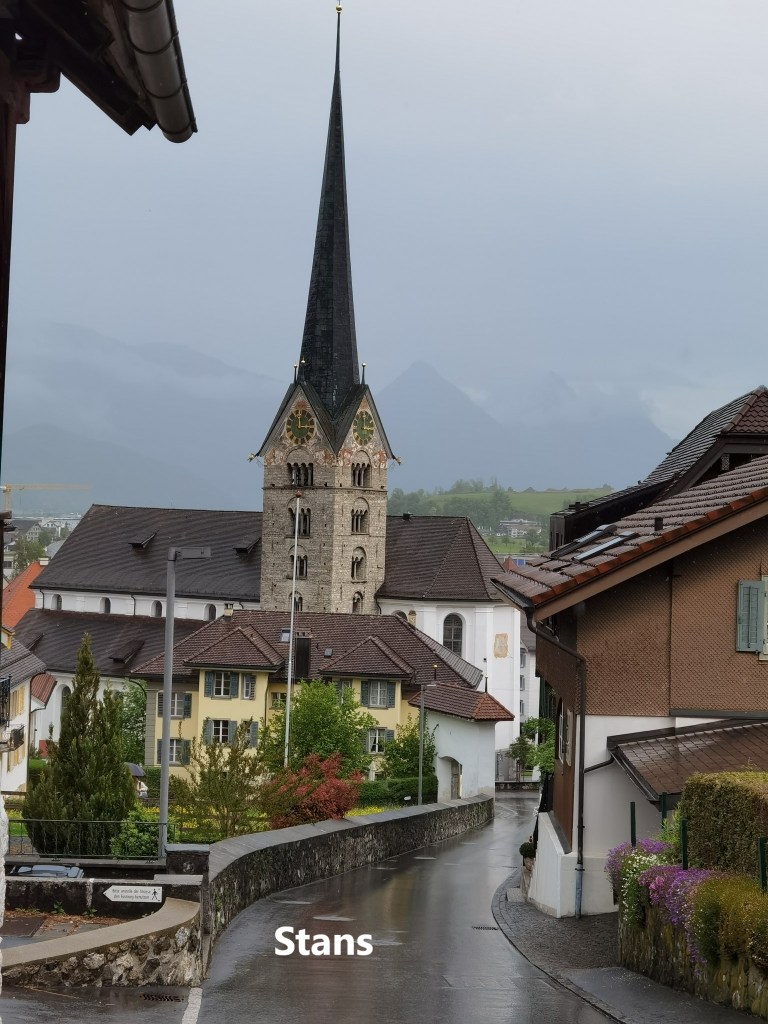
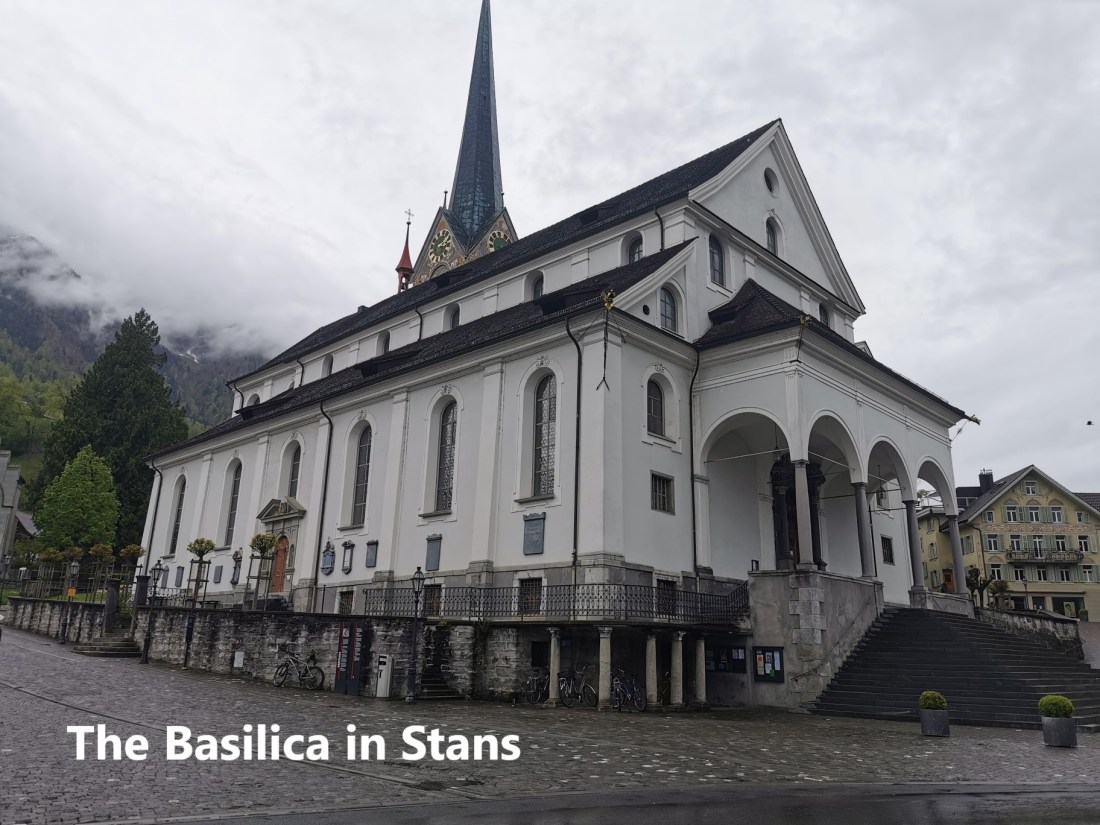
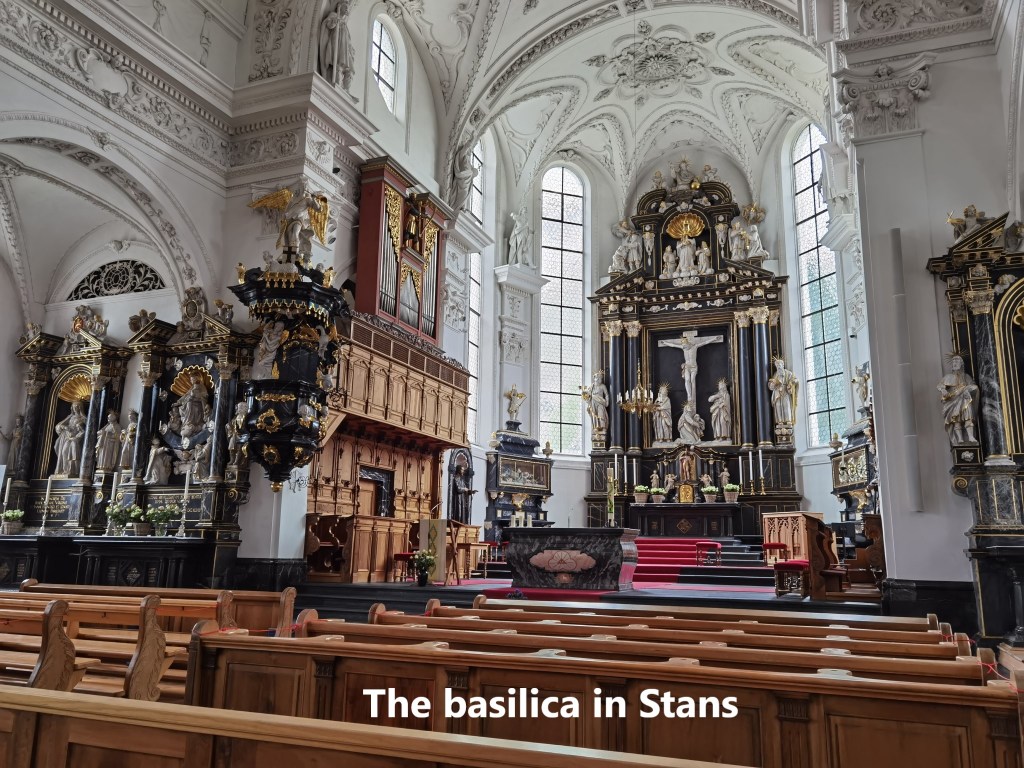
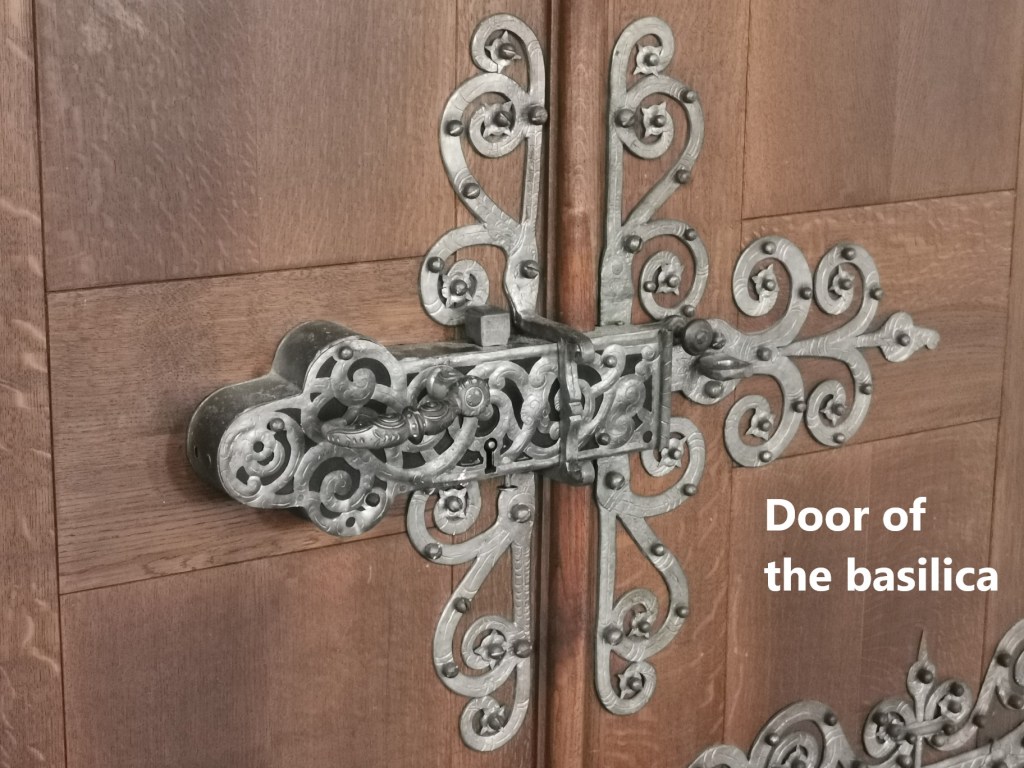
From there, it was only a short distance to Stans itself. Coming down the hill into the town, the first sight to greet me was the basilica, towering above everything as it does. The Basilica is worth a visit, being richly decorated inside. The door has one of the most elaborate locks or handles that I have ever seen, which is interesting, because it is completely redundant. The door opens automatically on approach!
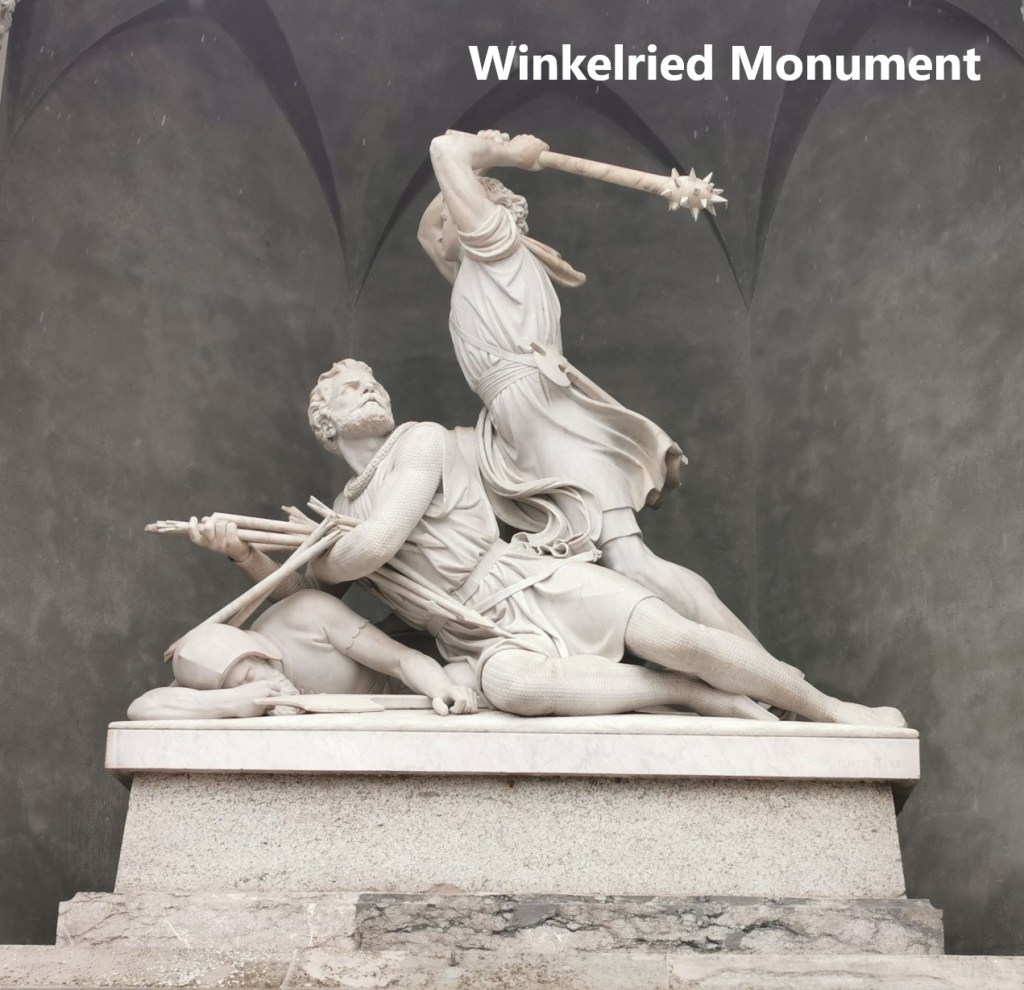
Close to the basilica is the Winkelried Monument, commemorating the victory of the Swiss cantons at the battle of Sempach in 1386. A force from various nations, dukedoms, and other realms, but under Austrian command, set out to break the Swiss confederacy. They attacked the canton of Luzern, and besieged Sempach, razing the areas they went through. A smaller Swiss force came to relieve the town. The two forces met unexpectedly and it became a classic encounter battle. It is not clear how the battle came to swing in favour of the Swiss. The hot weather, the terrain, and poor deployment of their troops militated against the Austrians. But the Swiss account is that Arnold von Winkelried threw himself on the Austrian lines, getting himself killed but creating a breach, which the rest of the Swiss exploited to win the battle. There is a film called The Man who shot Liberty Valance¸ containing the famous line: When the legend is bigger than the truth, print the legend”. And the Swiss have done that in this case.
It is just a short walk from the basilica to the train station in Stans, and then I was on my way back to Basel. I finished the day with a step count of 46,002.
I might come back to this area later in the year to ahve another go at getting to Stans over the mountains, when the weather is more stable and the snow is gone. But for now, I will go on with the trail. The next stage is waiting.

 Walkingman