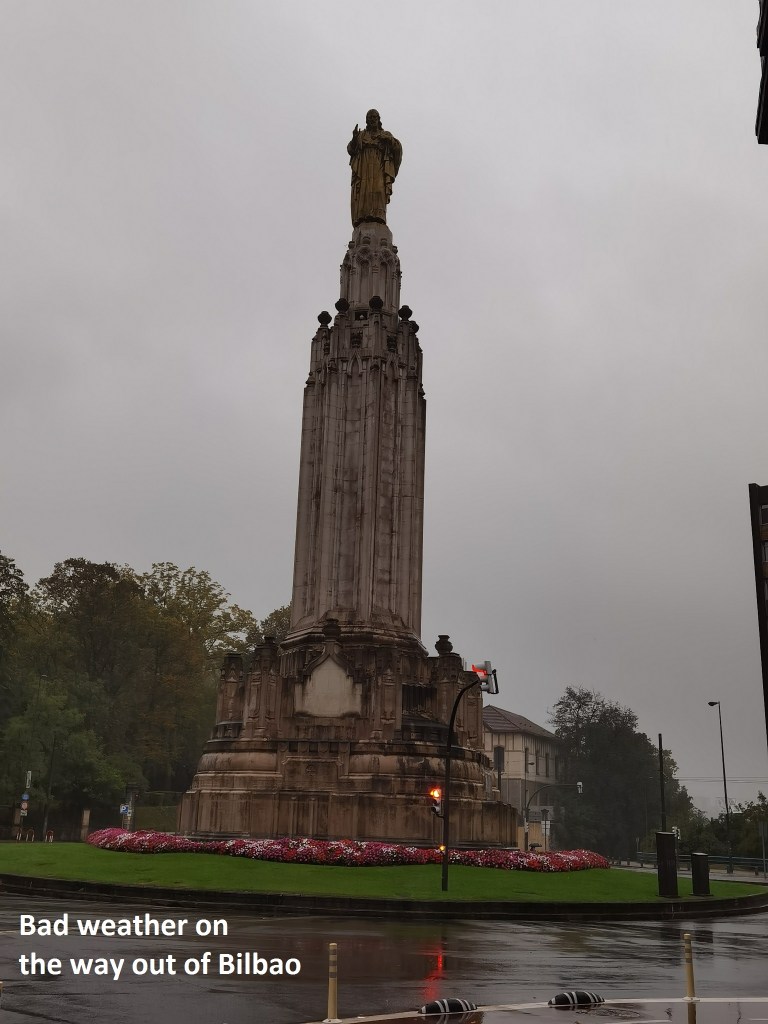
The weather was pretty awful when I was leaving Bilbao. I had arisen early, and when I looked out the window, although the streets were wet, people were not using umbrellas. But by the time I had breakfast, packed everything, and was on my way out, it had worsened. Everyone had umbrellas and raingear.
While the older part of Bilbao is a maze of small streets with great character, the newer part of the city on the other side of the river is wider streets laid out in a geometric pattern. One street took me straight through the Federico Moyua Plaza and on to the Monumento al Sagrado Corazon de Jesus, which really marks the end of the city centre.
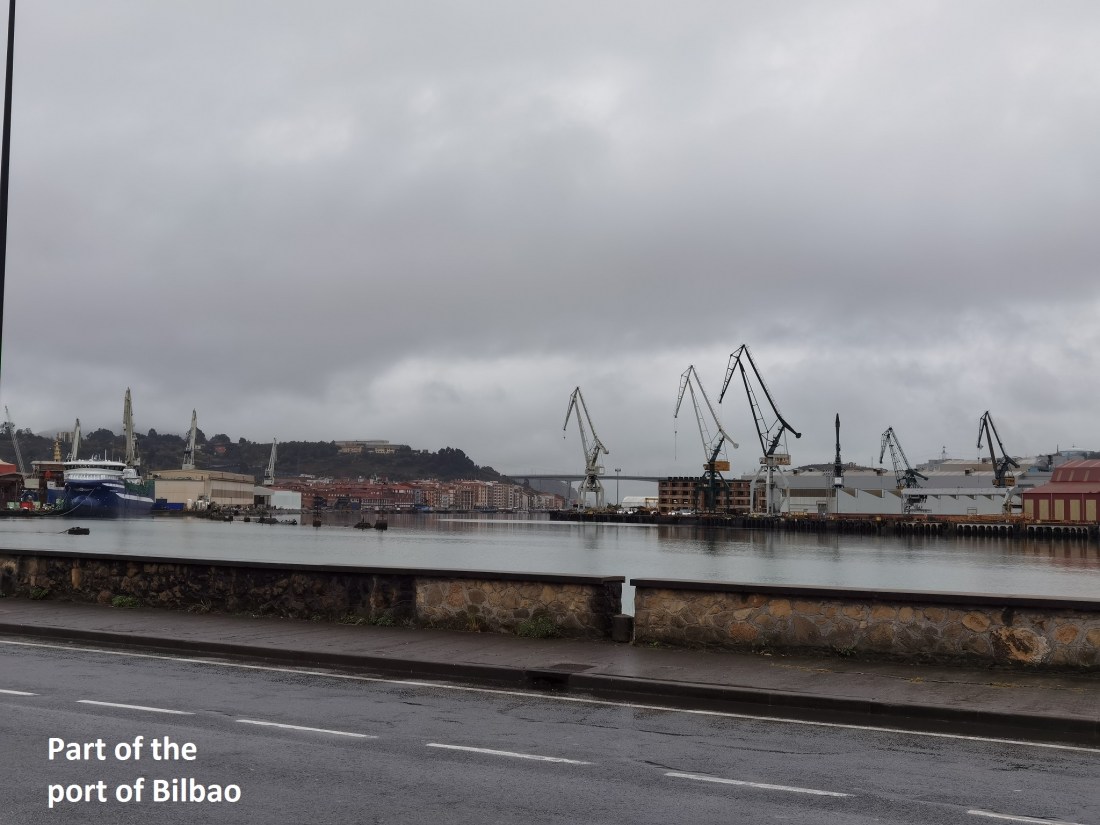
My route crossed over the river, and then followed the riverside northwards. When in the centre of Bilbao, it is easy to forget that this city is a port. Ships of various kinds were visible in the port, as well as ones that seemed to be just there for maintenance work.
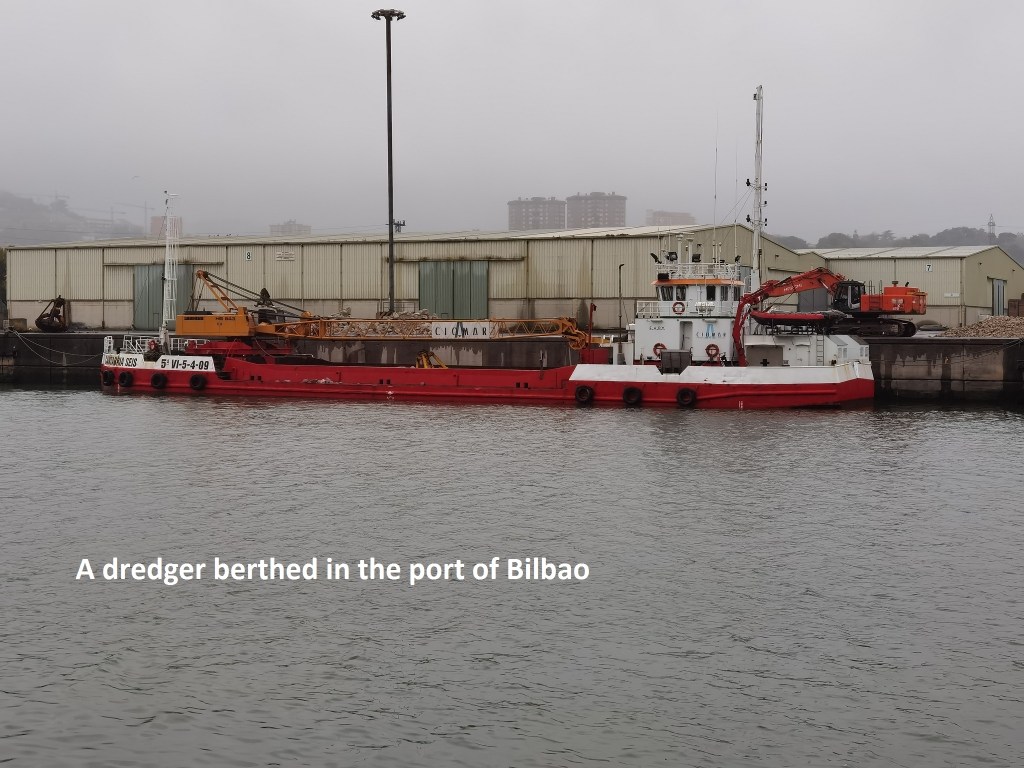
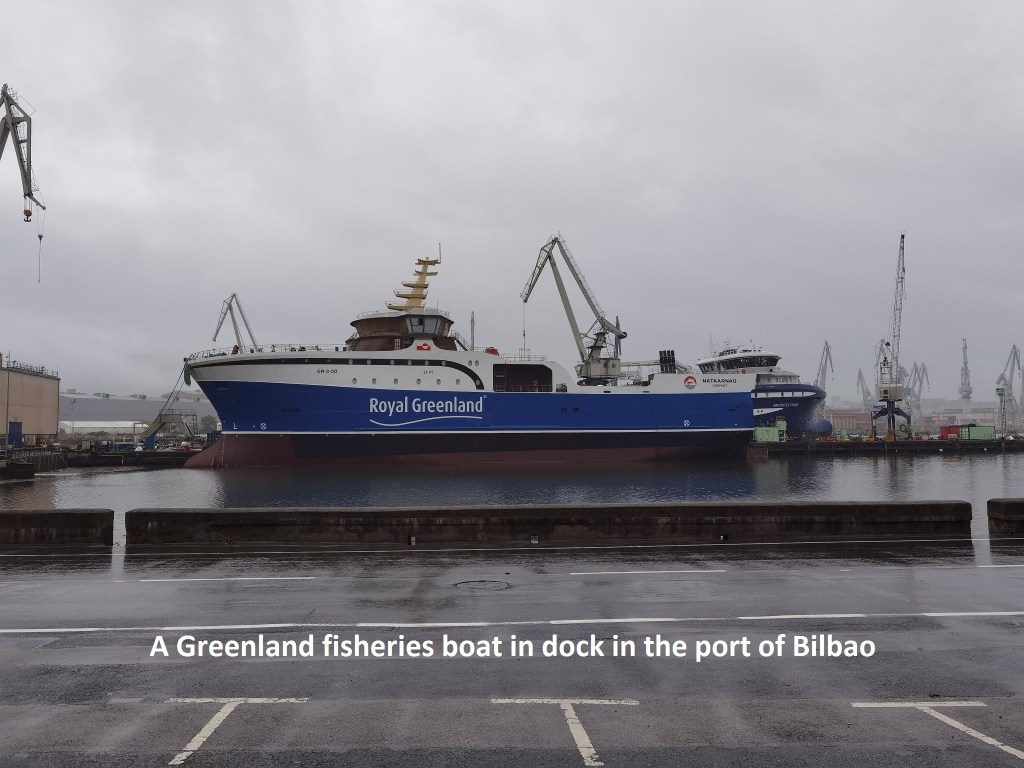
It continued raining as I made my way along, the port on one side, and a string of car dealerships and home appliance sales outlets on the other. As I approached Portugalete, the rain eased off, and by the time I approached the river crossing, it had stopped altogether.
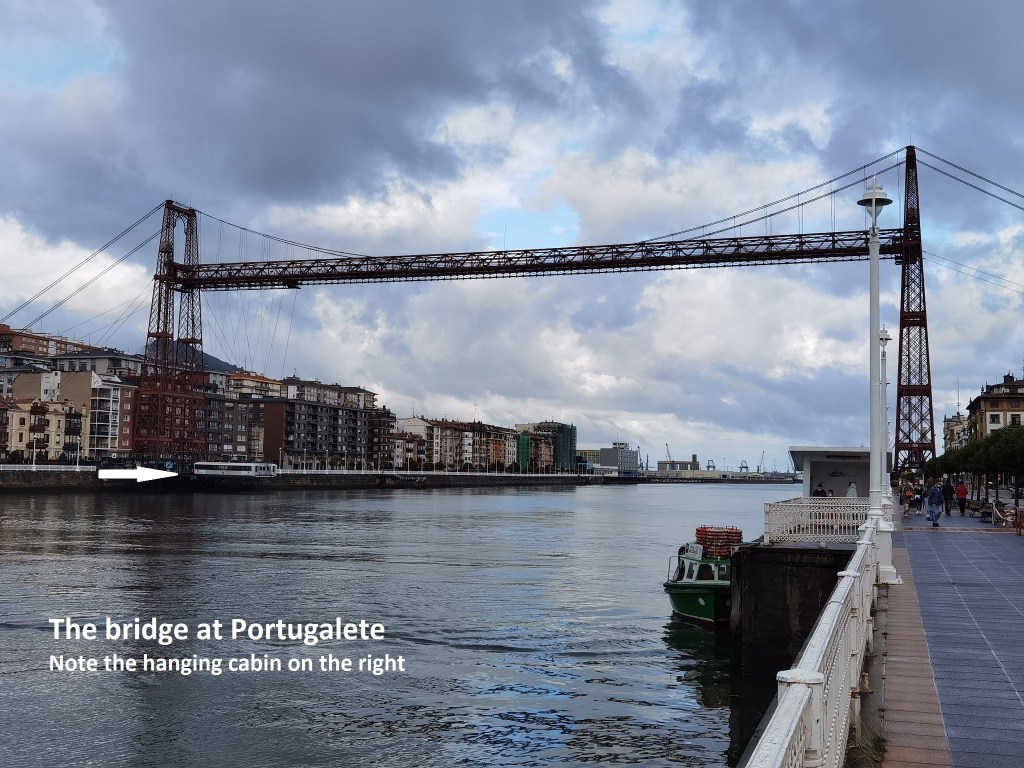
The Vizcaya Bridge in Portugalete is a strange construction. It is a transporter bridge, in that the structure is used to move a cabin across the river, suspended on long cables from the gantry above. The bridge was designed by a disciple of the famous Gustav Eifel and has been in operation for over 120 years. It only stopped working once, when damaged in the Spanish Civil War. It is a UNESCO world heritage site.

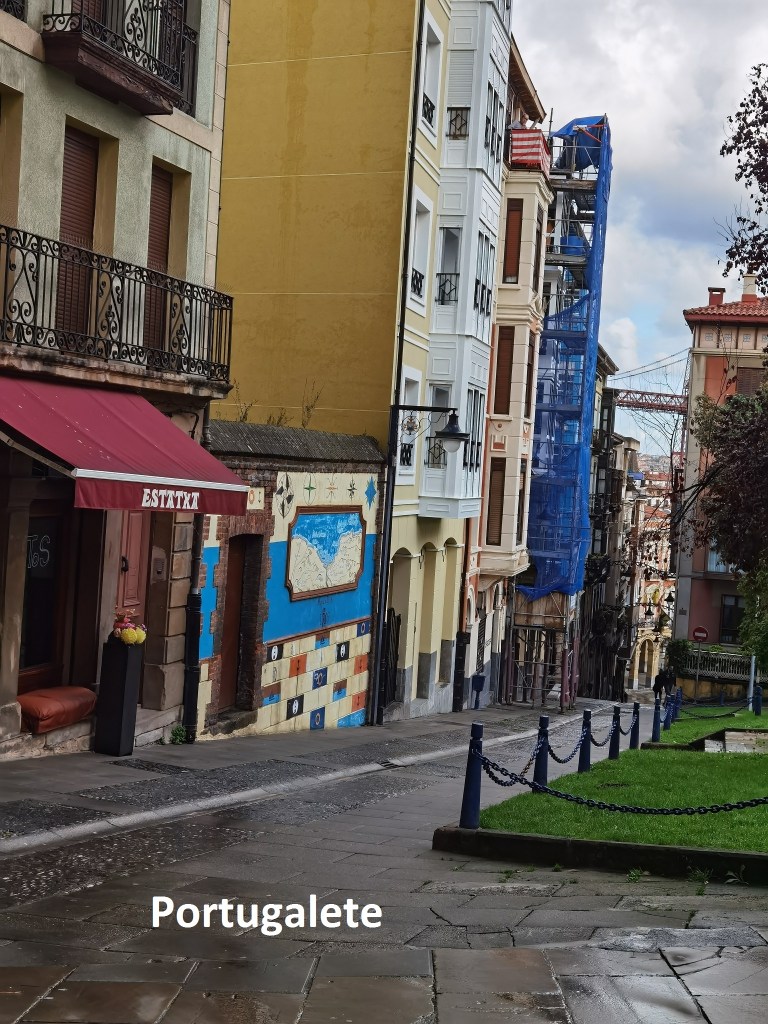
My route took me through the town of Portugalete and on out into the countryside beyond. Portugalete is a sizeable town in its own right, with business and industrial parks on the western fringes. Because of that, it takes quite some time before the route has completely left the city behind. But by now, the sun was out. I could even see my own shadow, which was missing all morning.


The route follows a kind of greenway for the most part, not a road, but a paved surface in three lanes: two for cyclists and one for walkers. At times the walking route branches off on its own, as in the photo above. Altogether, this continues for about ten kilometers to reach the sea at La Arena. Although it was a little past the peak of lunchtime service, the cafes were still open, and I had one of the best burgers I have ever tasted, washed down with a cold beer. And then it was time for the final short push to Pobena.
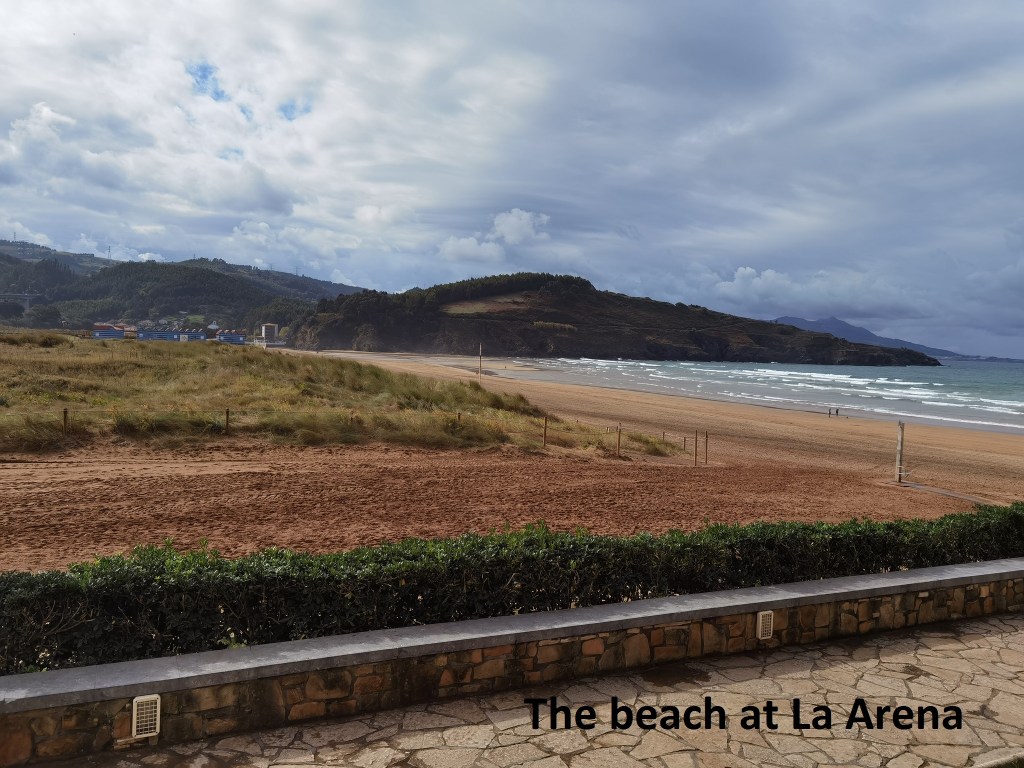

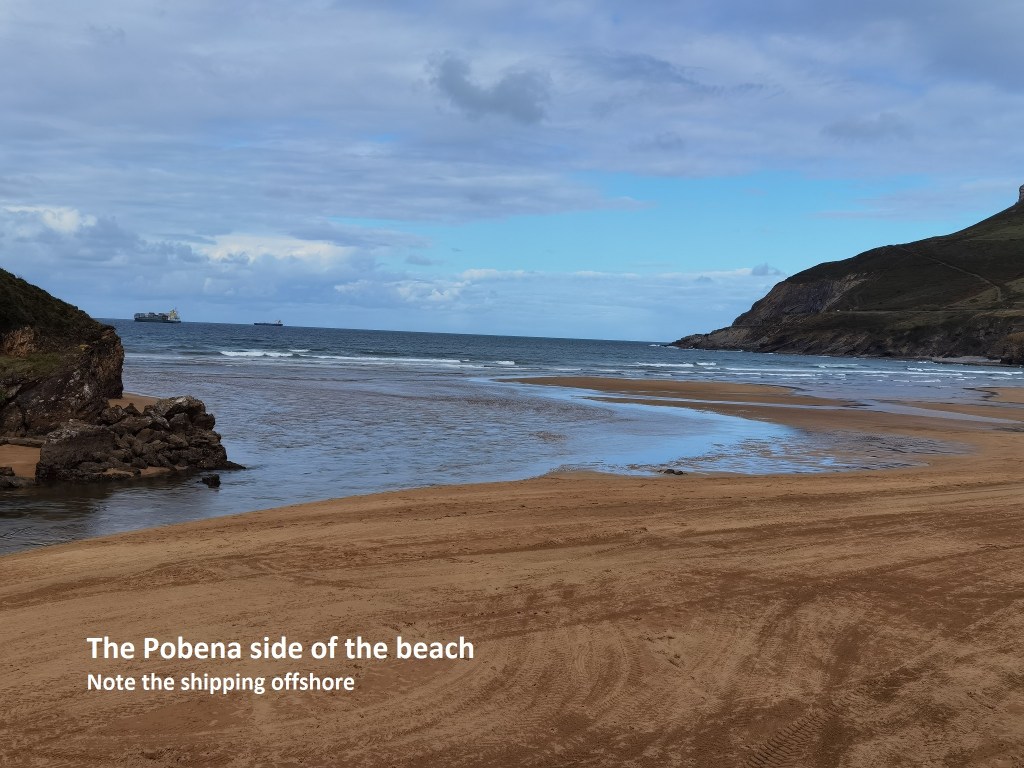
The route crosses the beach. To the south, there is the hum of traffic from the motorway A-8. I thought to myself, I don’t go as dast as the people on the motorway, but I think I see much more of the country as I pass. Pobena is a small village, but I had managed to find accommodation and that is where I am spending the night. I had to walk back down into the village to find a taberna where I had an excellent dinner. Tomorrow, I hope for better weather, though the route is shorter, so even if the weather is bad it should not be a problem.
Finally, today’s step count was 40,680.

 Walkingman
Hi Thurloch, thanks a lot for sharing, I follow you every day and admire your resilience. While I had never a doubt that you will stand the rain. There will be sunshine after rain and it looks you have a chance of better weather in the next days.
LikeLike