I am struggling a little to keep up to date, with a short delay in posting this account of Wednesday, October 7th.
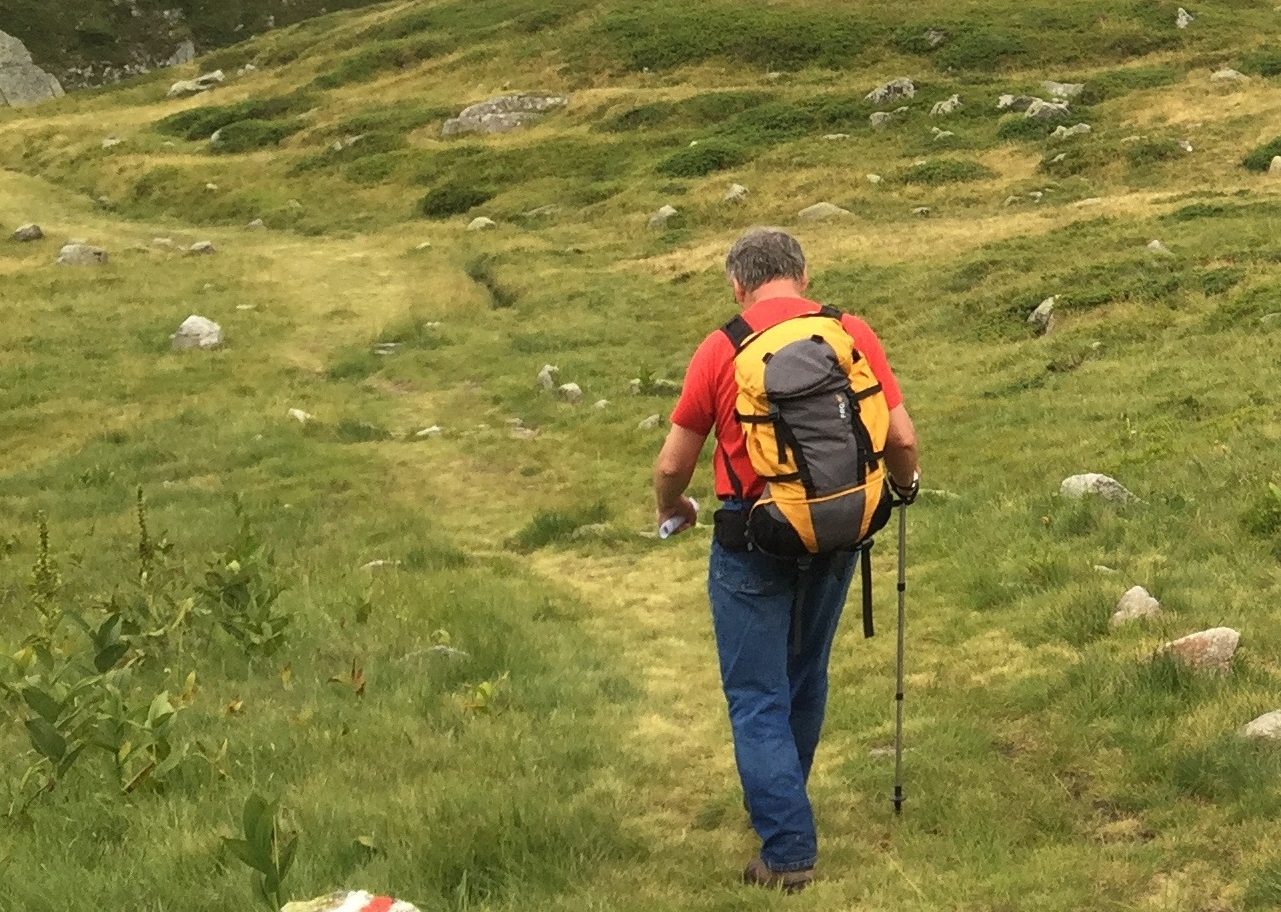
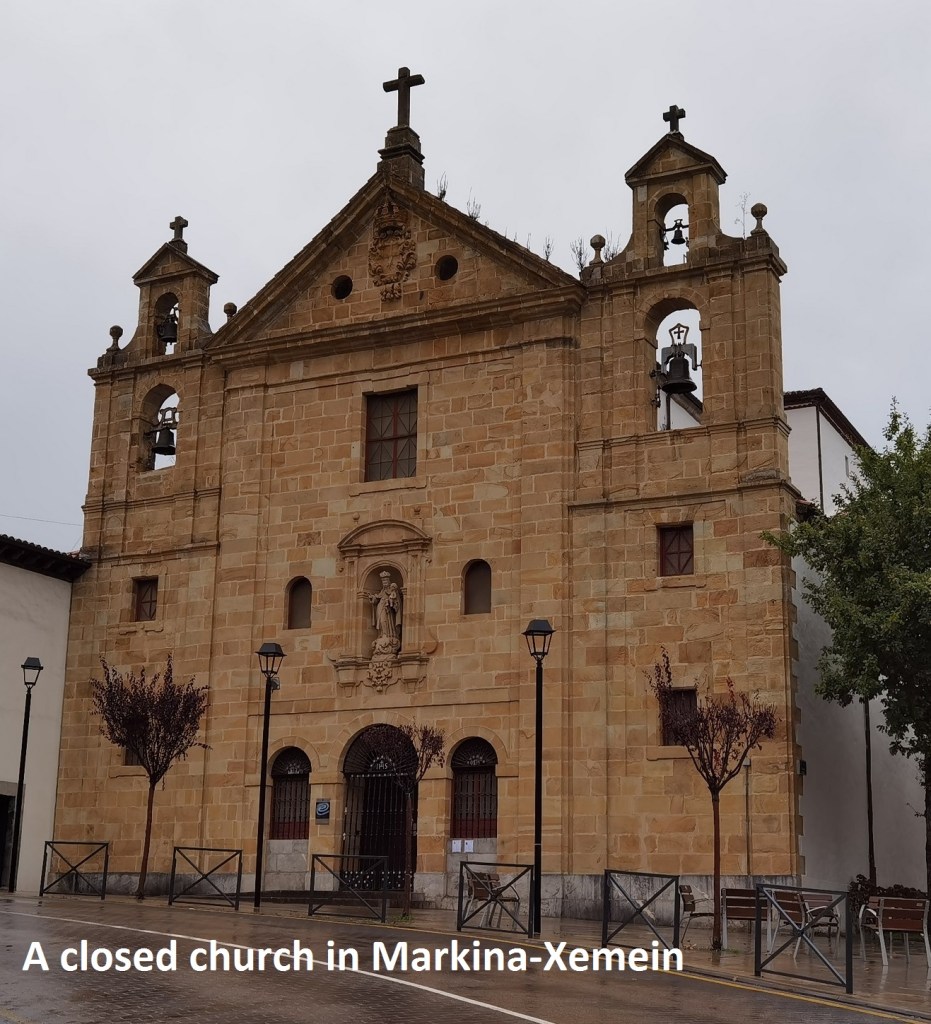
After my stay in the old iron smelting works, now a very nice hotel, I was ready to set forth. The weather forecast was promising, so what could go wrong? Well, quite a lot, as it turned out. While checking out of the hotel, I could hear the sound of rain on the roof of the adjacent porch. That was not on the agenda! But I took out the raingear, put it on, and headed away. It was probably only a shower, or so I thought. I went down the road, back into Markina-Xemein, still optimistic, and out onto the trail towards Gernika.
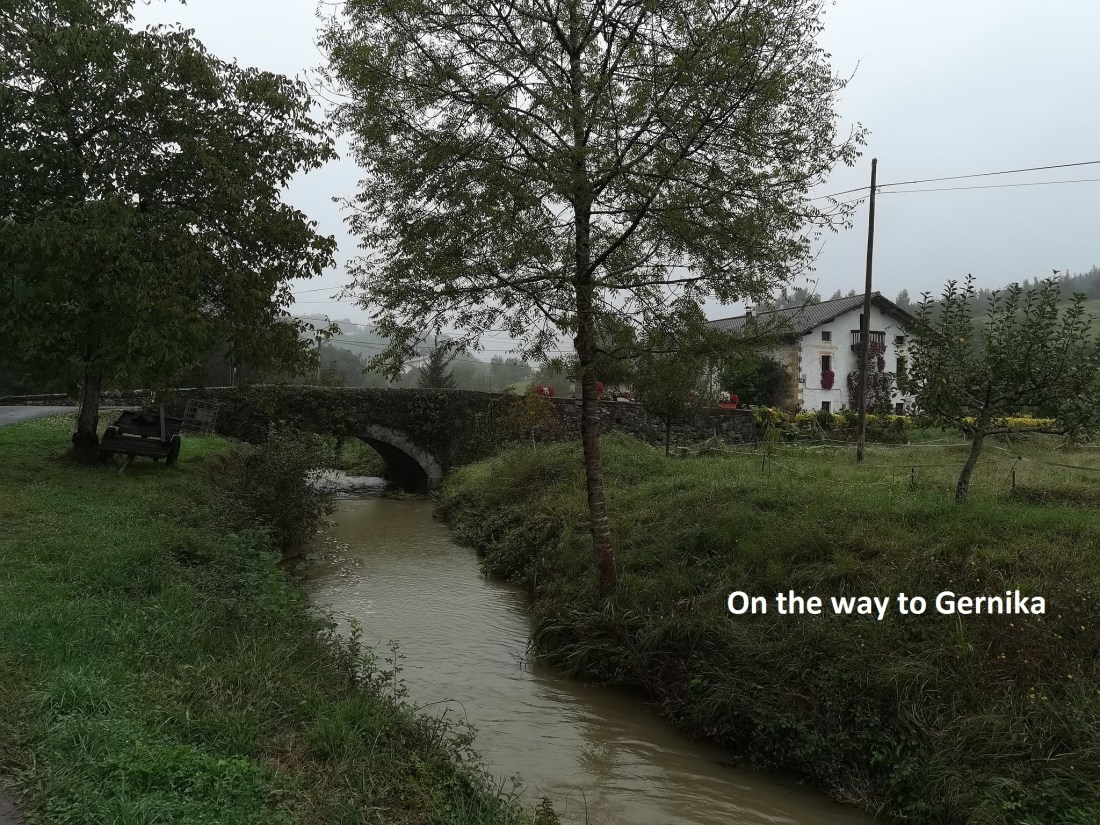
But my optimism was not well founded. The rain continued. It continued as I followed the trail alongside a local river.

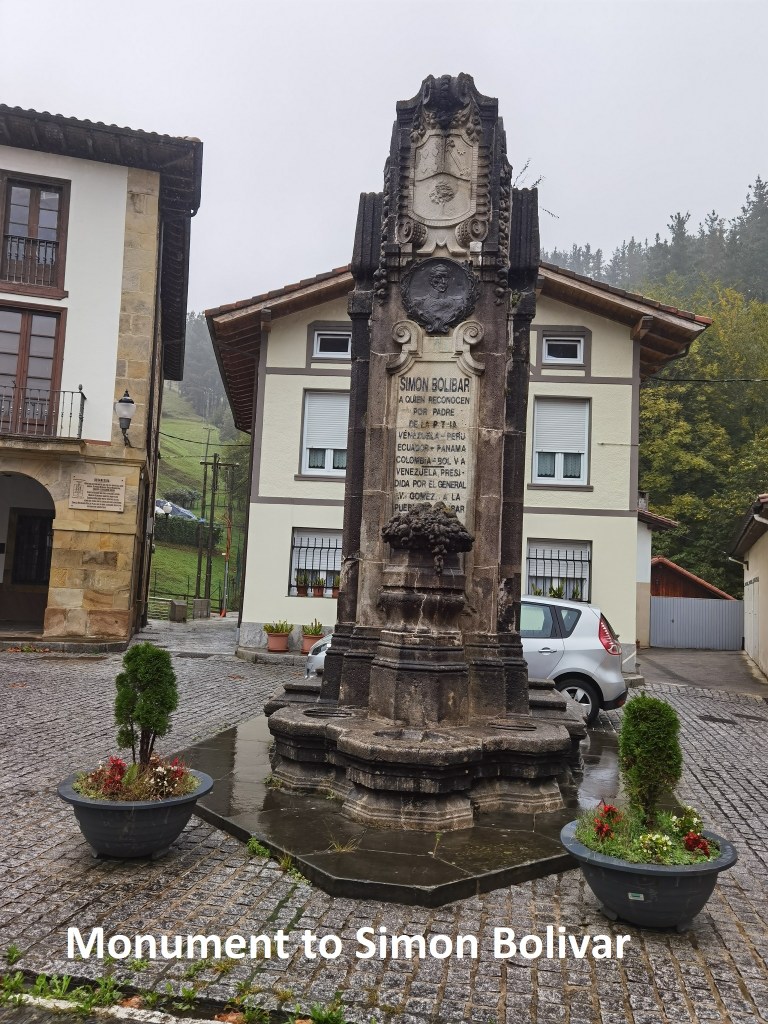
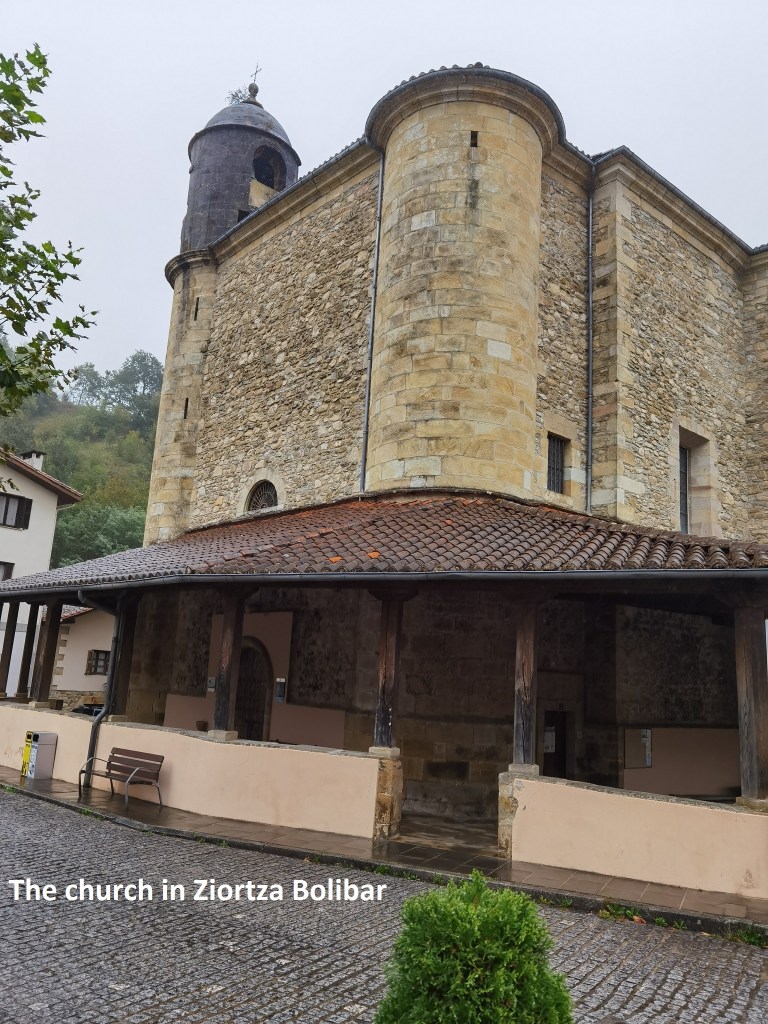
It continued as I reached the village of Iruzubieta. Nothing was open there anyway, so I continued on. The rain continued as I reached the village of Ziortza Bolibar. This village is the ancestral home of Simon Bolivar, so famous for liberating parts of South America from Spanish rule He is commemorated by a monument in the village. The church was closed. So were the tabernas.
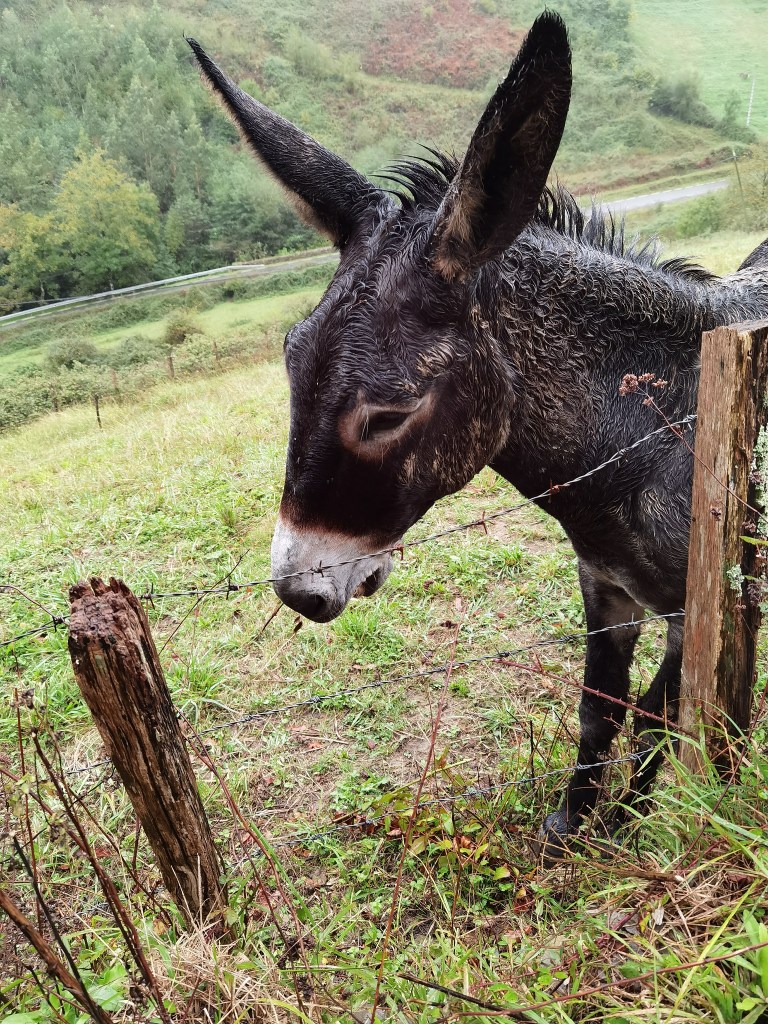
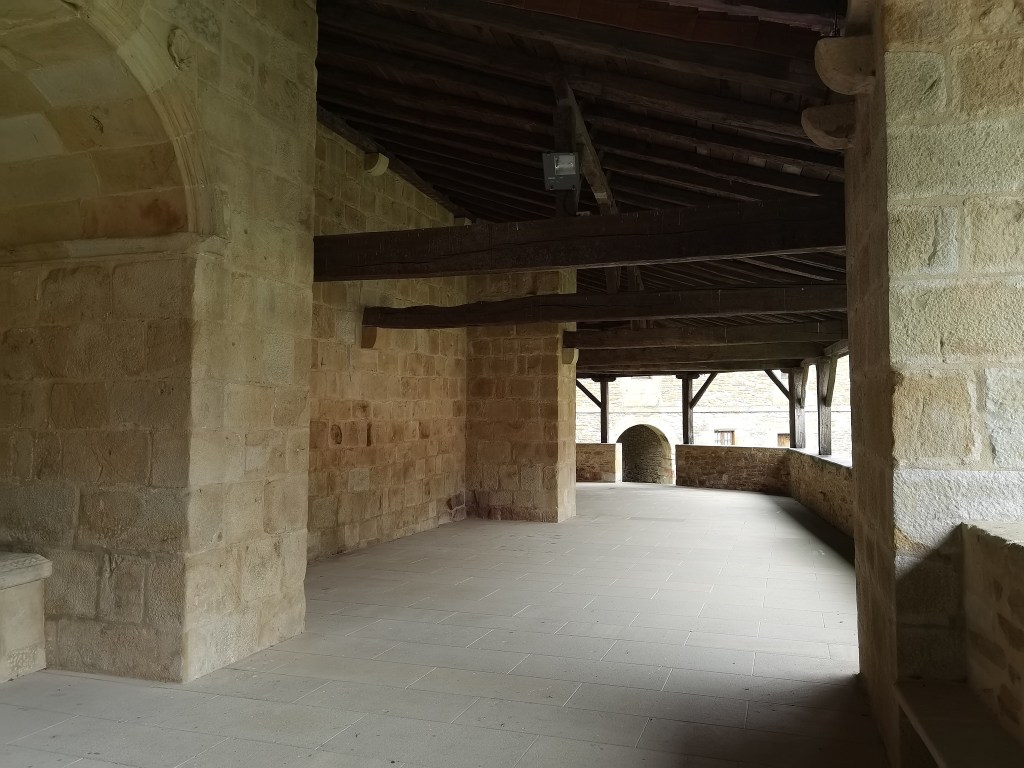
The rain continued as I slogged on uphill to the Monasterio de Zenarruza. Even the local donkeys seemed depressed by the weather. The monastery itself dates to the eleventh century. The monastery church was open, and displays an impressive altarpiece. The monastery also has a cloister. It even has a small shop, where I was able to get a beer. Even in the rain, slogging uphill is thirsty work.
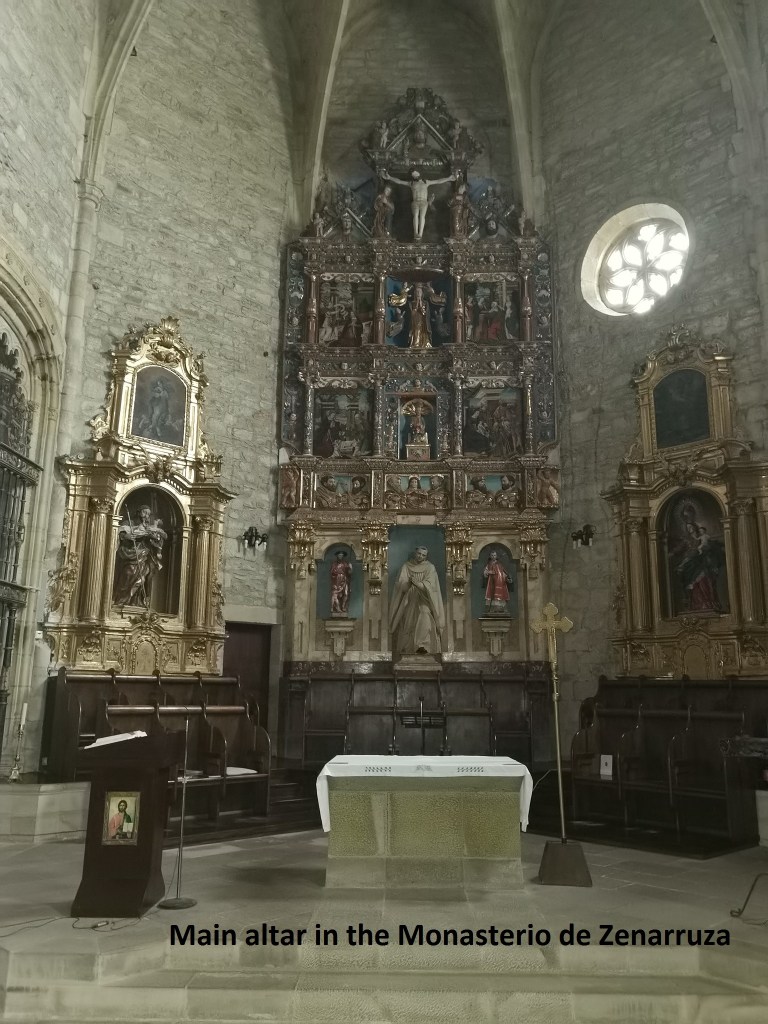
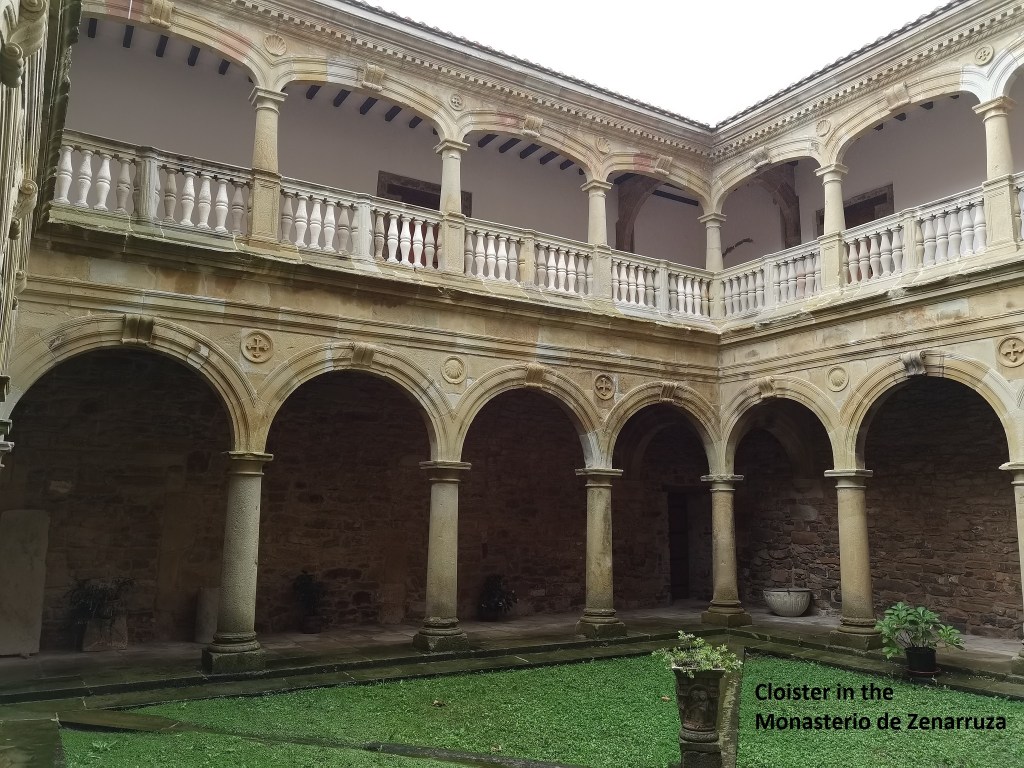
Photos. After the Monasterio, the track winds its way through the forested hills to the village of Muntibar. I arrived there in time for lunch. It was still raining, and a warm lunch was very welcome.
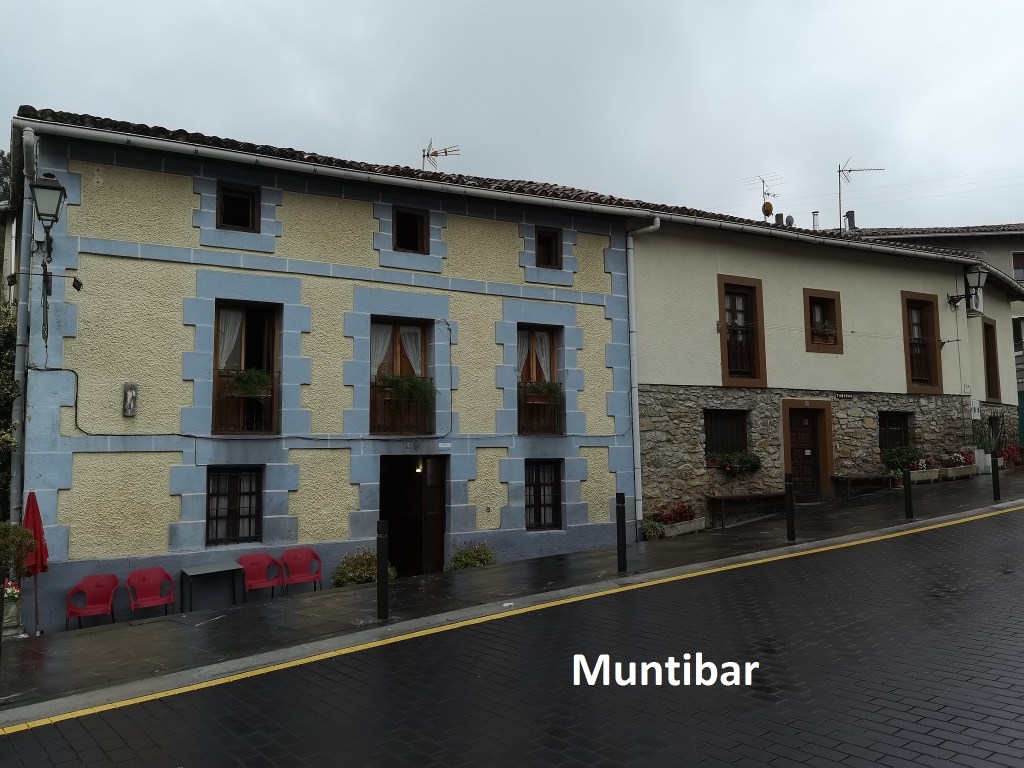
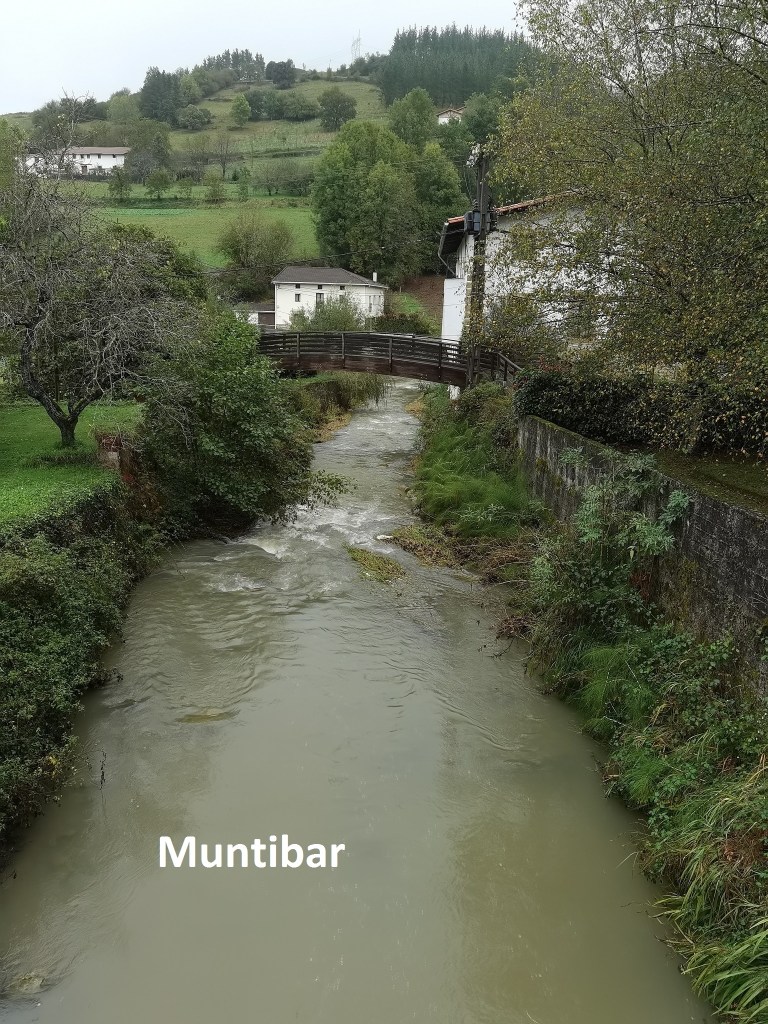
There then followed an uninteresting 13km slog in the rain from Muntibar to Gernika. I almost lost the trail a couple of times. On one of those occasions, I came to a house, and the barking dogs alerted the owner. She told me I should have turned right about 150m previously. The second time I realised the error almost immediately, and got back on the right track. Somewhere close to Gernika, the clouds lifted a little and the rain finally stopped.

Gernika is famous for two reasons. During the Spanish Civil War, in 1937. The German and Italian air forces supporting General Franco bombed the town. It had no strategic value in the war, and the bombing was purely to terrorise the population, and in this it was effective. Alas, it was a tactic that was used all too often by many if not all participants in World War 2 that started shortly afterwards. Gernika is also famous because Picasso chose to try to capture the horrors of the bombing in his art. His painting, simply entitled Gernika, is famous, but somewhat troubling in its content.
With this history, the old Gernika is no more; it is a modern city now. I found my way to the pension where I was to stay the night. The pension has an automated check-in system, and the website where I booked had not sent me the confirmation number. So, still damp from the rain, I had to cool my heels for about 90 minutes while waiting on the reception attendant to open up. Admittedly, the waiting was helped by the fact that the hotel is next door to a taberna, so it was not too painful an experience. However, it did mean that I did not get to do my write-up, and so it is belatedly presented here. A good dinner also helped reduce the feelings of frustration.
And the step count for the day was 42,180.

 Walkingman