This post was written on October 6th, but is only being posted on October 7th.
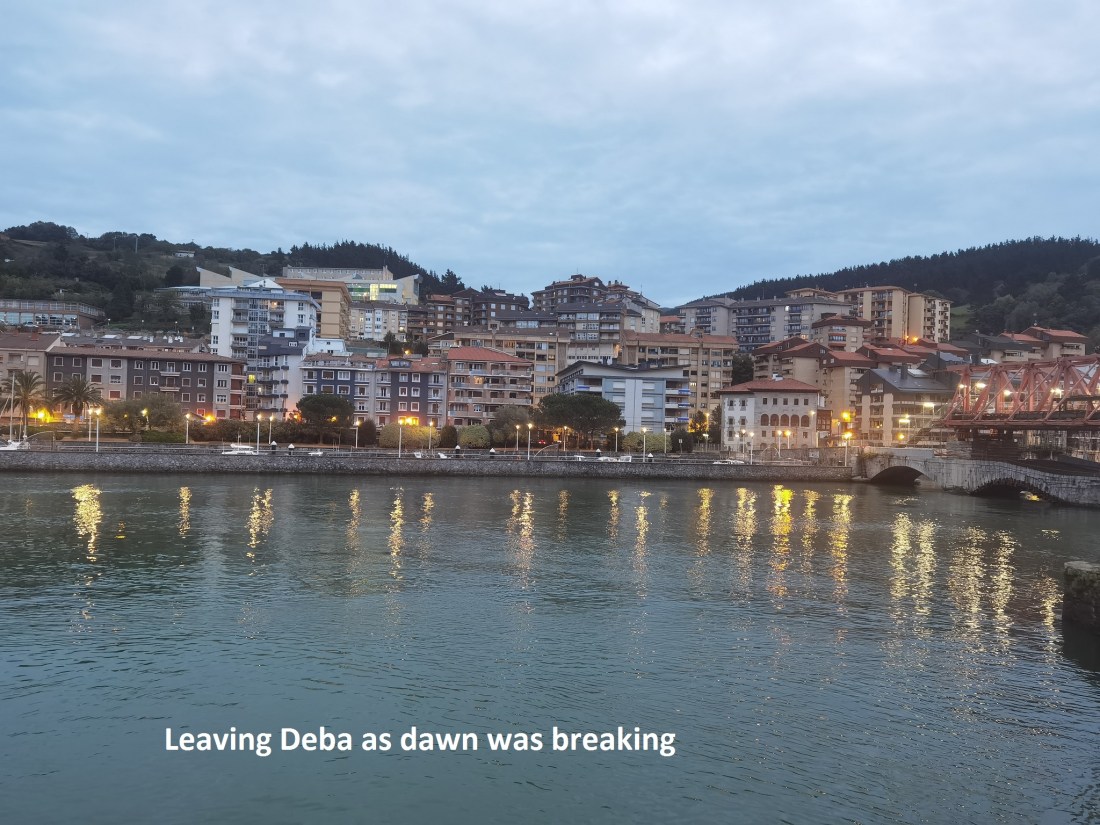
I left Deba just as dawn was breaking over the town. The town is almost entirely on the eastern side of the river, with just a handful of buildings on the western side. This minimizes the effect of the loss of their road bridge. The road bridge looks like it partially collapsed. The powers that be have then mounted an iron footbridge on the remaining piers of the bridge, so that locals, and walkers like me can still cross. In the heading picture above, you can just see part of the red pedestrian bridge above the old road bridge.
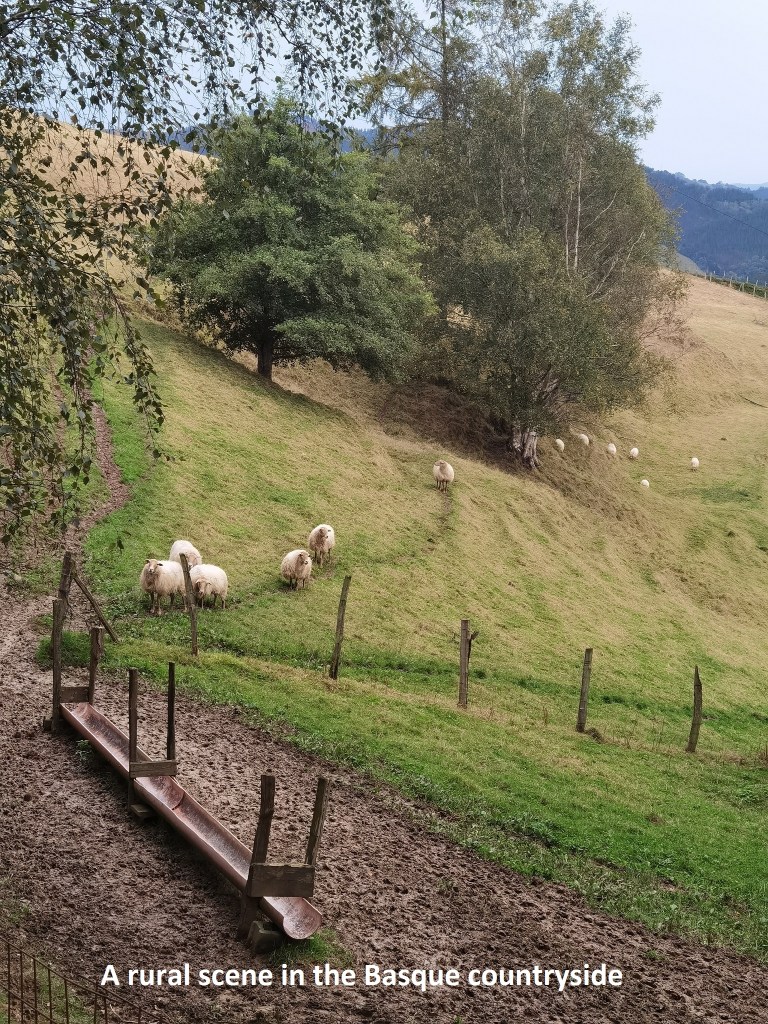
The route ascends quickly from Deba. I had some last vistas of the coast and the sea. The route turns inland for a few days, so I will not see the sea again for a while. This is farming country, and I was also treated to rural scenes of local agriculture.

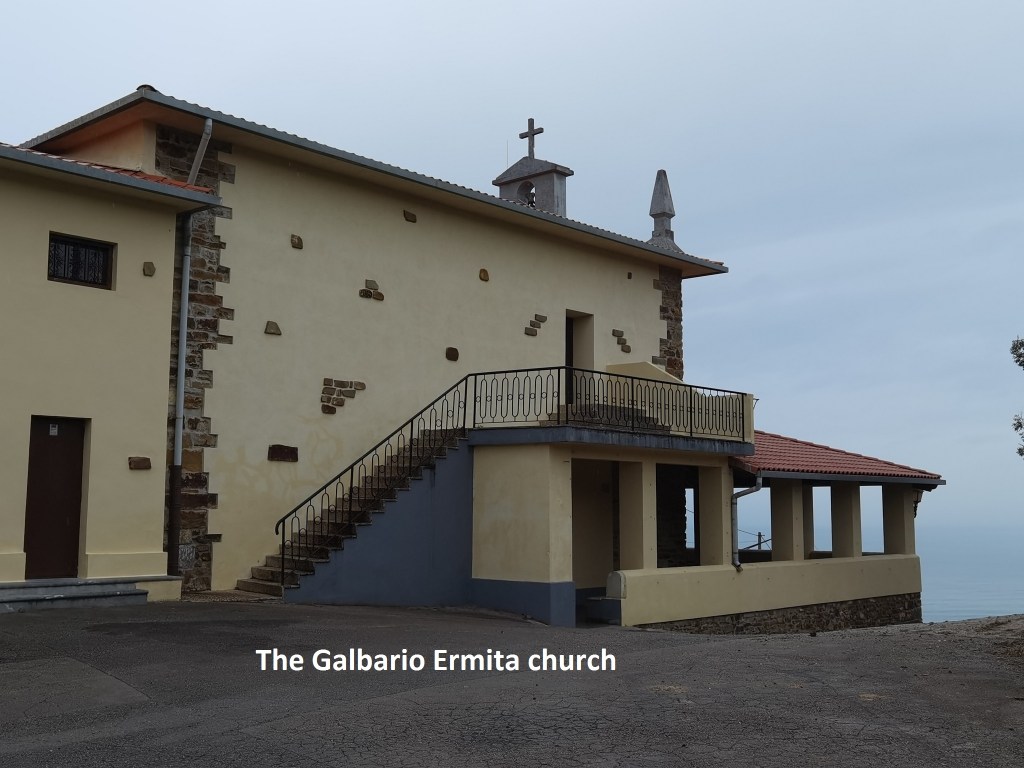
Four kilometers out of Deba, I came to the Galbario Ermita church. As with so many other churches I have passed, this one was locked. However, and quite interestingly, the windows do not have glass, but only bars to prevent entry when the church is closed, so it was possible to see the interior, though not in great detail.

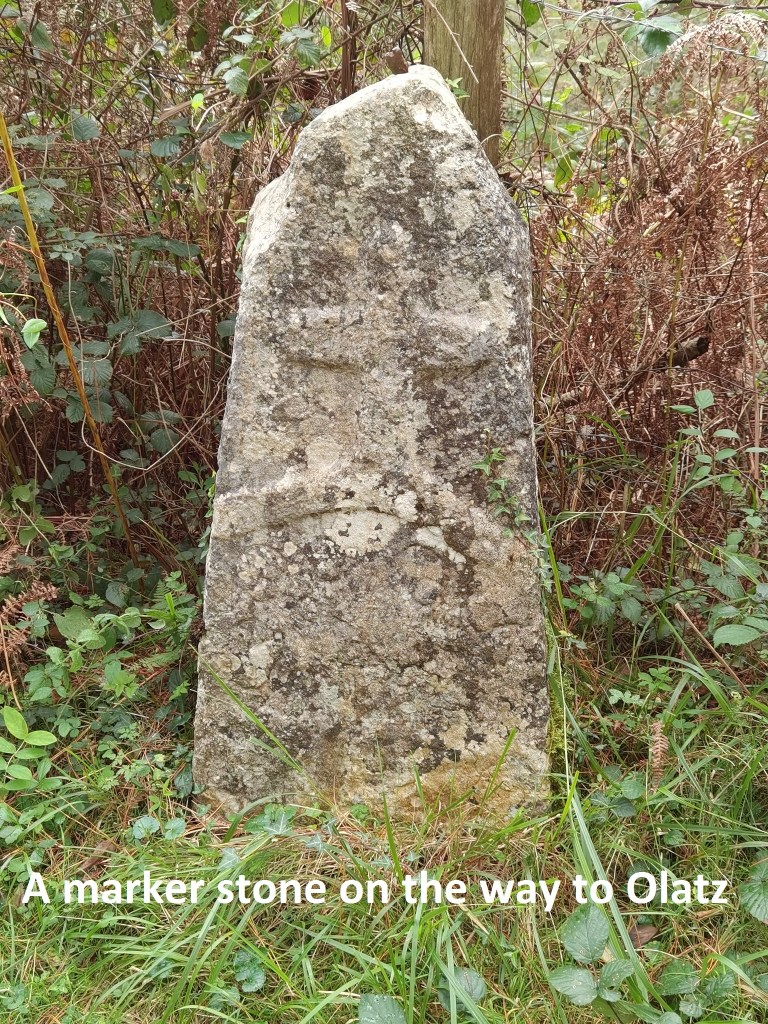
From the church, the route goes over some hills to reach Olatz. On the way, going through a wood, I came across what is clearly a marker stone of some kind. I could find no clue as to whether it is to remember some event, or to mark some boundary, but there it stands.
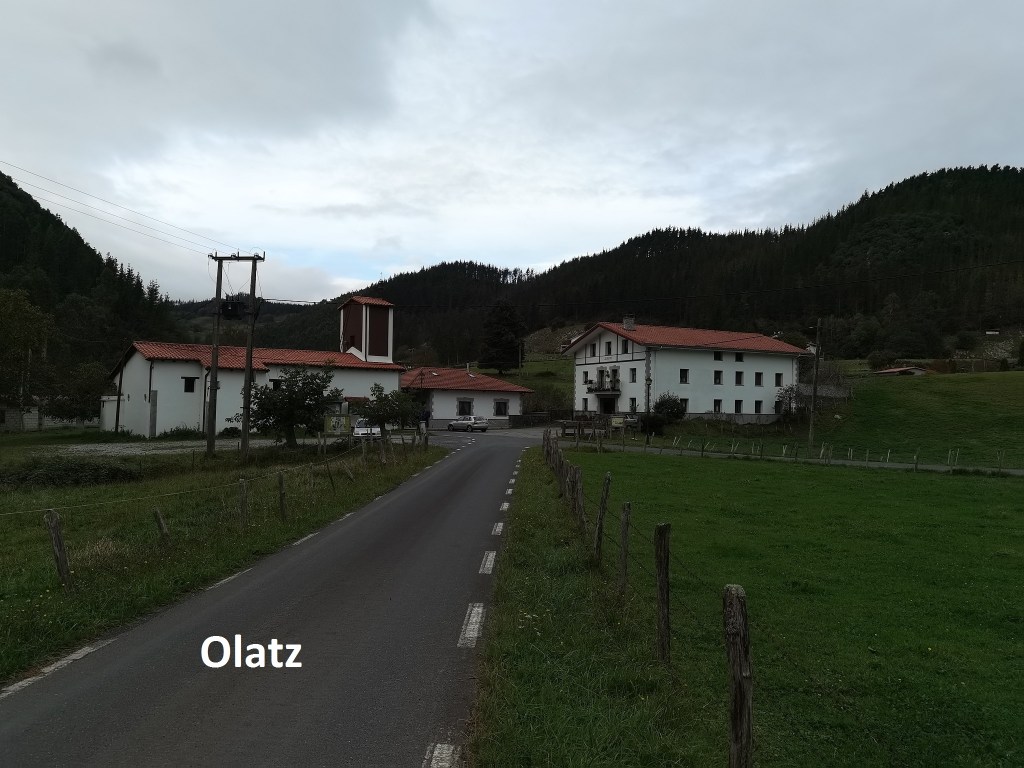
And so I came to Olatz. It is a very small village, and the picture shows the important elements. On the left is the church, which was closed. In the middle of the picture is the taverna, which thankfully was open, so that was where I went. Even though it was only 10:30 in the morning, the day was already warm and I was glad of a beer.
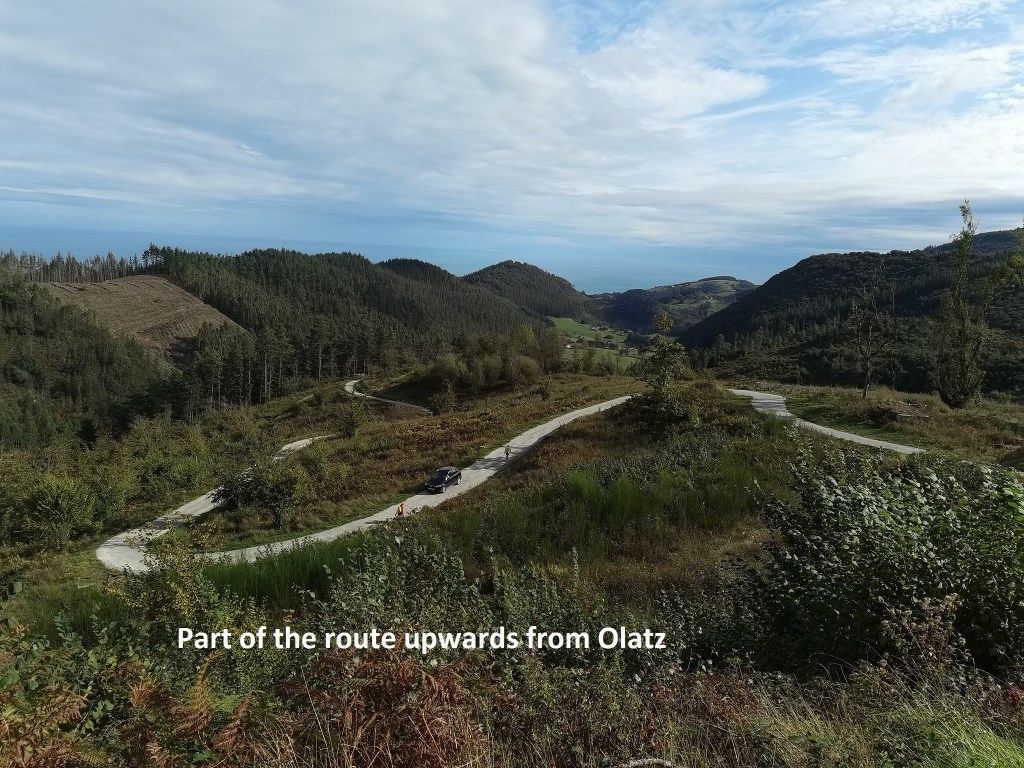
After Olatz, the route climbs into the hills. At first it is on paved road, but in the higher parts it degenerates to a track.
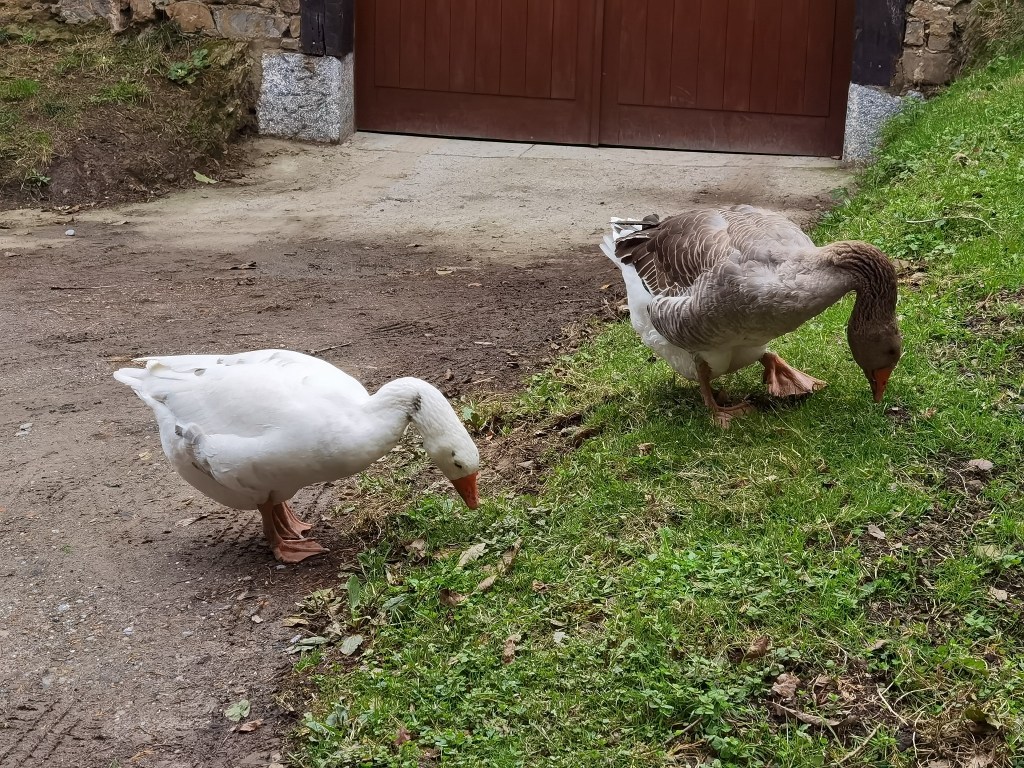
The next few kilometers are uninteresting, mostly forestry, until I came to Collado de Arno, which the guidebooks describe as a small cluster of houses rather than anything approaching a village. And here, two geese decided that they did not want me around. They hissed aggressively and wanted to bite, with only the threat of my stick keeping them at bay. When I had gone far enough that they felt I was no longer a threat, they calmly went back to grazing again. I will not feel guilty about eating foie gras for a while.
After the Collado de Arno, the route is again largely uninteresting until it arrives on Markina-Xemen. But on arrival in the town, there is one of the most interesting churches on the route so far. The Church of San Miguel de Arrantxinaga is notable for its shape, being hexagonal, rather than the usual cruciform shape. But what is fascinating is that inside, it can be seen that the church is built around a massive stone structure. Originally thought to have been brought there by “The Lords of the Forest”, it has been confirmed more recently that they were deposited there naturally.

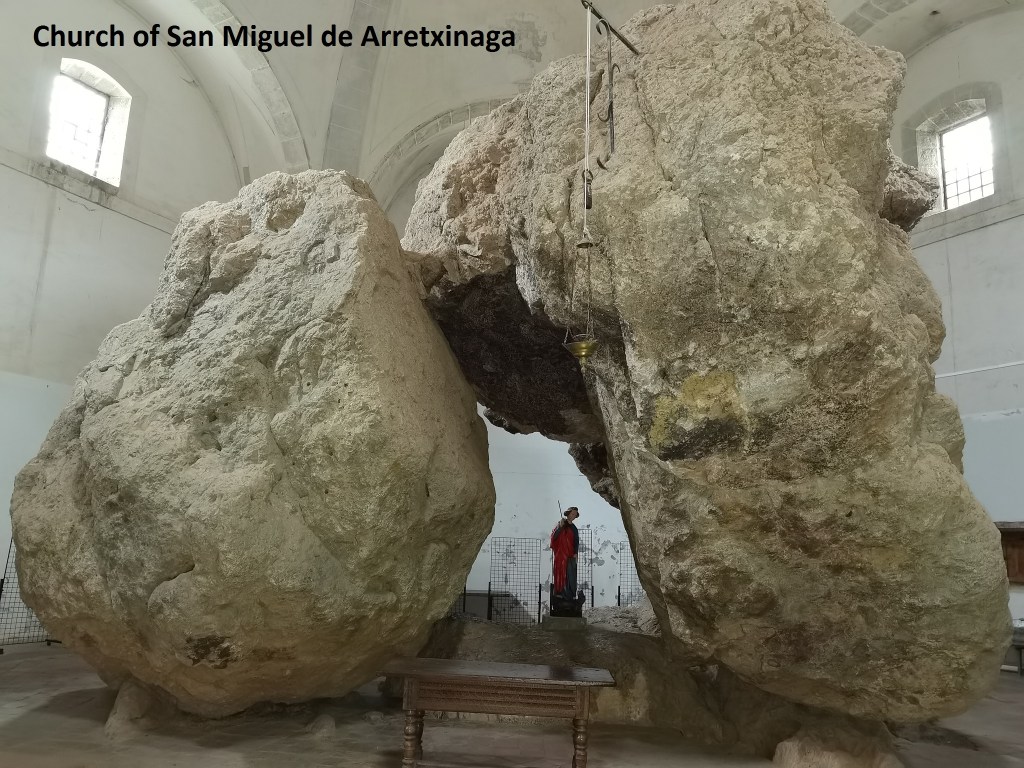
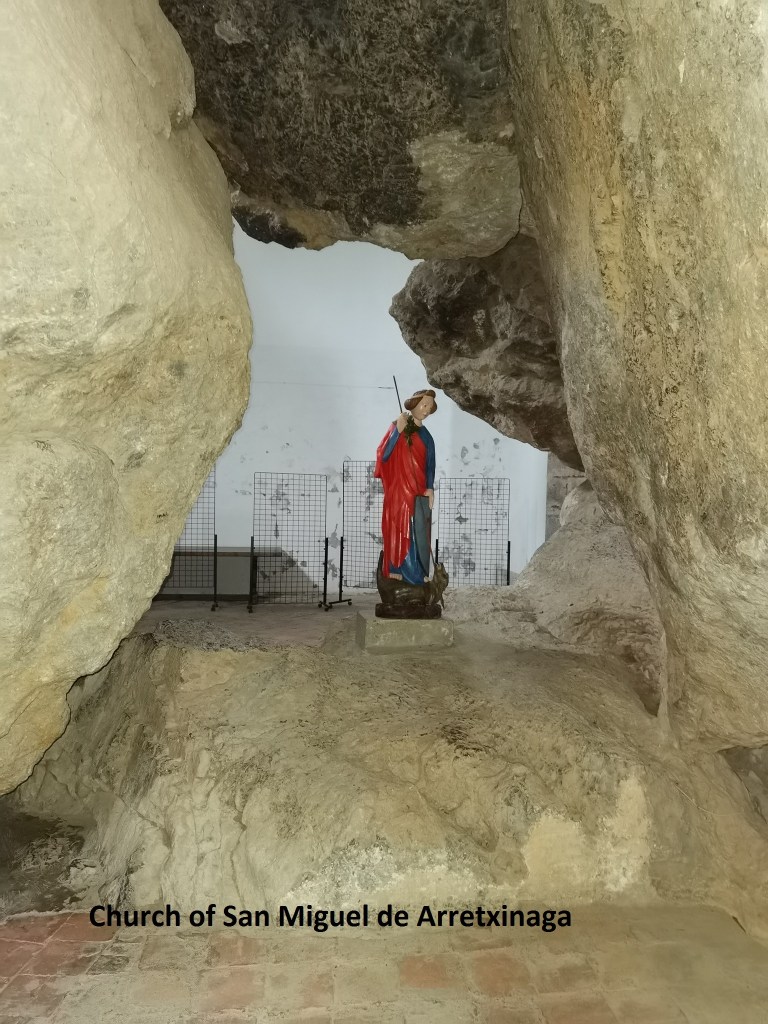
It was starting to rain as I left the church, so I got my raingear on for the last half hour of the walk, and arrived at my hotel for the night.
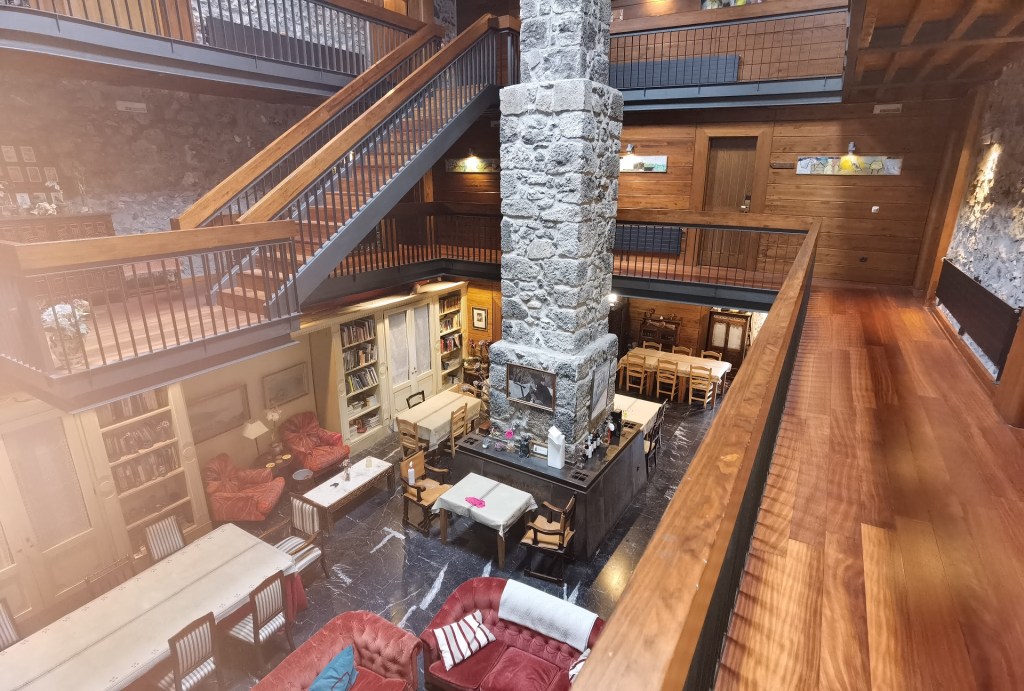
It is a nice hotel, but the internet connection is unreliable, so it looks like I will have to hold this post until tomorrow. But it is worth telling you about the hotel. The building was an old ironworks, going back to the 15th century. Who knows, perhaps swords for the conquistadores began life here. The room in the photo was the old store room for the ore. Now it is a very comfortable hotel with lots of character, and worth visiting even if the internet doesn’t always work.
And the step count for today is 43,508.

 Walkingman