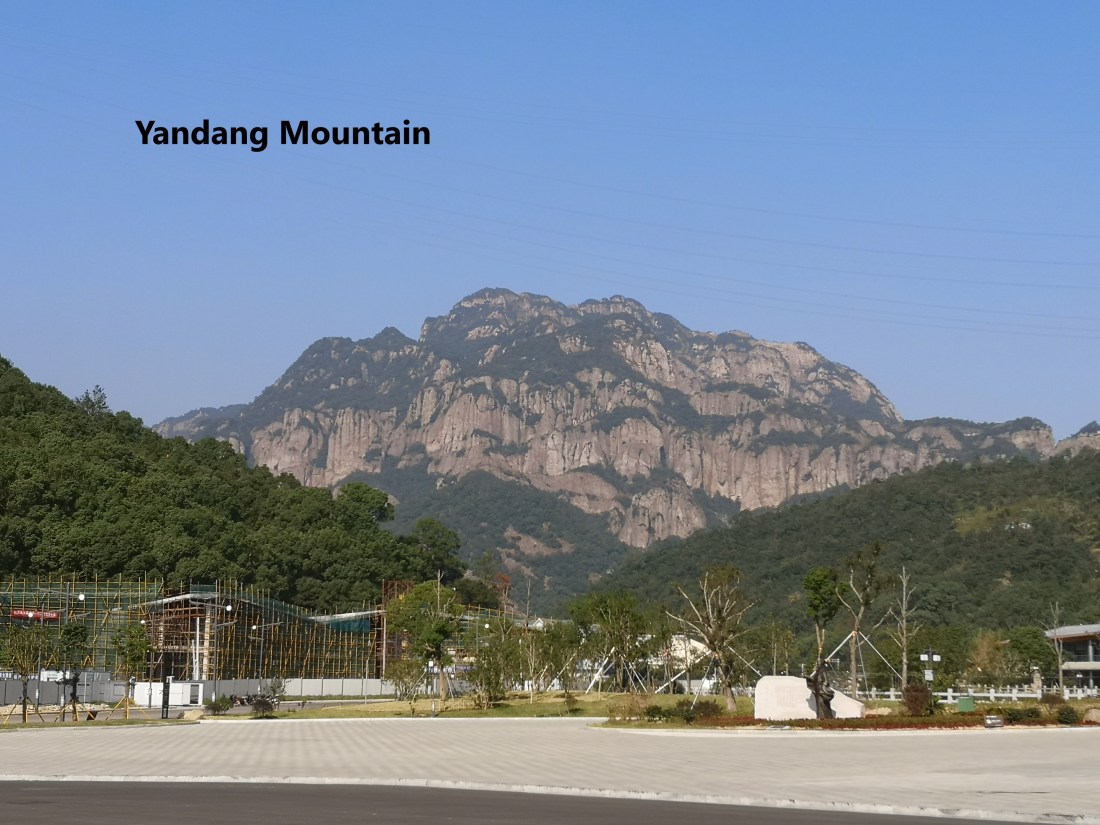
I have just returned from another visit to China, a business trip. While there, I was amazingly fortunate to have the chance to visit the Yandang Mountain area. Although the name suggests a single isolated mountain, Yandang Mountain is much more complex than that. It is an entire geopark, and is currently recognised by UNESCO as a world heritage site.
All the guidebooks recommend taking two days to visit Yandang Mountain in order to take in everything that there is to see. But business trips only allow a certain amount of free time, and I consider myself amazingly lucky to have had even one day there. Yandang Mountain has been of interest to travellers for hundreds of years, and has inspired poets and artists throughout that time. Yandang is volcanic in origin. About 100 million years ago, the volcanoes were active and laid down the rocks we see today. The millennia have weather and sculpted the rocks to provide the tourist attraction that brings may visitors to see this natural wonder.
There is a visitor centre where the sightseeing begins, and a system of busses takes one from there to the different scenic areas. I got to see three different scenic areas.
Dalonqiu scenic area
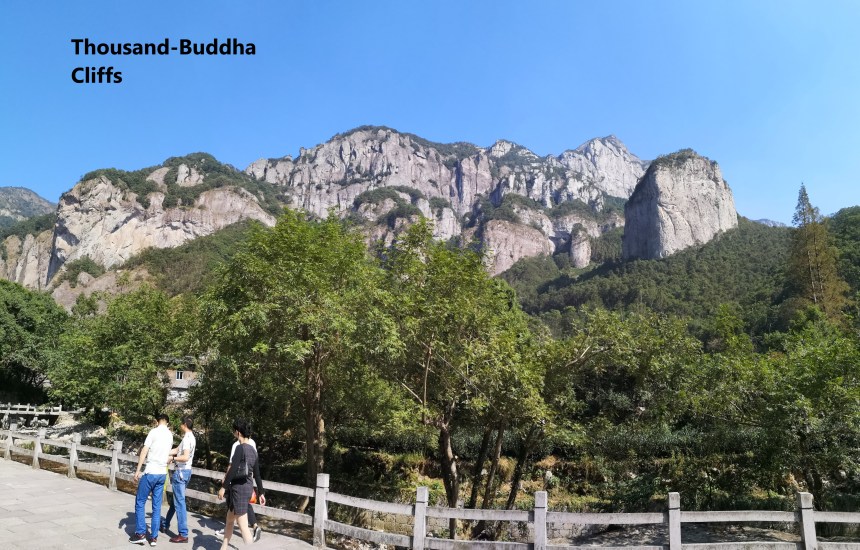
From the car park, the trail winds gently upwards. Soon, the Thousand-Buddha Cliffs come into view.
And then, as the path went on, I got my first view of the Scissors Peak. This rock formation has been split in the middle since it was first seen by travellers, and is said to resemble a scissors stuck in the ground.
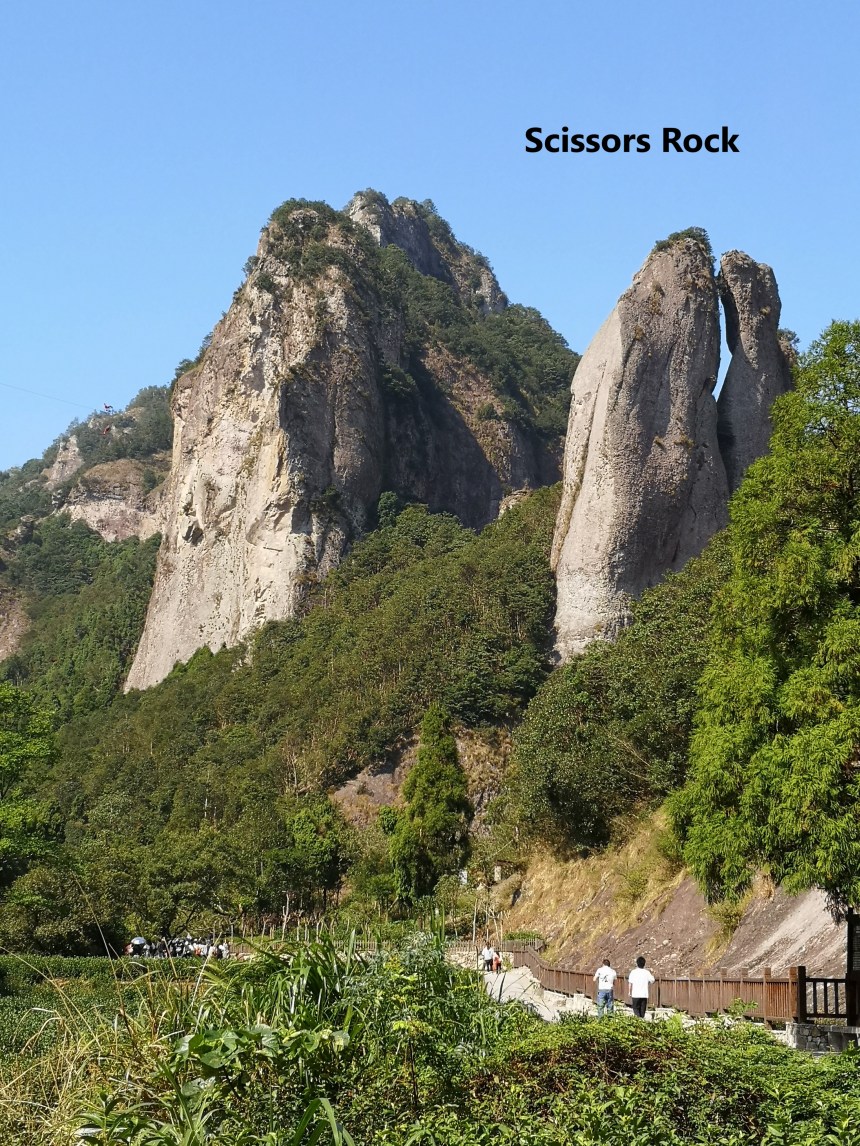
As the trail goes on around the rock, it seems to take on different shapes. It soon ceases to look like a scissors, and becomes a woodpecker, and then a bear. And later it looks like a pillar or the mast of a ship. I guess there is a metaphor there for many aspects of life: how things look depends a lot on where you are standing.


Further on, I came to the Great Dragon Waterfall. Unfortunately, after the dry weather of the summer months, the waterfall was nothing like the publicity photos. There was barely a small trickle going over the cliff.


I was reminded of a TV series from my youth that was set in China. It began with the words “do not despise the snake because it has no horns, for who is to say it will not become a mighty dragon”. But in this case, the reverse had happened, and the mighty dragon had become a small lizard. It was almost Godzilla in reverse. I could say that it is better to travel hopefully than to arrive, but the truth is that the total of what I saw at Yandang Mountain exceeded expectations.
The path went on from there, back to the car park and the bus to the next scenic area.
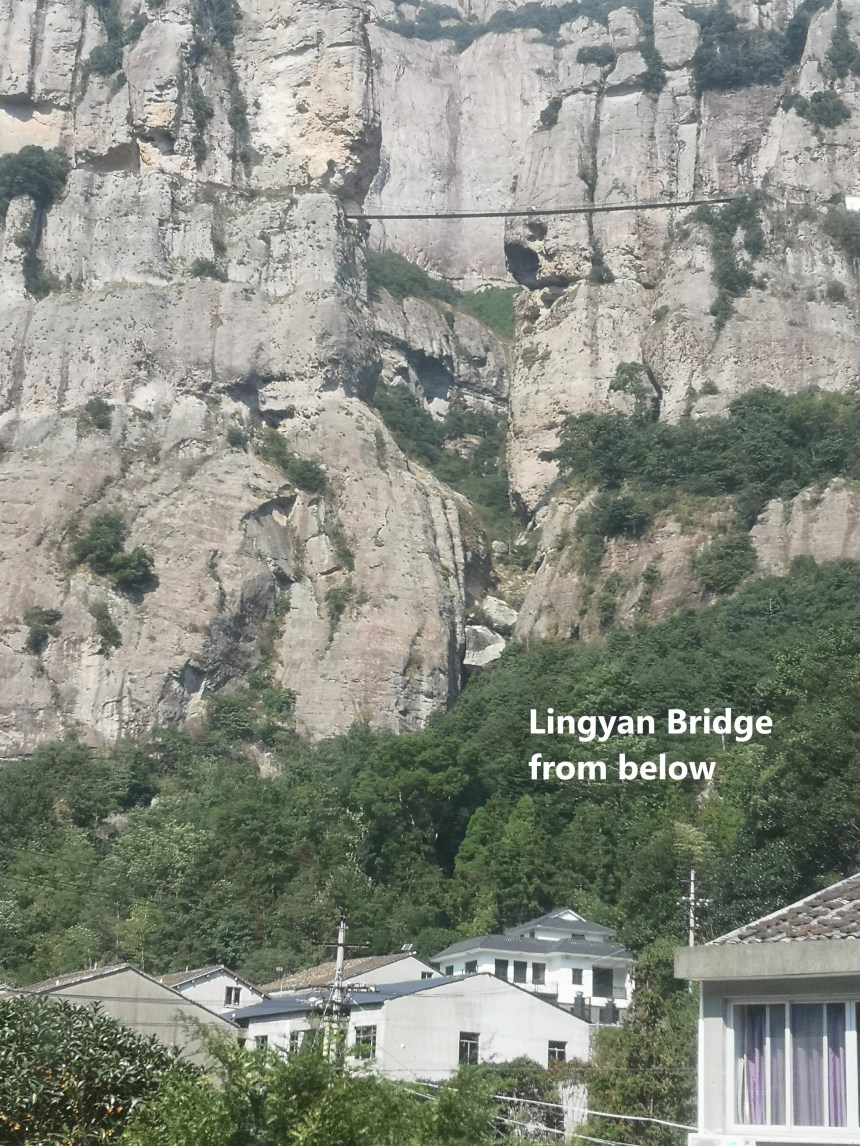
Golden Belt Cliff
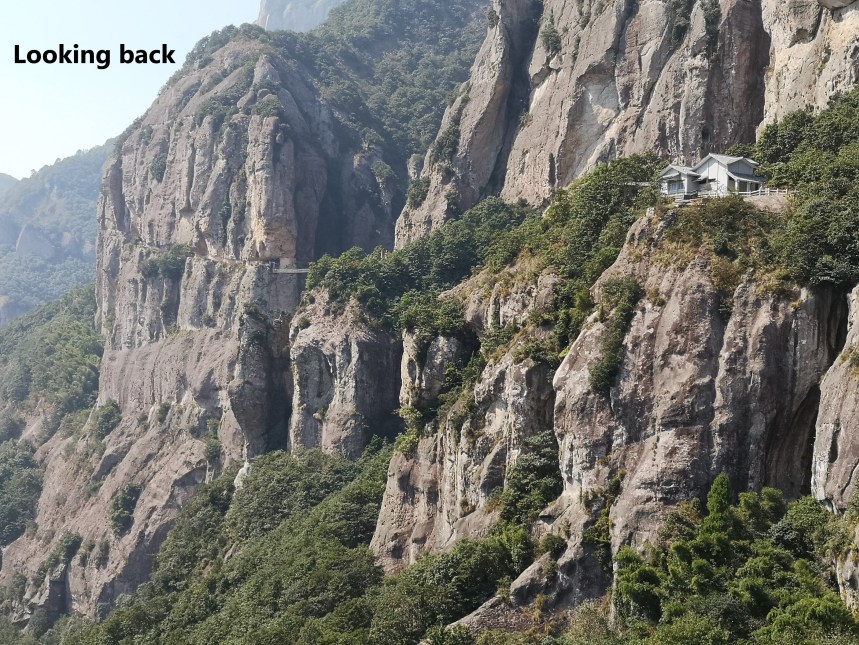
Regular readers of these posts will know that I cannot resist a good suspension bridge, and from the valley, I could see a really interesting specimen in the cliffs above.
So I took the bus to the Golden Belt Cliffs and set out on the Fandong Plank Road. This “road” is a pathway set into the cliff face. As the volcanic activity laid down different strata of rock, and the weathering played it’s part in creating the current structures, the rock strata are clearly visible in places. The pathway follows a line where two strata meet, and simply hugs the cliff face.
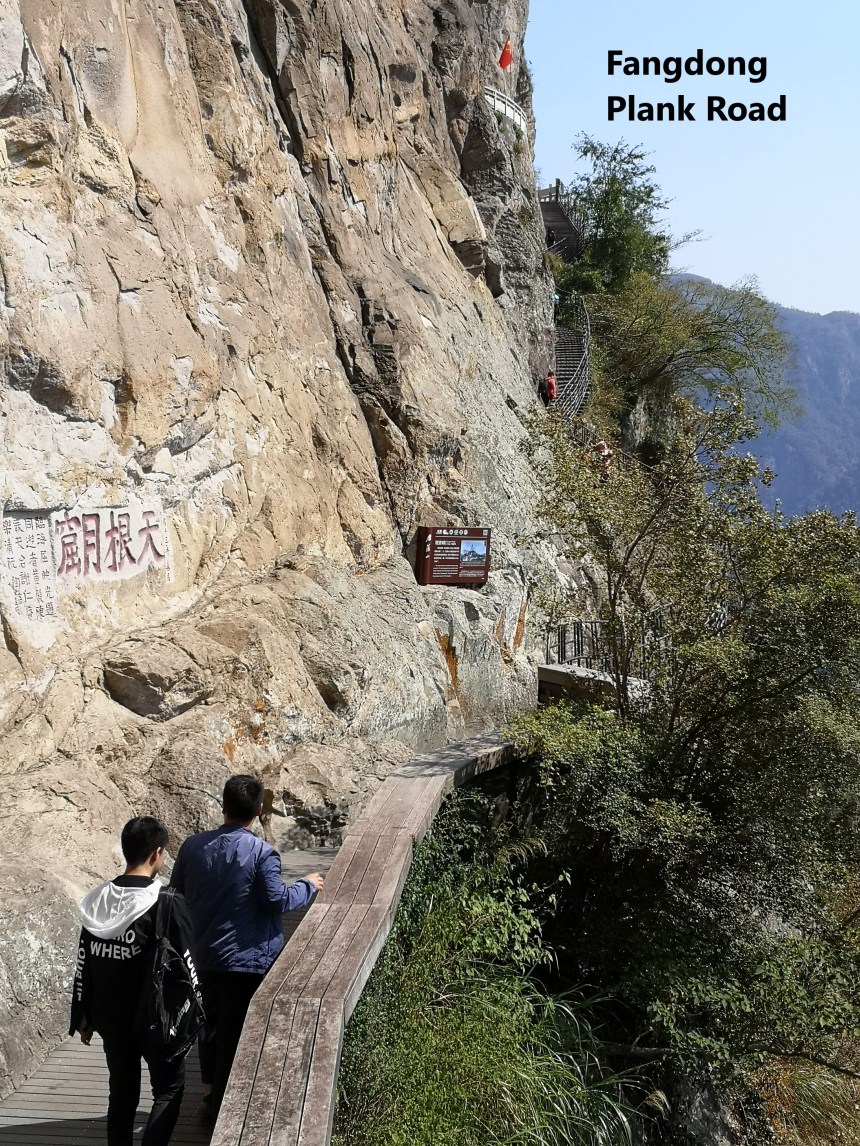
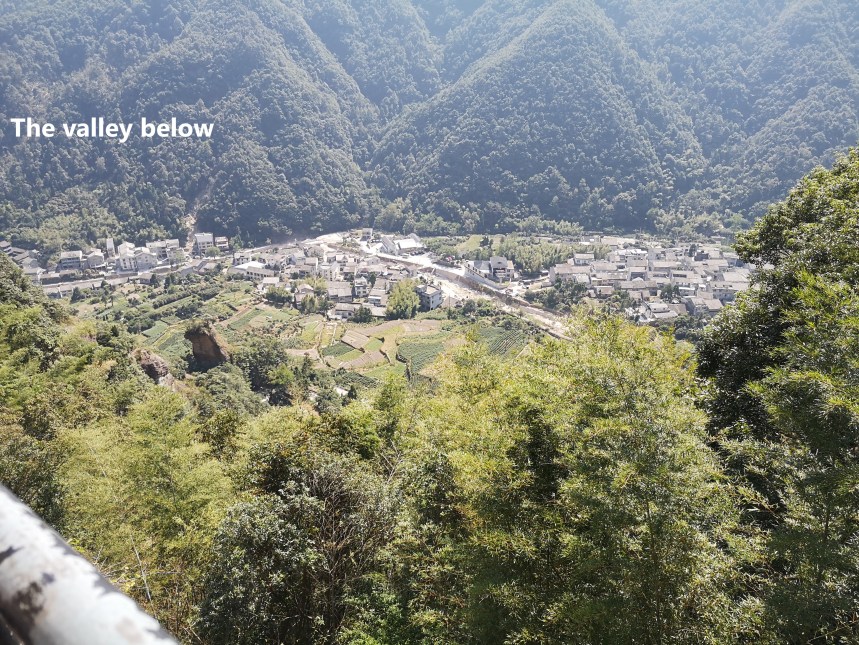
First, there is the Fandong Cave Temple, a Buddhist temple set into a cave in the cliff face. It is an interesting place, but out of respect for the people there, I offer no photos from the temple.
The pathway goes on and I soon came to the bridge. It is a good one!


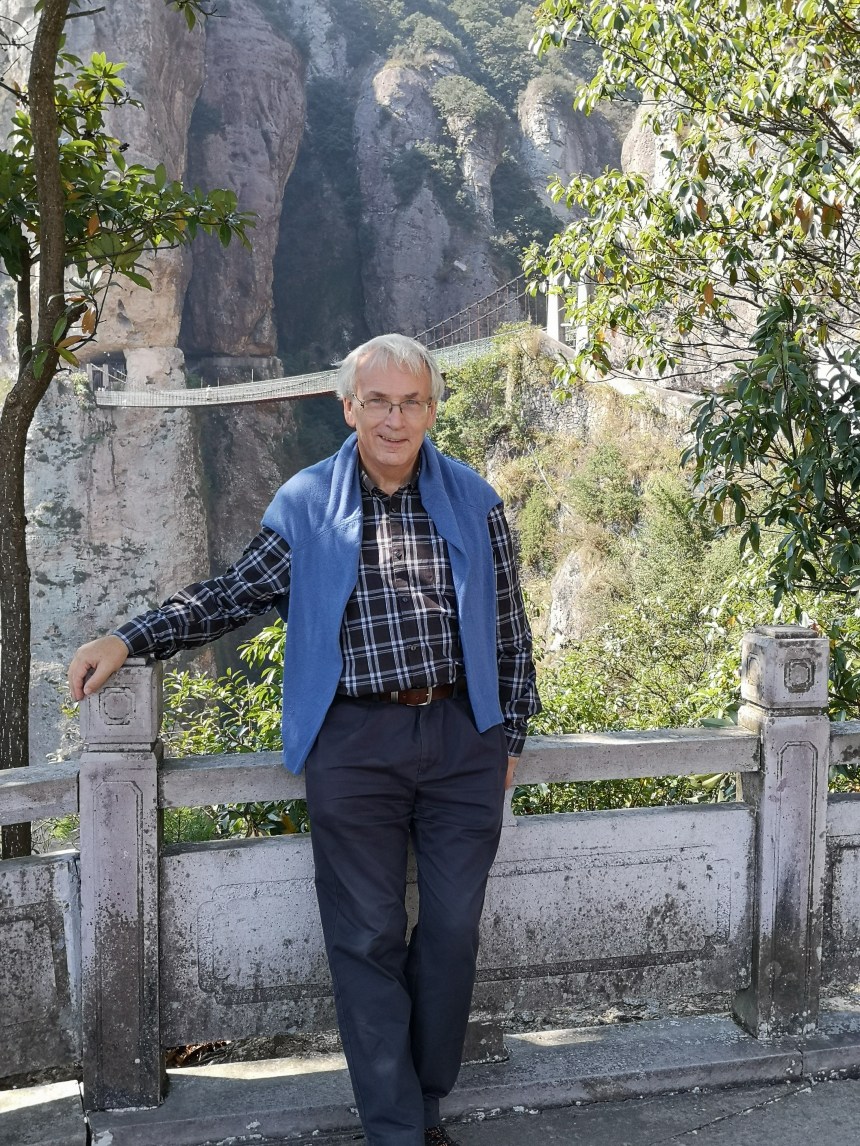
It is possible to go all the way back down into the valley from the bridge, but after getting what I reckoned were the best views of the bridge, it was time to retrace my steps back to the bus and down to the village. There I had lunch before going on to the next location.

Lingyan Scenic Area and the Wolong Valley
From the car and bus park, the trail goes upwards to Lingyan Temple. Apparently there has been a temple here for hundreds of years. It sits in the shadow of massive rock formations: Pingxia Cliffs behind, Flying Flag Peak to the right, and Tianzhu Peak in front.
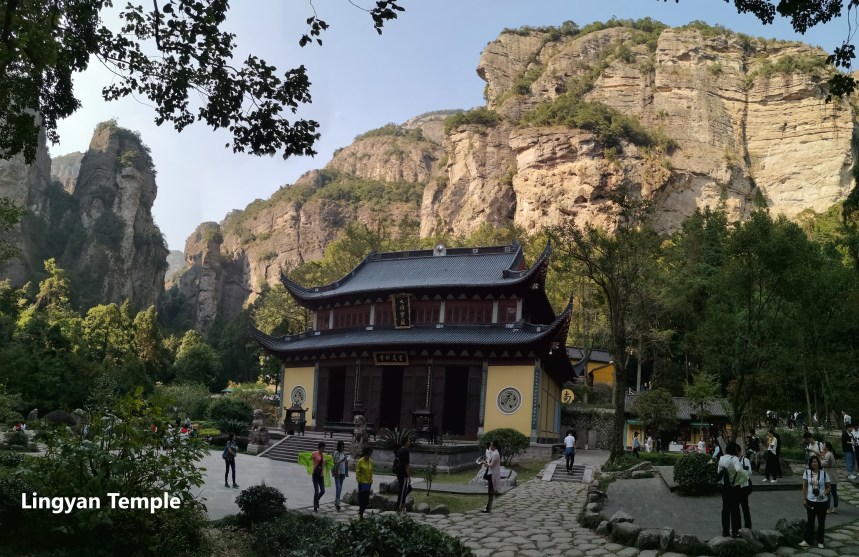


On the fourth side is the path that I followed upwards towards the Wolong Valley. Once again, the path is built onto the side of the cliffs, and goes steeply upwards until it comes to the Wolong Valley Glass Skywalk. On this part of the route, the panels that make up the floor of the walkway are glass, giving a view down below.
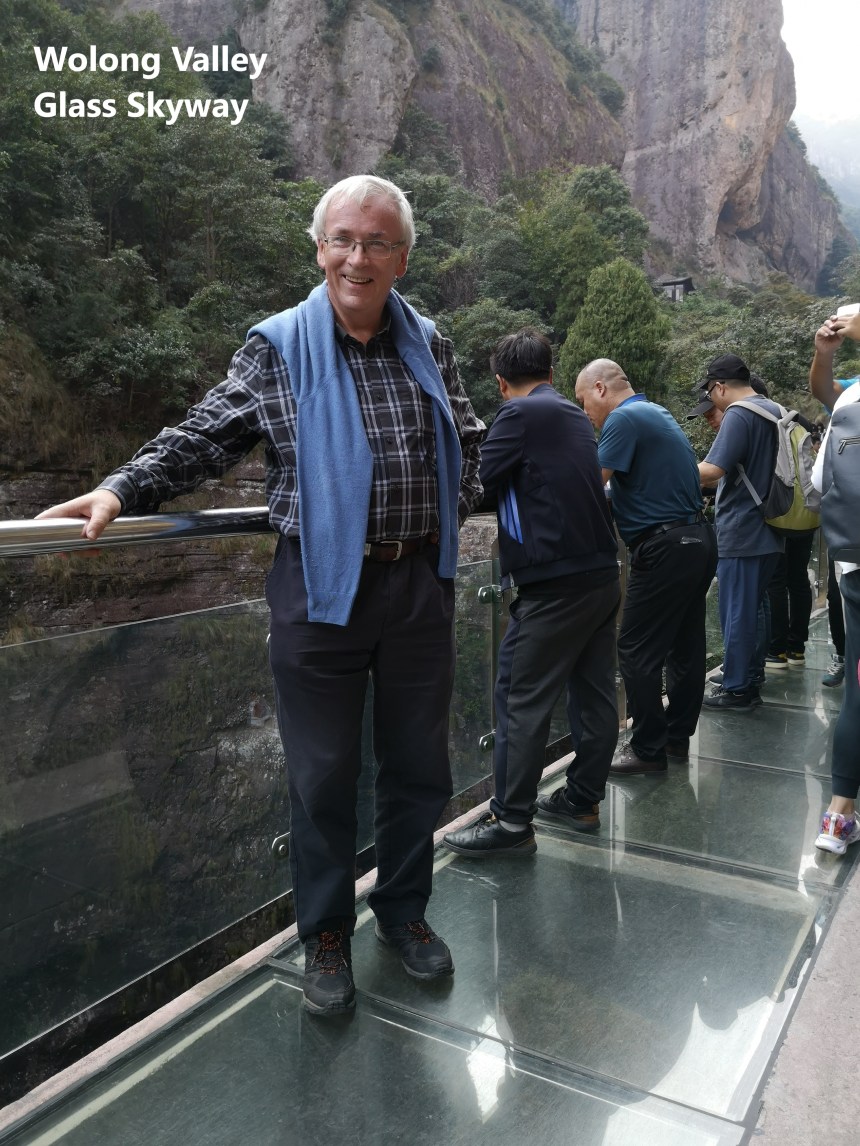
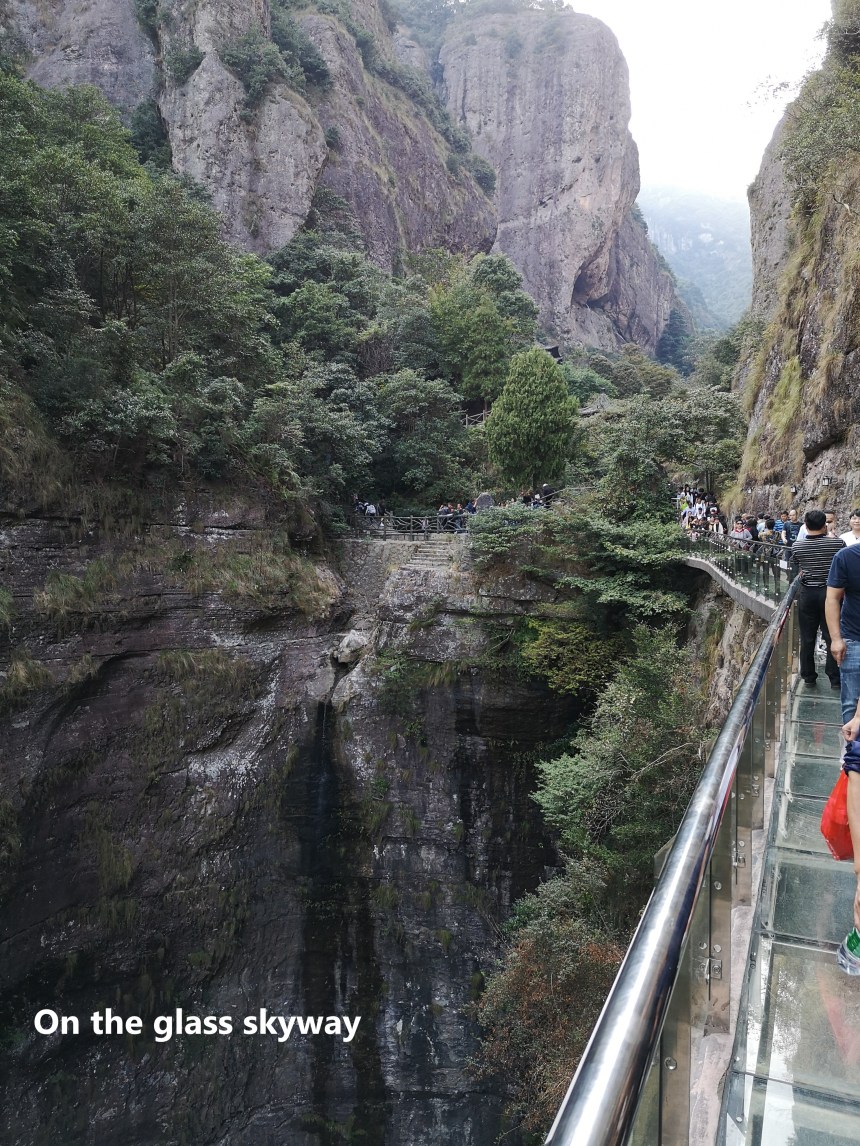
It is not to everyone’s taste, and some people hug the cliff only using the narrow concrete strip right next to the cliff face. To add to the effect, some of the glass panels are screens, with a video playing of the glass shattering and splintering, with appropriate sound effects. But most people walk confidently on the trail, sure that the engineering will give them safe passage.
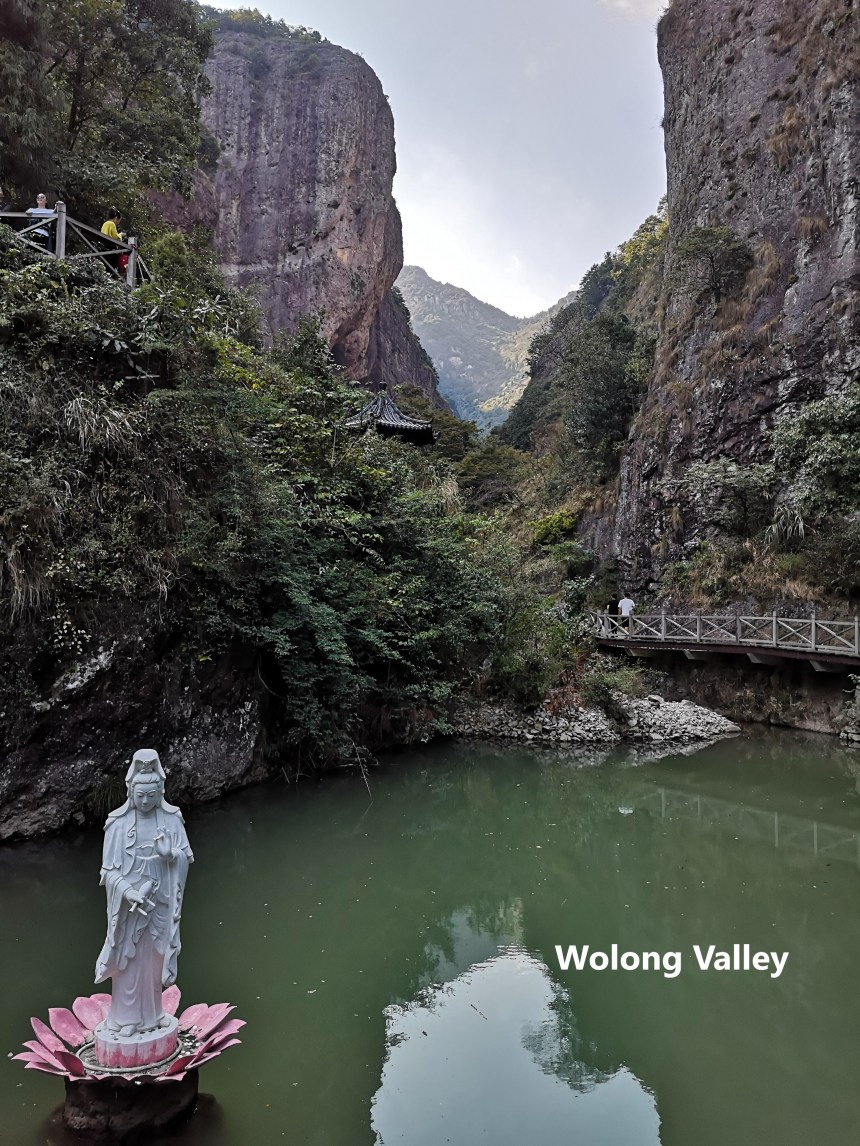


Further on, the trail comes to the head of the valley. There is a small lake where water has come down from the mountains on either side. There should be another waterfall, the Little Dragon Waterfall. But as I saw with its Great Dragon counterpart, the lack of recent rainfall has dried up the stream, and so there was no real waterfall visible.
Having circled the head of the valley, it was time to go back down, back to the visitor centre and back to my hotel.
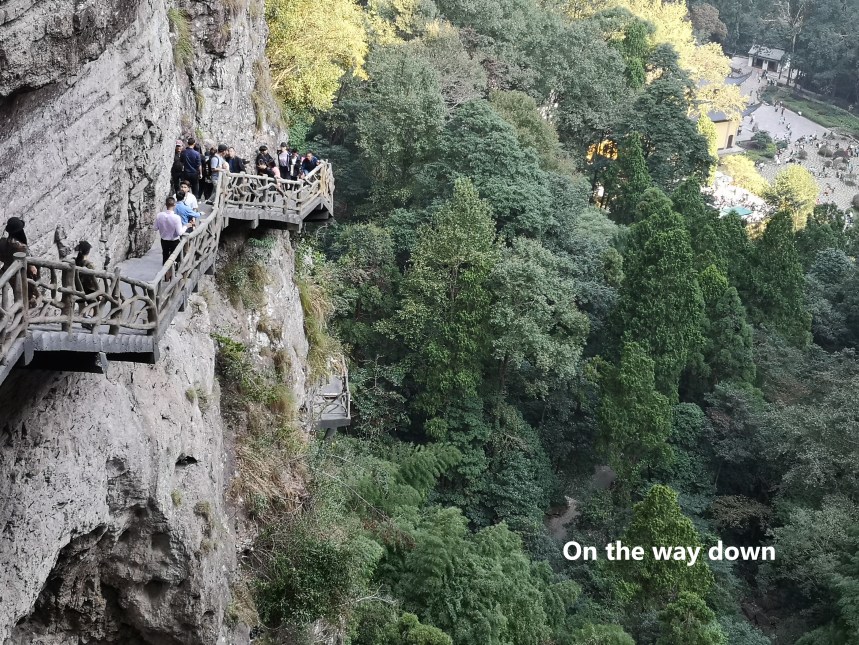
And my total step count for the day was 21,151. It was a most enjoyable day.

 Walkingman
Beautiful description of a beautiful journey.
Thanks for sharing !
LikeLike
Fascinating China, great tourists’ destinations…the views are breathtaking and amazing. Thanks for the share. It’s another unforgettable walk for you, amidst nature parks, mountains and waterfalls 👍👍👍
LikeLike