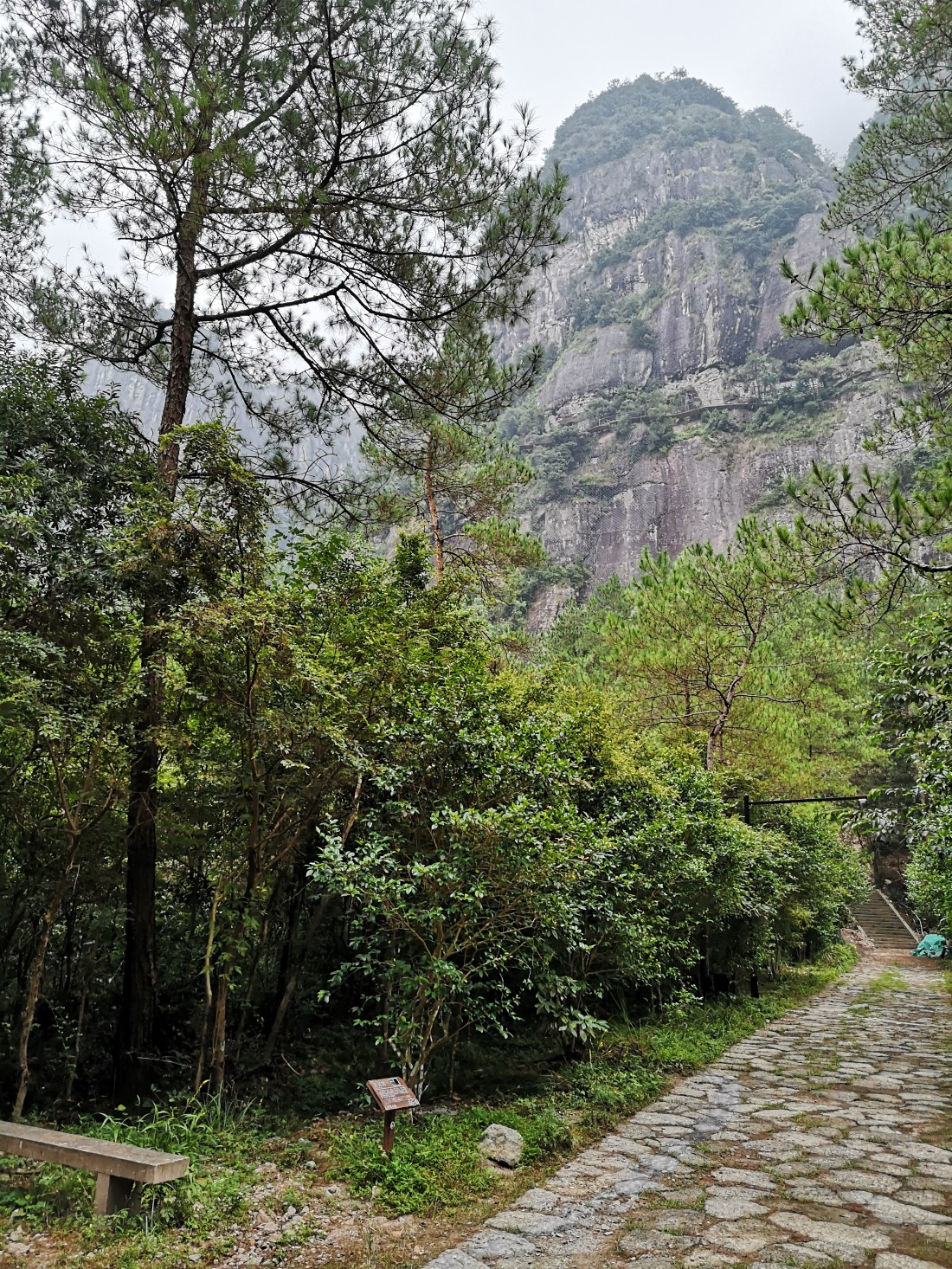
In the past, when looking at landscape paintings from China, they often seem to show towering vertical cliffs of almost impossible size. In those paintings, the mountains have a shape and form completely alien to someone who grew up looking out at the rolling hills of Ireland. Even in Switzerland, the limestone hills of the Jura are gentler that those mountains in the painted landscapes of China. So I had actually come to wonder whether such places really exist. As it happens, I am in China right now, and on Saturday I went to Shenxianju, where I found that such towering mountains are real, and if anything, the images I have seen in Chinese art are a gentler representation than the reality.
The weather in Zheijiang province has been mixed, and going to the mountains, I was not sure what to expect, but over the years I have learned not to let the weather dictate too much what I will or will not do. If it is going to be dangerous, then perhaps I will change my plans and do something else, but if it is simply going to be uncomfortable, then I will prepare and go ahead. When I reached the park at Shenxianju, the day was still warm, but it was clear that the clouds on the heights meant rain up there. It was still dry, though as I took the path towards the cable car. And there they were, those massive cliffs of old volcanic rock, hundreds of metres above a landscape that could only be Chinese.


I took the cable car up to the heights, where the path begins. It winds its way around the rocky crags, clinging to the side of the mountain. In the misty weather, it was impossible even to see the valley floor below.


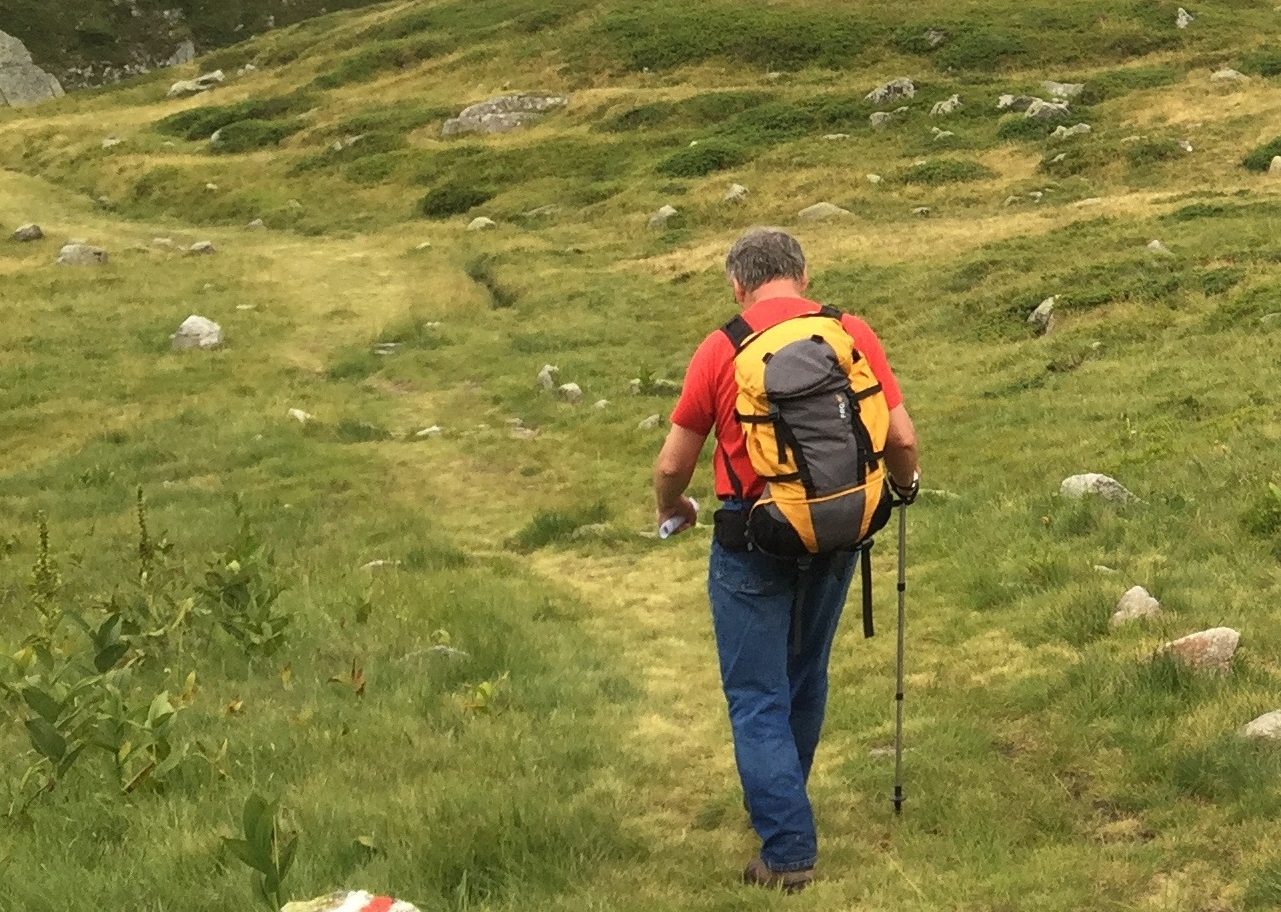
And then I came to the Nan Tian bridge. Anyone who has read all of my postings will know that I love a good hanging bridge. I have sought them out in Switzerland and Canada, and now in China. The Nan Tian is a good one. It is about 150 metres long, and quite a few metres up in the air. On this misty day, it seemed to just lead off into the mist, without any certainty of land at the other end. Of course, by now, after walking for a few kilometres in the mist, I was damp, as can be seen here. But for all that, it was not cold. China at the end of August is a warm place.


From the Nan Tian bridge, it was a short walk to the cable car. Back down in the valley, the path wound through a gorge to bring be to the car park and a bus back to the start.


I cannot finish without mentioning the signs in this park. Most are ordinary, such as instructions not to litter, or not to smoke. But a few are special. “Do not parabolize” suggests that other mathematical functions such as hyperbolas are acceptable. In fact, it means not to throw things off the pathway into the valley below. “Care for the elderly” is surely a laudable sentiment. And it is no harm to be reminded that without courtesy and respect, one cannot have maturity and independence.


But my favourite has to be a sign with a quotation from Ouyang Xiu, a Chinese poet and politician of the 11th century: “Looking up to admire the mountains, bending down to listen to the gurgling spring, picking flowers in spring, enjoying cool under the shady arbors, admiring frost in autumn and snow in winter. The scenic area is beautiful and lovely in all seasons.”
Today’s walk was not a long one, and over the whole day, I accumulated just 14698 steps.

 Walkingman
Another inspiring blog from the Walking Man, from Switzerland, to Ireland and now it’s China! It’s a vast country with so many scenic places to explore, the panoramic photos are awesome, and you captured them uniquely. Thanks for the share 🌷🌴🌳🌼🌿🦜🦋🌈
LikeLike