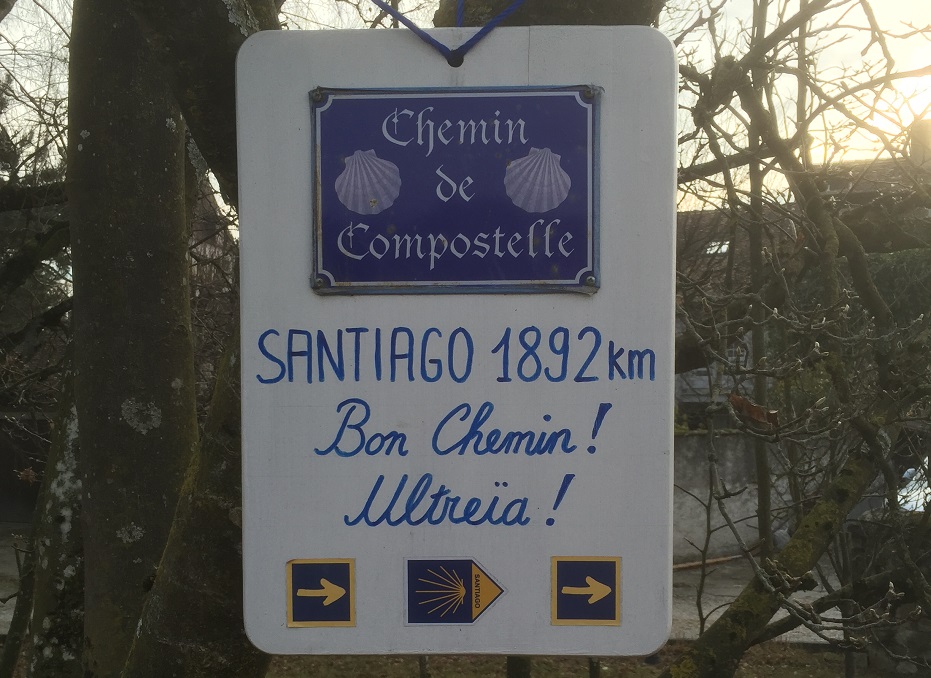
There are a few walking routes that have names known all over the world. You can mention their name, and even the person who only takes a Sunday afternoon stroll will have some idea of where they are and what they involve. These routes conjure up images in the mind. The images may not be correct, but it might be cruel to dispel those images with reality. The Appalachian Trail in the US is one such route, running from south to north through the eastern states of the US, and known by reputation all over the world. In Europe too, there is a walking route that is known the world over. It is the Camino de Santiago. It is so well known that it is usually called simply “The Camino”.
Santiago de Compostela in north western Spain is reputed to be the burial place of Saint James the Apostle, one of the twelve who, according to the bible, accompanied Jesus during his ministry on earth. There are several legends that explain how he might have left Jerusalem and made his way to Spain. The stories may be questionable, but sufficient people believed them that by medieval times Santiago had become one of the most important pilgrimage sites in Christendom. The pilgrimage to Santiago was one of three that could earn the pilgrim total forgiveness of all their sins; the other two were pilgrimages to Rome and Jerusalem. The importance of the pilgrimage route led to the building of a substantial cathedral in Santiago, and that cathedral became the point destination for the travelers.
In the 16th and 17th centuries, following the reformation, plagues, and the numerous religious wars that racked Europe at the time, the number of pilgrims going to Santiago declined steadily. Two World Wars and the Spanish Civil War in the 20th century cannot have helped, and by the 1970s, pilgrim numbers had dwindled to just a few people each year. However, since the 1980s, the numbers of people following The Camino rose steadily to the point that in the 21st century, hundreds of thousands of people walk The Camino each year. Some, no doubt, are true pilgrims following their beliefs. Some are simply walkers spurred on by the challenge of the long-distance walk that is involved. And some are people trying to find meaning in life, attracted by the mysticism associated with the route.
The route has featured in several books. Paolo Coelho’s account is perhaps the best known, but I find Shirley MacLaine’s account of her journey on The Camino to be more honest and realistic. In English language films, Martin Sheen shows some of the trials and joys of the traveler in his film “The Way”, while in German, the film Ich trage dich bis ans Ende der Welt is also well known.
But what many people do not realise is that what they see as The Camino is not the complete route. The Camino as most people know it starts in the south western French town of Saint-Jean-Pied-de-Port near the Franco-Spanish border. But there are four routes across France that link up at this little town. And it is possible to start the journey of walking to Santiago on pilgrimage routes from as far away as Poland or Norway. Those routes go by local names, but they generally recognise that the walker is on their way to Santiago, so the name of Saint James is usually incorporated into the name of the route.
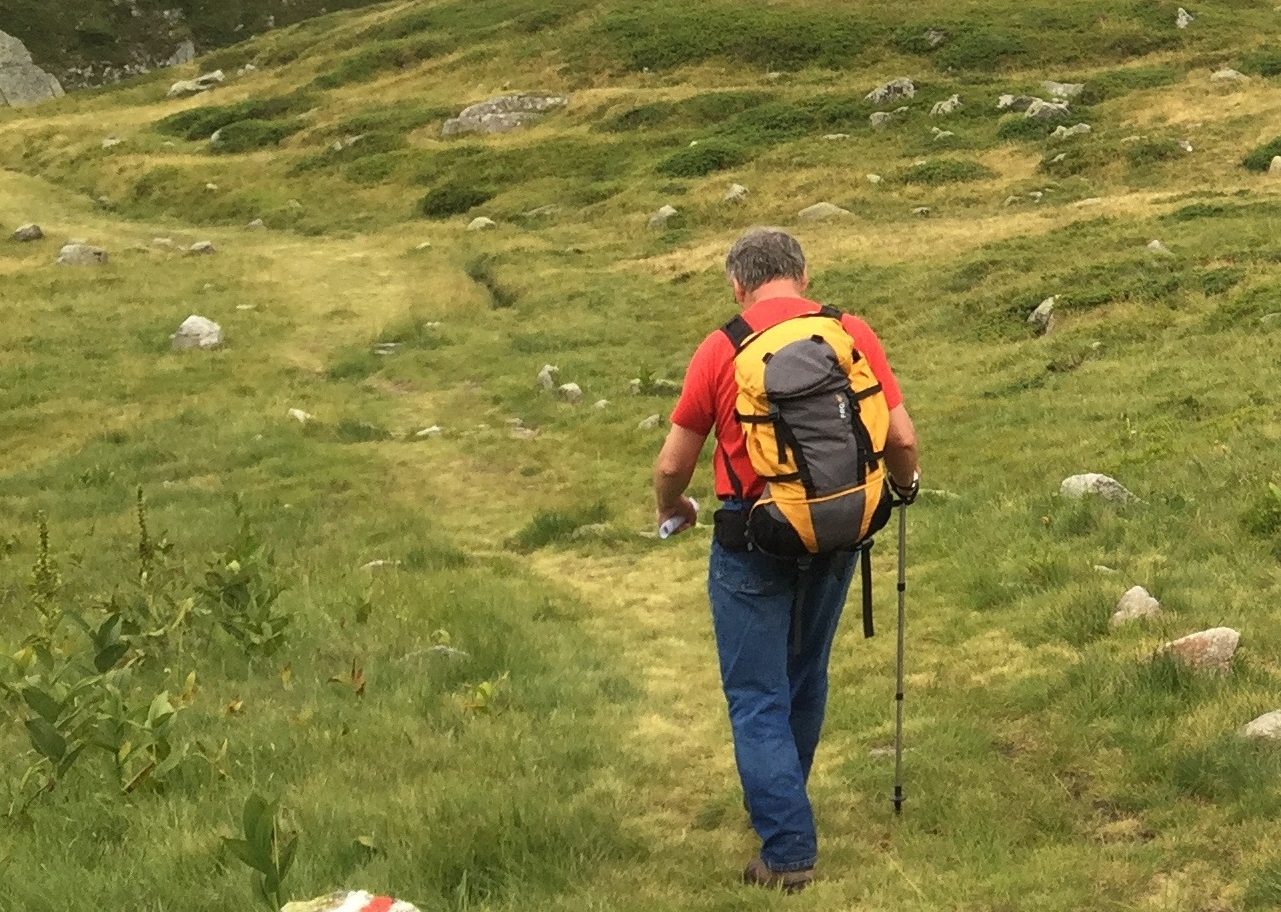
In Switzerland, the classic route starts at Lake Konstanz and goes in a south westerly direction to Geneva. There is a spur that starts in the city of Luzern (Lucerne) and joins up with the main route at the little village of Rüeggisberg. The route is one of seven national walking routes in Switzerland. In German speaking Luzern and Bern, the route is known as the Jakobsweg. Somewhere about Fribourg, where the language changes to French, the route becomes the Chemin de Saint Jacques. A couple of years ago, I decided to walk the route from Luzern (Lucerne) to Geneva. Because I live in Basel, I was able to do this in day stages. The route took me around the outskirts of Bern, and through the cities of Fribourg, Lausanne and Geneva before reaching the French border. The route goes through forests and towns, farmland and vineyards, river valleys and lake shores. When I got to Geneva, I continued on to the French border nine kilometers beyond the city. The border is marked by the little stream called L’Aranda. I reached there at Easter this year, and I stopped at the border.
Since then, I have been working on how to get across France to that little town of Saint-Jean-Pied-de-Port. And now I think I am ready to start. It is clear to me that once I start the French route I will be too far away from my base in Basel for day stages to be realistic, so I am going to have to walk larger sections over many days.
The first stage goes from the Franco-Swiss border to the town of Le-Puy-en-Velay. It is 350 kilometers long, and is referred to by its Latin name, Via Gebennensis, which translates as The Geneva Route. This is not one of the classic pilgrimage routes; those will take me on from Le-Puy-en-Velay to Saint-Jean-Pied-de-Port. The Geneva Route was opened in the 1990s to link up the Swiss routes with the classic pilgrimage routes. It will be challenging, but I am looking forward to it.
The walk will start in a few weeks’ time, in late September, and of course I will give a full account of it here. Between now and then I will also have some posts to describe my preparations for the undertaking.
And by the way, yesterday’s step count was 19,500.

 Walkingman