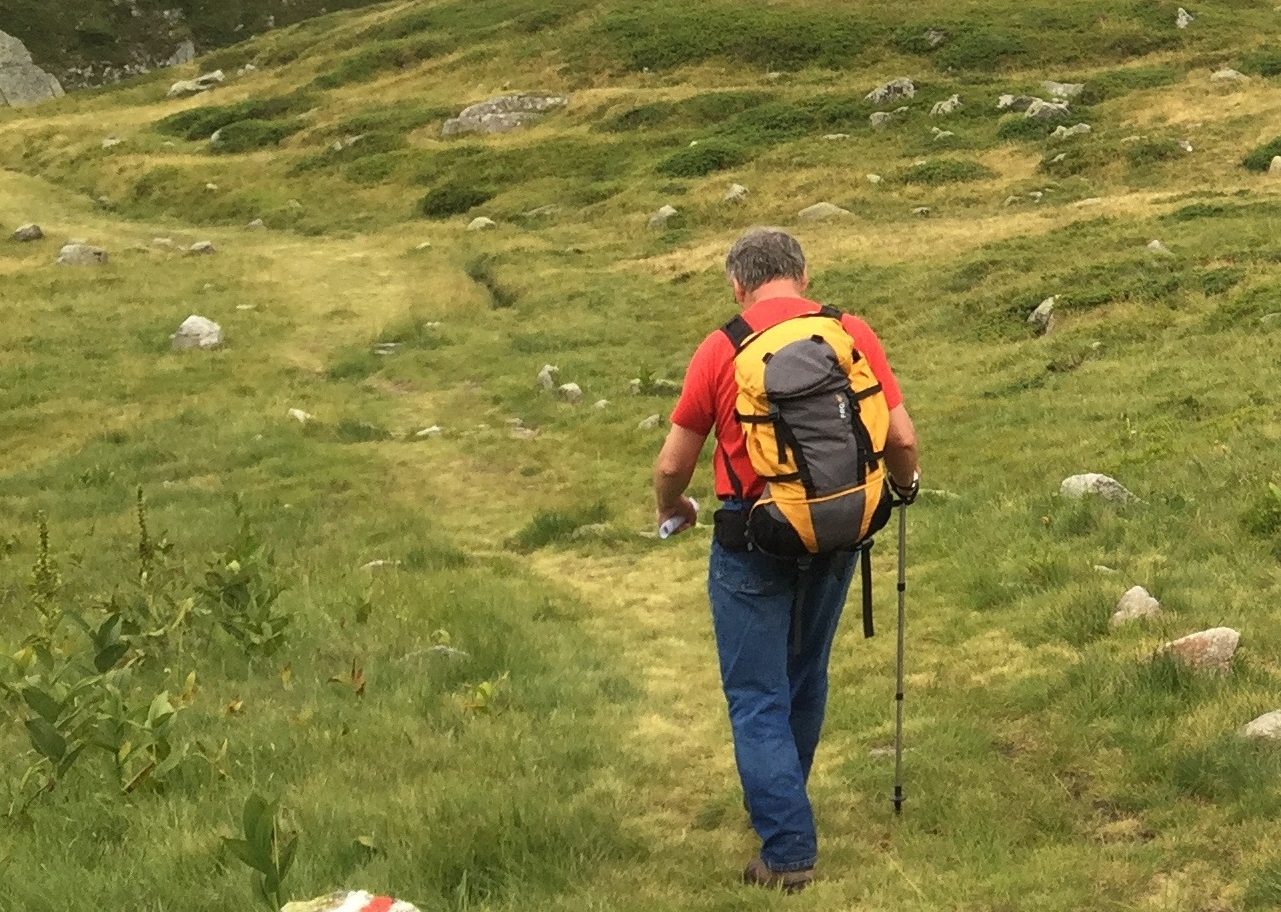
There are many poems about the concept of walking as a metaphor for life. In the English language, perhaps the best known is Robert Frost’s The Road not Taken. The poem was first published in 1916. Frost later remarked that readers tended to take the poem more seriously than he intended.
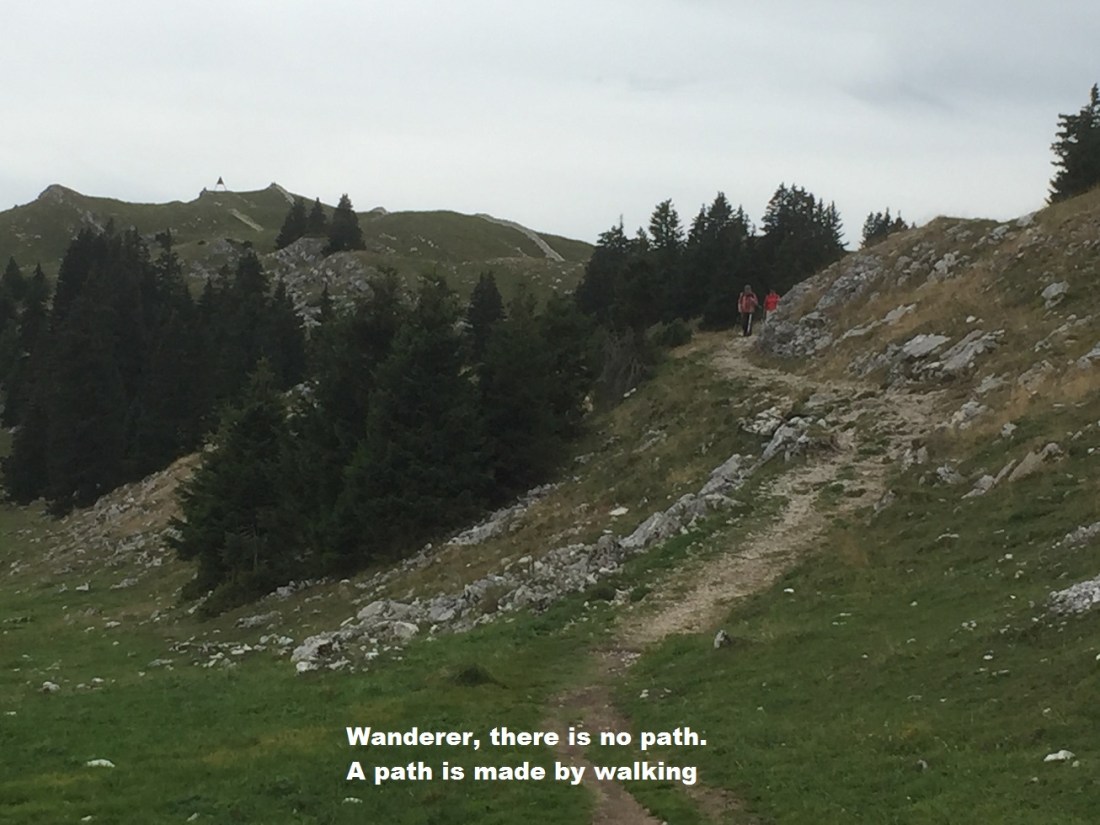
It was very close to this time that the Spanish poet, Antonio Machado, published his collection of poems Proverbos y Cantares, or “Proverbs and Songs” as an addition to his 1912 collection: Campos. It contains one of his best known poems, under the title Cantares. It is there that he says “Wanderer there is no path, the path is made by walking”.
Antonio Machado was born in Seville in the latter part of the 19th century. He lived in various parts of Spain through his life, and in the 1930s when the Spanish Civil War broke out, he was teaching in Madrid. He was evacuated to Valencia and then Barcelona, but as the nationalist troops closed in on republican areas, he made his way to France, where he died in February 1939, before the greater European conflagration that was to come.
The original Cantares is not a long poem, but it explores the idea that we are all moving forward, searching and progressing. We cannot see where we are going; we only know by where we have been. The line that resonates most with readers is
Caminante son tus huellas el camino y nada más;
Traveler, your footprints are the path, and nothing else.
The concept was taken further by Machado and encapsulated into a smaller poem which today goes under the title “Wanderer”. I include it here in its entirety, with both the original Spanish and English versions.
Caminante, no hay camino
Caminante, son tus huellas
el camino y nada más;
Caminante, no hay camino,
se hace camino al andar.
Al andar se hace el camino,
y al volver la vista atrás
se ve la senda que nunca
se ha de volver a pisar.
Caminante no hay camino
sino estelas en la mar.
Wanderer, there is no path
Wanderer, the only way
Is your footprints and no other.
Wanderer, there is no path.
Make your way by going farther.
By going farther, make your way
Till looking back at where you’ve wandered,
You look back on that path you may
Not set foot on from now onward.
Wanderer, there is no path;
Only wake-trails on the sea.
It is interesting to wonder why the poets would see walking as a metaphor for life in the way. Why not some form of vehicular transport, whether horse drawn or motorized. Perhaps it is that walking is closer in pace to life itself. The movement, and changes of scenery are gradual, but looking back, you put things in perspective. Faster ways of travel are all about looking forward. When driving, you look in the rear view mirror only to see the cars behind you, not to contemplate where you have been. But walking allows that luxury of looking back and thinking about the route you have taken, the choices made, and how they led to the current situation. Maybe that is why those poems still are popular today, more than 100 years after they were first published.
And the step count this week? Averaging 16,300.

 Walkingman