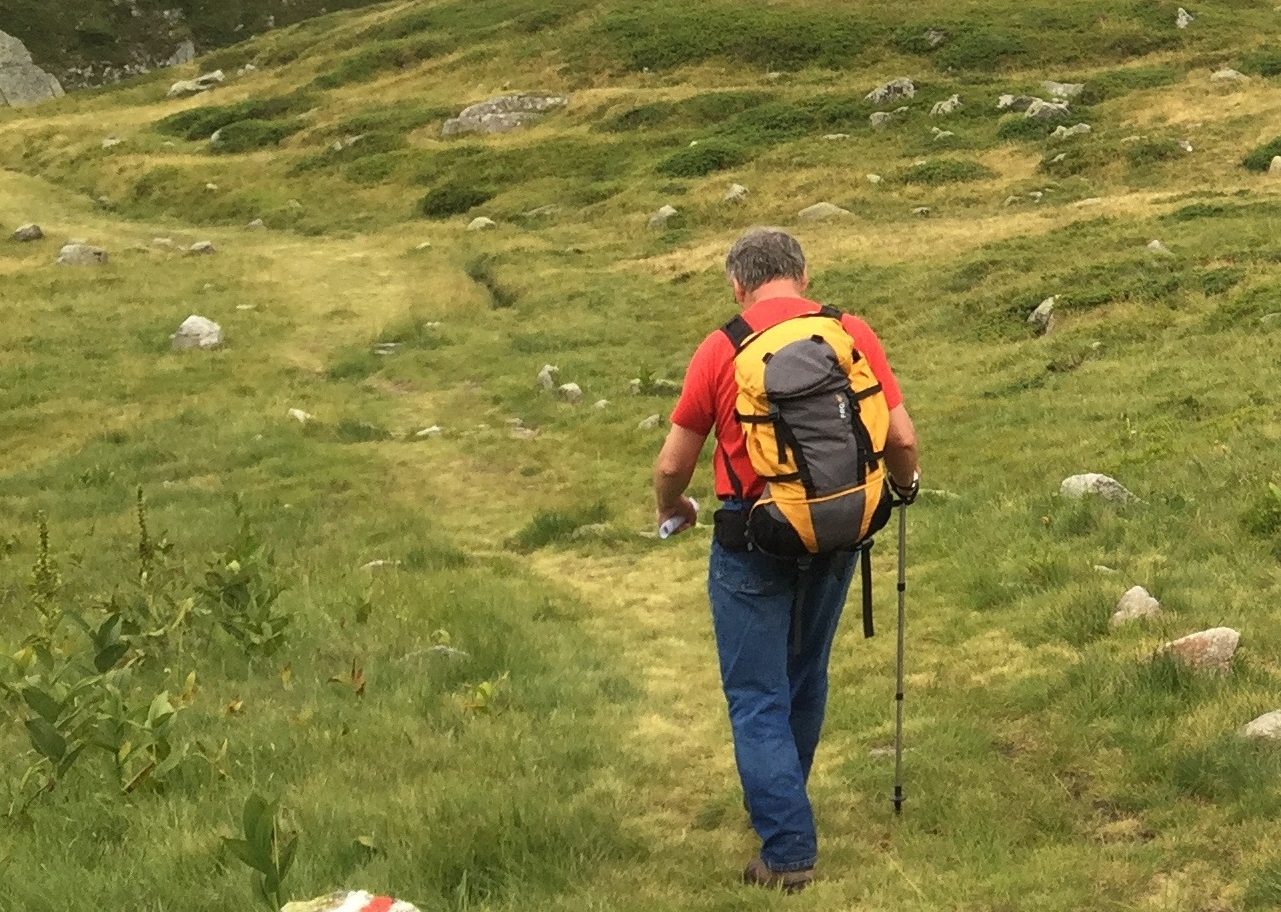

Everyone agrees that walking is a healthy pastime. The British National Health Service (NHS) talks about on the website under the heading of “Walking for Health”, along with cycling dancing, and workouts as one of the ways to improve your health. But how much walking is enough? In terms of time, that same website recommends 150 minutes of physical exercise per week, which is just over 20 minutes per day. In terms of the number of steps walked, the recommendation from the same website is 10,000 steps per day. The average person walks between 4,000 and 5,000 steps per day just by doing their normal activities and without taking any exercise as such. The walk to the car, from the car to the place of work, around the office or factory, and so on all add up to just short of half that daily target of 10,000 steps. To make up the remainder, we are talking about walking about 45 minutes each day. This is based on the fact that the average person walks just over 100 steps per minute.
All this was part of my thinking when I first started daily walking and counting my steps. That was seven years ago. The same NHS website recommends that you set goals, so I did that. I structured the goal in two ways:
- To walk 10,000 steps per day on average
- To walk 1,000,000 steps in each quarter of the year, and 4 million steps for the year
This second piece is important, and it is where the psychology comes in. If you just set a goal of 10,000 steps a day, and you miss that on some days, as inevitably happens, then it seems as if you have missed your goal. But the second piece ensures an average of 10,000 steps a day, while also giving the chance to make up for bad days with some very good ones. It also forces you to track performance, which is important as well
Of course, it is necessary to have a good pedometer to measure all that, and I had one. So everything was in place. It is testimony to the psychological power of having objectives, that I recorded 4,389,569 steps in that first year. In terms of distance, I calculated it to be just over 2900km. On the basis of seeking continuous improvement, I increased my target the next year, and the next. And each year except one, I beat my target. The one exception was that having set a target of 5 million steps in 2014, and having achieved that, I kept the same target in 2015, but in practice did not do as well as I had done in 2014.
So this year, I have set myself a target of 6 million steps for the year. When you break it down, that equates to 16,438 steps each day. That is a good bit more than the 10,000 per day that the NHS recommends.
My friends and colleagues often ask how it is possible to walk 16,000 steps each day. It is not just about once in the week, but every day, or at least having this as an average for each day. So let’s look at a typical day. I get up early, about 40 minutes earlier than I otherwise would. I use those 40 minutes to take a circuitous route of walking to work. That means that when I arrive in the office, I already have accumulated 6,000 steps. If I left it until the evening to take some exercise, the prospect would be daunting, but psychologically, to have more than 30% of my objective achieved by 9 AM gives a confidence boost, and creates the belief that I will succeed.
By lunchtime, thanks to the normal movement around the office, that is about 7,500. Then I take walk around the company property for about 30 minutes, so that when I return to work after lunch, I am already at over 10,000 steps. My route home in the evening does not have to be very circuitous to ensure that I reach my target of 16,000 for the day.
Thanks to the walking, my health is good, without walking, I would be a candidate for cardiac problems, but with the walking, there are no problems. And a little bit of psychology has helped to achieve that.

 Walkingman
muy impresionada.. 7 años caminando y contando tus pasos… Eres increíble…un ejemplo de constancia y perseverancia en lograr tus objetivos… felicitaciones My Dear Thurlock!!
LikeLike
I really enjoyed reading this blog about the psychology of walking . Very inspiring and motivational.
LikeLike